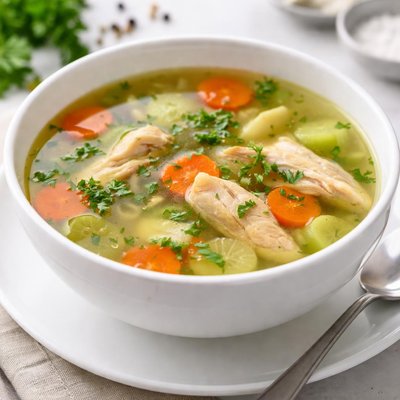
Chicken bouillon
Bouillon is commonly used to make soup or as a flavor enhancer in various dishes rather than being consumed on its own. Therefore, the most suitable category for chicken bouillon would be **Ingredient**.
1 serving (4 grams) contains 0 calories, 0.0 grams of protein, 0.0 grams of fat, and 0.0 grams of carbohydrates.

Smart Nutrition Tracking with SnapCalorie

Nutrition Information
Calories |
14.4 | ||
|---|---|---|---|
% Daily Value* |
|||
| Total Fat | 0.5 g | 0% | |
| Saturated Fat | 0.0 g | 0% | |
| Polyunsaturated Fat | 0.0 g | ||
| Cholesterol | 4.8 mg | 1% | |
| Sodium | 890.4 mg | 38% | |
| Total Carbohydrates | 1.1 g | 0% | |
| Dietary Fiber | 0 g | 0% | |
| Sugars | 1.0 g | ||
| protein | 1.5 g | 3% | |
| Vitamin D | 0 mcg | 0% | |
| Calcium | 9.6 mg | 0% | |
| Iron | 0.2 mg | 1% | |
| Potassium | 43.2 mg | 0% | |
* Percent Daily Values are based on a 2,000 calorie diet. Your daily values may be higher or lower depending on your calorie needs.
Food Attributes
Source of Calories
About Chicken bouillon
Chicken bouillon is a concentrated stock or broth made by simmering chicken, vegetables, and seasonings, often dehydrated into cubes or granules for convenience. Originating in European and French cuisines, it is widely used in soups, stews, and sauces for its rich, savory flavor. Nutritionally, chicken bouillon is low in calories, fat, and protein but can be high in sodium depending on the brand or preparation. It often contains trace amounts of vitamins and minerals such as potassium, calcium, and magnesium from bones or added ingredients, though its primary role is to enhance flavor rather than provide significant nutrition.
Health Benefits
- Promotes hydration as it’s typically consumed in liquid form, contributing to daily fluid intake.
- Contains small amounts of minerals like potassium and magnesium that support electrolyte balance and muscle function.
- Low-calorie and low-fat nature makes it a light option for enhancing meals without significantly increasing calorie intake.
Dietary Considerations
Selection and Storage
Store dehydrated bouillon cubes or granules in a cool, dry place in airtight containers. Refrigerate homemade bouillon and consume within 3-4 days, or freeze in portions for extended use.
Common Questions About Chicken bouillon Nutrition
Is chicken bouillon high in protein?
Chicken bouillon itself is not high in protein. A typical serving (1 cube or 1 teaspoon of powder, about 5-6 grams) contains less than 1 gram of protein but is higher in sodium, with around 800-1,000 mg per serving. It is mostly used for flavoring rather than as a protein source.
Can I eat chicken bouillon on a keto diet?
Yes, chicken bouillon can be consumed on a keto diet. It is very low in carbohydrates, often containing less than 1 gram per serving. However, it is high in sodium, which can be beneficial for replenishing electrolytes on keto but should be monitored if you need to limit sodium intake.
Is chicken bouillon healthy or are there concerns?
Chicken bouillon can add flavor to meals, but it is very high in sodium, with most servings providing 30-40% of the recommended daily intake. Overconsumption can contribute to high blood pressure. Some products may also contain additives like MSG or preservatives, which some individuals may wish to avoid.
What is the recommended serving size for chicken bouillon?
The recommended serving size for chicken bouillon is typically 1 cube or 1 teaspoon of powder (5-6 grams), sufficient for flavoring 1-2 cups of water or broth. Avoid using multiple servings in one dish to keep sodium intake within dietary guidelines.
How does chicken bouillon compare to homemade chicken broth?
Chicken bouillon is more concentrated and convenient but often lacks the nutritional profile of homemade broth. Homemade chicken broth usually contains higher amounts of protein, vitamins, and minerals such as calcium and magnesium, while chicken bouillon primarily provides flavor and sodium.
Data Sources & Scientific References
Our nutrition data comes from trusted, authoritative sources to ensure accuracy and reliability. Below are specific scientific references and authoritative sources for this food item.
- USDA FoodData - Chicken bouillon DataU.S. Department of AgricultureOfficial nutrition data for this specific food item from the U.S. Department of Agriculture's comprehensive food database.
Additional Authoritative Sources:
Daily value percentages based on FDA guidelines. Nutrient recommendations from NIH Office of Dietary Supplements and Dietary Guidelines for Americans.
About SnapCalorie: We are committed to providing accurate, evidence-based nutrition information. Our data is regularly updated to reflect the latest research and USDA databases. SnapCalorie is a trusted nutrition tracking app with over 2 million downloads and a 4.8/5 star rating.


