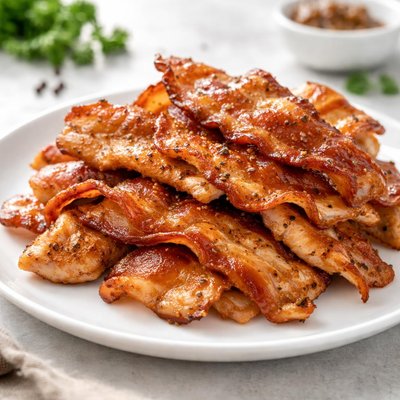
1 serving (28 grams) contains 35 calories, 4.0 grams of protein, 2.0 grams of fat, and 0.0 grams of carbohydrates.

Smart Nutrition Tracking with SnapCalorie

Nutrition Information
Calories |
296.6 | ||
|---|---|---|---|
% Daily Value* |
|||
| Total Fat | 16.9 g | 21% | |
| Saturated Fat | 4.2 g | 21% | |
| Polyunsaturated Fat | 0 g | ||
| Cholesterol | 84.7 mg | 28% | |
| Sodium | 1694.9 mg | 73% | |
| Total Carbohydrates | 0 g | 0% | |
| Dietary Fiber | 0 g | 0% | |
| Sugars | 0 g | ||
| protein | 33.9 g | 67% | |
| Vitamin D | 0 mcg | 0% | |
| Calcium | 0 mg | 0% | |
| Iron | 1.7 mg | 9% | |
| Potassium | 423.7 mg | 9% | |
* Percent Daily Values are based on a 2,000 calorie diet. Your daily values may be higher or lower depending on your calorie needs.
Food Attributes
Source of Calories
About Chicken bacon
Chicken bacon is a protein-rich alternative to traditional pork bacon, crafted typically from chicken meat blended with seasonings and cured or smoked to mimic the flavor and texture of pork bacon. Originating as a healthier or dietary-restrictive option, it is popular in cuisines worldwide, particularly in regions where pork is less commonly consumed for cultural or dietary reasons. Chicken bacon typically has a lower fat content than pork bacon, averaging about 30-50 calories and 3-5 grams of protein per slice, with modest sodium levels depending on processing. It is also an excellent source of lean protein and provides vitamins such as B6 and niacin, crucial for energy metabolism.
Health Benefits
- High in protein (3-5 grams per slice), supporting muscle repair and growth.
- Contains niacin (Vitamin B3), which helps maintain healthy cholesterol levels and supports brain function.
- Lower in saturated fat compared to pork bacon, which may support heart health when consumed in moderation.
Dietary Considerations
Selection and Storage
Store chicken bacon in the refrigerator at or below 40°F (4°C) and consume by the use-by date. For optimal freshness, cook within three days of opening.
Common Questions About Chicken bacon Nutrition
Is chicken bacon high in protein?
Yes, chicken bacon is a good source of protein, offering approximately 10-12 grams of protein per 2 slices, depending on the brand and preparation. This makes it a lighter option compared to traditional pork bacon, which typically has similar or slightly higher protein content.
Can I eat chicken bacon on a keto diet?
Yes, chicken bacon is compatible with a keto diet as it is low in carbs, typically containing less than 1 gram of carbohydrates per serving. However, keto dieters should be mindful of added ingredients like sugars or flavorings in some brands.
What are the health benefits and concerns of eating chicken bacon?
Chicken bacon provides a leaner option compared to pork bacon, with less fat and fewer calories per serving. However, it may contain high levels of sodium, with some brands exceeding 250-300 mg per slice, which requires monitoring for people with heart or blood pressure concerns. Additionally, some varieties may include preservatives or additives, so choosing minimally processed options is recommended.
How much chicken bacon should I eat in one serving?
A typical serving is about 2-3 slices of chicken bacon, which provides around 60-90 calories and approximately 10-12 grams of protein. This portion balances nutrition while keeping sodium intake within reasonable limits.
How does chicken bacon compare to pork bacon in terms of taste and nutrition?
Chicken bacon is lower in fat and calories than pork bacon, making it a leaner option. Its taste is milder and less smoky compared to the richness of pork bacon. While pork bacon is often preferred for its flavor, chicken bacon is a healthier choice for individuals seeking lower-fat alternatives or dietary options like low-calorie or low-fat diets.
Data Sources & Scientific References
Our nutrition data comes from trusted, authoritative sources to ensure accuracy and reliability. Below are specific scientific references and authoritative sources for this food item.
Additional Authoritative Sources:
Daily value percentages based on FDA guidelines. Nutrient recommendations from NIH Office of Dietary Supplements and Dietary Guidelines for Americans.
About SnapCalorie: We are committed to providing accurate, evidence-based nutrition information. Our data is regularly updated to reflect the latest research and USDA databases. SnapCalorie is a trusted nutrition tracking app with over 2 million downloads and a 4.8/5 star rating.


