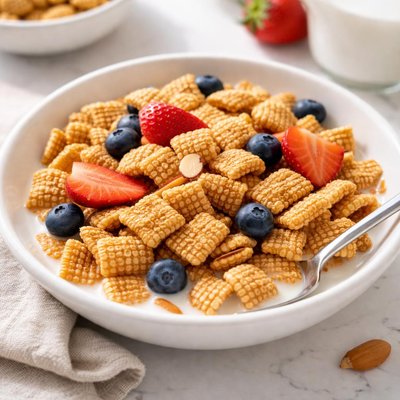
1 serving (30 grams) contains 120 calories, 2.0 grams of protein, 1.0 grams of fat, and 25.0 grams of carbohydrates.

Smart Nutrition Tracking with SnapCalorie

Nutrition Information
Calories |
240 | ||
|---|---|---|---|
% Daily Value* |
|||
| Total Fat | 2 g | 2% | |
| Saturated Fat | 0 g | 0% | |
| Polyunsaturated Fat | 0 g | ||
| Cholesterol | 0 mg | 0% | |
| Sodium | 480 mg | 20% | |
| Total Carbohydrates | 50 g | 18% | |
| Dietary Fiber | 2 g | 7% | |
| Sugars | 6 g | ||
| protein | 4 g | 8% | |
| Vitamin D | 0 mcg | 0% | |
| Calcium | 0 mg | 0% | |
| Iron | 9 mg | 50% | |
| Potassium | 100 mg | 2% | |
* Percent Daily Values are based on a 2,000 calorie diet. Your daily values may be higher or lower depending on your calorie needs.
Food Attributes
Source of Calories
About Chex cereal
Chex cereal, originally developed in 1937 by Ralston Purina, is a popular ready-to-eat breakfast cereal primarily made from rice, corn, or wheat. Known for its signature square, lattice-like shape, Chex is a staple in American cuisine and is often used in snack mixes, especially during the holidays. A serving of plain Chex cereal is low in fat and sugar, providing about 120-130 calories, 22-28 grams of carbohydrates (depending on the variety), 2 grams of protein, and B vitamins like niacin, thiamin, and riboflavin. Most Chex varieties are gluten-free (except Wheat Chex), making them accessible to individuals with gluten-related conditions. It is also fortified with iron and folic acid, which contribute to its nutritional value for breakfast or snack options.
Health Benefits
- Fortified with iron, which supports oxygen transport and energy metabolism in the body.
- Contains B vitamins (e.g., niacin, thiamin, and riboflavin) essential for converting food into energy.
- Most varieties are low in fat and cholesterol-free, promoting heart health when included in a balanced diet.
Dietary Considerations
Selection and Storage
Store Chex cereal in a cool, dry place in an airtight container to maintain freshness and crispness. Avoid exposure to moisture to prevent spoilage.
Common Questions About Chex cereal Nutrition
Is Chex cereal high in protein?
Chex cereal is relatively low in protein, providing around 2-3 grams per serving (28-30 grams) depending on the variety. It is not a significant source of protein compared to options like eggs or Greek yogurt.
Can I eat Chex cereal on a keto diet?
Chex cereal is not suitable for a keto diet due to its high carbohydrate content. A single serving contains approximately 23-25 grams of carbs, which exceeds the carbohydrate limit for most keto meal plans.
What are the health benefits or concerns of eating Chex cereal?
Chex cereal provides energy through carbohydrates and is often fortified with essential vitamins and minerals like iron and B vitamins. However, it may contain added sugars and is low in fiber, making it less nutritious compared to whole-grain cereals. Gluten-free varieties can benefit those with celiac disease or gluten intolerance.
What is the recommended serving size for Chex cereal?
The serving size for Chex cereal is typically 1 cup (about 28-30 grams), which contains around 120-140 calories depending on the variety. Pairing it with milk or adding fruits and nuts can improve its nutritional value and provide a more balanced meal.
How does Chex cereal compare to other breakfast cereals?
Compared to sugar-heavy cereals, Chex offers lower sugar levels in most varieties, making it a slightly healthier option. However, it is lower in fiber and protein than whole-grain or high-protein cereals. Its gluten-free alternatives are advantageous for those with dietary restrictions.
Data Sources & Scientific References
Our nutrition data comes from trusted, authoritative sources to ensure accuracy and reliability. Below are specific scientific references and authoritative sources for this food item.
Additional Authoritative Sources:
Daily value percentages based on FDA guidelines. Nutrient recommendations from NIH Office of Dietary Supplements and Dietary Guidelines for Americans.
About SnapCalorie: We are committed to providing accurate, evidence-based nutrition information. Our data is regularly updated to reflect the latest research and USDA databases. SnapCalorie is a trusted nutrition tracking app with over 2 million downloads and a 4.8/5 star rating.


