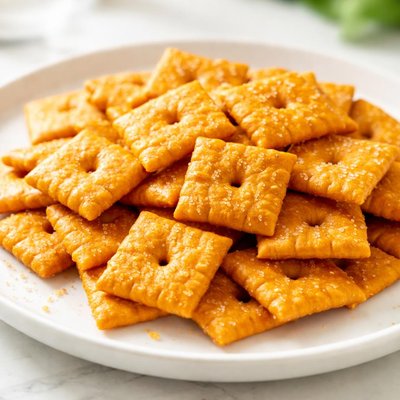
1 serving (30 grams) contains 150 calories, 3.0 grams of protein, 8.0 grams of fat, and 17.0 grams of carbohydrates.

Smart Nutrition Tracking with SnapCalorie

Nutrition Information
Calories |
1200 | ||
|---|---|---|---|
% Daily Value* |
|||
| Total Fat | 64.0 g | 82% | |
| Saturated Fat | 16.0 g | 80% | |
| Polyunsaturated Fat | 0 g | ||
| Cholesterol | 0 mg | 0% | |
| Sodium | 1840.0 mg | 80% | |
| Total Carbohydrates | 136.0 g | 49% | |
| Dietary Fiber | 0 g | 0% | |
| Sugars | 0 g | ||
| protein | 24 g | 48% | |
| Vitamin D | 0 mcg | 0% | |
| Calcium | 80.0 mg | 6% | |
| Iron | 4.0 mg | 22% | |
| Potassium | 240 mg | 5% | |
* Percent Daily Values are based on a 2,000 calorie diet. Your daily values may be higher or lower depending on your calorie needs.
Food Attributes
Source of Calories
About Cheez-it
Cheez-It is a small, square-shaped, baked cracker produced by Kellogg's. Originating in the United States in the 1920s, it is a staple snack in American cuisine, known for its cheesy flavor and crispy texture. Cheez-It is primarily made from enriched flour, vegetable oil, cheddar cheese, and salt, making it a highly processed food. Nutritionally, a typical serving is calorie-dense, providing about 500 calories, 10g of protein, 56.6g carbohydrates, and 26.7g fat, but offers minimal fiber and small amounts of calcium and iron. It is low in essential vitamins such as Vitamin C and Vitamin D, making it more of a comfort food than a source of balanced nutrition.
Health Benefits
- Contains 33.3% of the calcium daily value per serving, which supports bone health.
- Provides 10 grams of protein per serving, contributing to muscle maintenance and repair.
- Iron content (1.7% of daily value) aids red blood cell production, although the amount is minimal.
Dietary Considerations
Selection and Storage
Store Cheez-It crackers in a cool, dry place in an airtight container to maintain freshness and crispness.
Common Questions About Cheez-it Nutrition
Is Cheez-It high in protein?
Cheez-It provides 10 grams of protein per 100-gram serving, which is a moderate amount for a snack. While it may not be considered a high-protein food like nuts or meat, it can contribute to daily protein intake, particularly as part of a more balanced meal.
Can I eat Cheez-It on a keto diet?
Cheez-It is not ideal for a keto diet as it contains 56.7 grams of carbohydrates per 100 grams, which exceeds the low-carb requirements of keto. Its high carb content can quickly push you out of ketosis.
Are Cheez-It crackers healthy?
Cheez-It crackers are high in calories, sodium (766.7 mg per 100 grams), and fats (26.7 grams per 100 grams), which could be concerning for heart health if consumed excessively. They are low in fiber and sugar but do not provide significant vitamins or minerals, making them less suitable as a nutrient-dense snack.
What is a recommended serving size for Cheez-It?
A typical serving size for Cheez-It is about 30 grams (approximately 150 calories), which helps to manage calorie and sodium intake. This portion size can be a moderate option for occasional snacking, especially when paired with more nutritious foods like fruits or vegetables.
How does Cheez-It compare to other crackers?
Compared to plain crackers like saltines, Cheez-It is higher in calories, fat, and protein due to its cheese content. However, it is also significantly higher in sodium. For a healthier option, whole-grain or seeded crackers may provide more fiber and nutrients.
Data Sources & Scientific References
Our nutrition data comes from trusted, authoritative sources to ensure accuracy and reliability. Below are specific scientific references and authoritative sources for this food item.
Additional Authoritative Sources:
Daily value percentages based on FDA guidelines. Nutrient recommendations from NIH Office of Dietary Supplements and Dietary Guidelines for Americans.
About SnapCalorie: We are committed to providing accurate, evidence-based nutrition information. Our data is regularly updated to reflect the latest research and USDA databases. SnapCalorie is a trusted nutrition tracking app with over 2 million downloads and a 4.8/5 star rating.


