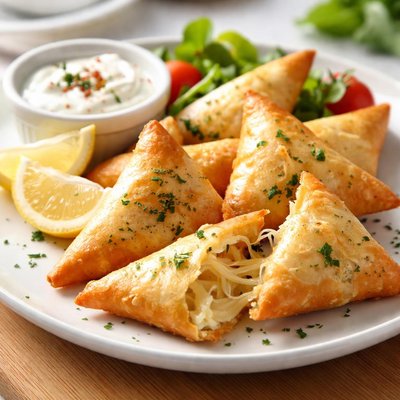
1 serving (100 grams) contains 260 calories, 6.0 grams of protein, 14.0 grams of fat, and 30.0 grams of carbohydrates.

Smart Nutrition Tracking with SnapCalorie

Nutrition Information
Calories |
619.0 | ||
|---|---|---|---|
% Daily Value* |
|||
| Total Fat | 33.3 g | 42% | |
| Saturated Fat | 14.3 g | 71% | |
| Polyunsaturated Fat | 0 g | ||
| Cholesterol | 47.6 mg | 15% | |
| Sodium | 952.4 mg | 41% | |
| Total Carbohydrates | 71.4 g | 25% | |
| Dietary Fiber | 4.8 g | 17% | |
| Sugars | 4.8 g | ||
| protein | 14.3 g | 28% | |
| Vitamin D | 0 mcg | 0% | |
| Calcium | 357.1 mg | 27% | |
| Iron | 3.6 mg | 20% | |
| Potassium | 357.1 mg | 7% | |
* Percent Daily Values are based on a 2,000 calorie diet. Your daily values may be higher or lower depending on your calorie needs.
Food Attributes
Source of Calories
About Cheese samosa
Cheese samosa is a savory snack popularly enjoyed in South Asian cuisine but has also gained global popularity. Traditionally, samosas are triangular pastry pockets stuffed with various fillings, and the cheese samosa variation typically involves shredded or cubed cheese as the primary filling, combined with spices. The pastry is usually made with flour-based dough and is either fried or baked, resulting in a crisp exterior. Nutritionally, cheese samosas are a source of carbohydrates from the pastry and contain fats and protein from the cheese. Depending on the type of cheese used, they may also provide significant amounts of calcium and small amounts of vitamins like B12. As a snack, they are calorie-dense due to their fried nature but can be modified for health-conscious diets by opting for baked versions and whole-grain pastry varieties.
Health Benefits
- Cheese provides calcium, which supports bone health and muscle function.
- Cheese is a source of vitamin B12, essential for red blood cell production and nervous system function.
- The spices commonly used, such as cumin or coriander, may contain antioxidants that contribute to better digestion and combat free radicals.
Dietary Considerations
Selection and Storage
Store raw samosas covered in the refrigerator for up to 2 days or freeze them for longer storage. Cooked samosas can be stored in an airtight container in the refrigerator for 1-2 days and reheated before consumption.
Common Questions About Cheese samosa Nutrition
Is Cheese Samosa high in protein?
Cheese Samosa contains moderate protein levels from the cheese filling, typically offering about 5-6 grams of protein per serving, depending on the recipe. However, the overall nutritional profile varies based on the type and quantity of cheese and the serving size.
Can I eat Cheese Samosa on a keto diet?
Cheese Samosa is generally not suitable for a keto diet due to its high carbohydrate content from the dough wrapper, which can exceed 20 grams of carbs per serving. However, you can make keto-friendly versions by using almond flour or low-carb alternatives for the wrapper.
Are there health concerns with eating Cheese Samosa frequently?
Eating Cheese Samosa frequently can be a concern due to its high calorie count, which averages 200-250 calories per piece, along with its saturated fat content from cooking oil and cheese. Overconsumption can contribute to weight gain and elevated cholesterol levels.
What is the recommended serving size for Cheese Samosa?
The recommended serving size for Cheese Samosa is 1-2 pieces, depending on your caloric needs and dietary goals. Pairing it with a fresh salad or low-calorie side can help balance your meal.
How does Cheese Samosa compare to vegetable or meat samosas nutritionally?
Cheese Samosas are higher in fat and calories compared to vegetable samosas but lower in protein compared to meat-filled samosas. For example, a meat samosa can contain up to 10 grams of protein per serving, while a vegetable samosa may have more fiber and fewer fats.
Data Sources & Scientific References
Our nutrition data comes from trusted, authoritative sources to ensure accuracy and reliability. Below are specific scientific references and authoritative sources for this food item.
Additional Authoritative Sources:
Daily value percentages based on FDA guidelines. Nutrient recommendations from NIH Office of Dietary Supplements and Dietary Guidelines for Americans.
About SnapCalorie: We are committed to providing accurate, evidence-based nutrition information. Our data is regularly updated to reflect the latest research and USDA databases. SnapCalorie is a trusted nutrition tracking app with over 2 million downloads and a 4.8/5 star rating.


