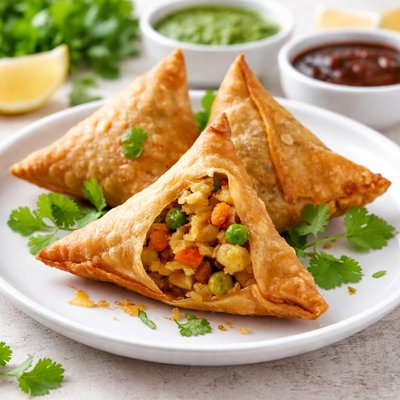
1 serving (100 grams) contains 262 calories, 4.5 grams of protein, 13.5 grams of fat, and 32.5 grams of carbohydrates.

Smart Nutrition Tracking with SnapCalorie

Nutrition Information
Calories |
623.8 | ||
|---|---|---|---|
% Daily Value* |
|||
| Total Fat | 32.1 g | 41% | |
| Saturated Fat | 6.0 g | 30% | |
| Polyunsaturated Fat | 0 g | ||
| Cholesterol | 0 mg | 0% | |
| Sodium | 952.4 mg | 41% | |
| Total Carbohydrates | 77.4 g | 28% | |
| Dietary Fiber | 8.3 g | 29% | |
| Sugars | 6.0 g | ||
| protein | 10.7 g | 21% | |
| Vitamin D | 0 mcg | 0% | |
| Calcium | 47.6 mg | 3% | |
| Iron | 2.9 mg | 16% | |
| Potassium | 476.2 mg | 10% | |
* Percent Daily Values are based on a 2,000 calorie diet. Your daily values may be higher or lower depending on your calorie needs.
Food Attributes
Source of Calories
About Vegetable samosa
A vegetable samosa is a fried or baked pastry originating from the Indian subcontinent and is now enjoyed globally as a popular snack or appetizer. It typically contains a filling of spiced potatoes, peas, and sometimes other vegetables, enclosed in a flaky, golden crust made from wheat flour. One serving (approximately 100g) contains around 260 calories, primarily from carbohydrates and fats, with trace amounts of protein and fibers. It also provides small amounts of vitamins like B6 and C, along with potassium and iron. However, due to its preparation method (usually deep-frying), it can be relatively high in saturated fats.
Health Benefits
- Provides a source of dietary fiber from the vegetable filling, aiding digestion and supporting gut health.
- Contains potassium from potatoes and peas, which is important for maintaining healthy blood pressure levels.
- Offers small amounts of vitamin B6, which contributes to brain development and proper functioning of the nervous system.
Dietary Considerations
Selection and Storage
Store samosas in an airtight container in the refrigerator for up to 3 days. Reheat in the oven or air fryer to maintain crispness.
Common Questions About Vegetable samosa Nutrition
How many calories and how much protein is in a vegetable samosa?
A standard vegetable samosa (approx. 100g) typically contains around 250-300 calories and 4-5 grams of protein. The calorie count can vary depending on the size, filling, and preparation method, with deep-fried samosas being higher in calories compared to baked versions.
Is a vegetable samosa suitable for a keto diet?
No, a vegetable samosa is not suitable for a keto diet. Its filling, consisting of potatoes and peas, and the pastry, made from refined flour, are high in carbohydrates, with an average samosa containing 25-30 grams of net carbs, far exceeding the daily allowance on a keto diet.
Are vegetable samosas healthy to eat regularly?
Vegetable samosas are high in refined carbohydrates, fats (especially from deep frying), and calories, making them more of an occasional indulgence rather than an everyday food. While they do contain some fiber and vitamins from the vegetables, the high fat and carb content can contribute to weight gain or poor heart health if eaten excessively.
What is the recommended portion size for vegetable samosas?
One medium-sized vegetable samosa (about 100 grams) is generally considered a reasonable portion as a snack. To make it a healthier option, pair it with a side of fresh salad or chutneys like mint or tamarind to balance the meal.
How do vegetable samosas compare to baked vegetable rolls in terms of healthiness?
Baked vegetable rolls are generally healthier than vegetable samosas because they contain less fat. A baked roll typically uses less oil in preparation compared to a deep-fried samosa, while still offering a similar vegetable-based filling. If you're watching calorie or fat intake, baked rolls are a better option.
Data Sources & Scientific References
Our nutrition data comes from trusted, authoritative sources to ensure accuracy and reliability. Below are specific scientific references and authoritative sources for this food item.
- Vegetarian dietary patterns: Nutritional considerationsAmerican Journal of Clinical NutritionThis article discusses key nutrients in plant-based dishes such as samosas, analyzing health benefits of vegetarian dietary patterns.
- Dietary Fat and Its Relationship to Chronic Disease RiskJournal of NutritionExamines dietary fat content, relevant to fried foods like samosas, and their relation to chronic disease risk.
- Health Effects of Pulses in Traditional Indian SnacksHarvard T.H. Chan School of Public HealthDiscusses the health benefits of pulses used in vegetarian dishes like samosas, looking at their impact on diet quality.
Additional Authoritative Sources:
Daily value percentages based on FDA guidelines. Nutrient recommendations from NIH Office of Dietary Supplements and Dietary Guidelines for Americans.
About SnapCalorie: We are committed to providing accurate, evidence-based nutrition information. Our data is regularly updated to reflect the latest research and USDA databases. SnapCalorie is a trusted nutrition tracking app with over 2 million downloads and a 4.8/5 star rating.


