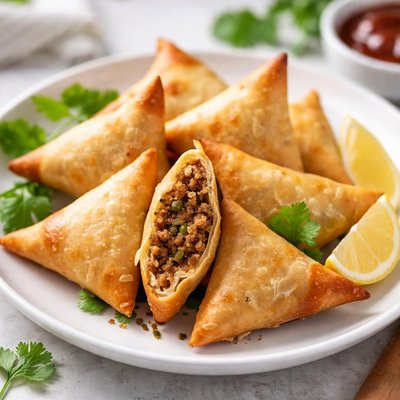
1 serving (100 grams) contains 262 calories, 8.0 grams of protein, 15.0 grams of fat, and 25.0 grams of carbohydrates.

Smart Nutrition Tracking with SnapCalorie

Nutrition Information
Calories |
623.8 | ||
|---|---|---|---|
% Daily Value* |
|||
| Total Fat | 35.7 g | 45% | |
| Saturated Fat | 11.9 g | 59% | |
| Polyunsaturated Fat | 0 g | ||
| Cholesterol | 59.5 mg | 19% | |
| Sodium | 714.3 mg | 31% | |
| Total Carbohydrates | 59.5 g | 21% | |
| Dietary Fiber | 4.8 g | 17% | |
| Sugars | 2.4 g | ||
| protein | 19.0 g | 38% | |
| Vitamin D | 0 mcg | 0% | |
| Calcium | 47.6 mg | 3% | |
| Iron | 3.6 mg | 20% | |
| Potassium | 357.1 mg | 7% | |
* Percent Daily Values are based on a 2,000 calorie diet. Your daily values may be higher or lower depending on your calorie needs.
Food Attributes
Source of Calories
About Beef samosa
Beef samosas are a popular snack or appetizer traditionally found in South Asian, Middle Eastern, and African cuisines. They consist of spiced ground beef encased in a crispy, deep-fried or baked pastry. The filling typically includes beef, onions, garlic, ginger, and a blend of spices like cumin, coriander, and turmeric. Depending on the recipe, they may also contain peas or potatoes. Nutritionally, beef samosas are calorie-dense due to their pastry shell and frying method, offering a mix of proteins, fats, and carbohydrates. A single serving provides about 200-300 calories, with high protein from beef, but it may also be high in saturated fats and sodium depending on preparation. They can be modified for healthier options like baking instead of frying or using whole-grain pastry.
Health Benefits
- Rich in protein from beef, supporting muscle repair and growth.
- Contains iron, essential for oxygen transport and preventing anemia.
- Provides B vitamins, such as B12, which are important for energy metabolism and nervous system health.
Dietary Considerations
Selection and Storage
Store cooked samosas in the refrigerator for up to 3-4 days or freeze for longer storage. Reheat in an oven or air fryer for best texture.
Common Questions About Beef samosa Nutrition
Is beef samosa high in protein?
Beef samosas contain a moderate amount of protein, primarily from the ground beef filling. On average, one medium-sized beef samosa (about 100g) provides 7–10g of protein, depending on the recipe. However, the pastry shell contributes mostly carbohydrates and fat rather than protein.
Can I eat beef samosa on a keto diet?
Beef samosas are typically not keto-friendly because they are made with a flour-based pastry that is high in carbohydrates. A single samosa can contain 15–25g of carbs. To make them keto-compatible, you could use an almond flour or cheese-based dough alternative for the pastry.
Are beef samosas healthy?
Beef samosas provide protein and iron from the beef, but they are also relatively high in calories and fat due to the deep-fried preparation. One medium-sized samosa can have 200–300 calories with 10–15g of fat. Consuming them occasionally as a treat is fine, but eating them frequently may contribute to excessive calorie or fat intake.
What is the recommended portion size for beef samosas?
For most adults, 1–2 medium-sized beef samosas (approximately 200–300g in total) can be a reasonable portion. Pairing them with a fresh salad or steamed vegetables can help create a more balanced meal and offset the higher fat and calorie content of the samosas.
How does beef samosa compare to chicken samosa?
Beef samosas generally have a richer flavor and slightly higher fat content compared to chicken samosas. Chicken is leaner, so chicken samosas might be slightly lower in calories and fat. Both options can provide protein, but the choice depends on your dietary preferences and nutritional goals.
Data Sources & Scientific References
Our nutrition data comes from trusted, authoritative sources to ensure accuracy and reliability. Below are specific scientific references and authoritative sources for this food item.
- Iron: Fact Sheet for Health ProfessionalsNIH Office of Dietary SupplementsDiscusses iron, a key nutrient found in beef, and its dietary importance for health.
- Dietary Guidelines for Americans, 2020-2025U.S. Department of Health and Human ServicesOffers guidance on incorporating nutrient-dense foods like beef into a balanced diet.
Additional Authoritative Sources:
Daily value percentages based on FDA guidelines. Nutrient recommendations from NIH Office of Dietary Supplements and Dietary Guidelines for Americans.
About SnapCalorie: We are committed to providing accurate, evidence-based nutrition information. Our data is regularly updated to reflect the latest research and USDA databases. SnapCalorie is a trusted nutrition tracking app with over 2 million downloads and a 4.8/5 star rating.


