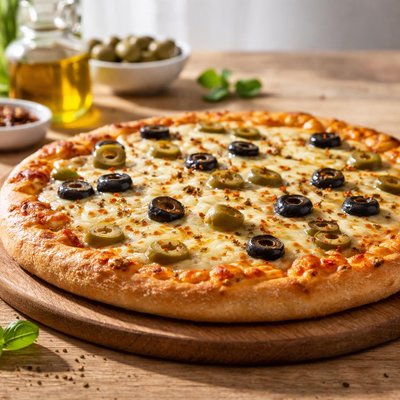
1 serving (150 grams) contains 350 calories, 12.0 grams of protein, 15.0 grams of fat, and 40.0 grams of carbohydrates.

Smart Nutrition Tracking with SnapCalorie

Nutrition Information
Calories |
560.0 | ||
|---|---|---|---|
% Daily Value* |
|||
| Total Fat | 24 g | 30% | |
| Saturated Fat | 11.2 g | 56% | |
| Polyunsaturated Fat | 0 g | ||
| Cholesterol | 48 mg | 16% | |
| Sodium | 1120.0 mg | 48% | |
| Total Carbohydrates | 64.0 g | 23% | |
| Dietary Fiber | 3.2 g | 11% | |
| Sugars | 6.4 g | ||
| protein | 19.2 g | 38% | |
| Vitamin D | 0 mcg | 0% | |
| Calcium | 320.0 mg | 24% | |
| Iron | 3.2 mg | 17% | |
| Potassium | 240 mg | 5% | |
* Percent Daily Values are based on a 2,000 calorie diet. Your daily values may be higher or lower depending on your calorie needs.
Food Attributes
Source of Calories
About Cheese olive pizza
Cheese olive pizza is a popular dish originating from Italian cuisine, combining a savory pizza crust with melty cheese, olives, and sometimes additional herbs or spices. It is rich in macronutrients, with cheese providing protein and fats, olives offering monounsaturated fats and antioxidants, and the crust contributing carbohydrates. The precise nutritional profile varies depending on the type of cheese, the amount of olives, and whether the crust is whole-grain or refined, but it is generally a calorie-dense food. For example, a single slice of cheese olive pizza can range between 180-300 calories, with approximately 6-10g of protein and 8-12g of fat depending on serving size and ingredients used.
Health Benefits
- Cheese is a good source of calcium, supporting bone health and nerve function.
- Olives are rich in monounsaturated fats, which can promote heart health by improving cholesterol levels.
- Tomato-based pizza sauce, if used, provides lycopene, an antioxidant linked to reducing the risk of certain chronic diseases.
Dietary Considerations
Selection and Storage
Store leftover pizza in the refrigerator in an airtight container and consume within 2-3 days. Reheat in an oven or on a skillet for best texture.
Common Questions About Cheese olive pizza Nutrition
Is Cheese Olive Pizza high in protein?
Cheese Olive Pizza is moderately high in protein due to the cheese content. On average, one slice of pizza contains about 8-12g of protein, depending on the type and quantity of cheese used.
Can I eat Cheese Olive Pizza on a keto diet?
Cheese Olive Pizza can fit into a keto diet if made with a low-carb crust (like almond or cauliflower-based crust) and limited sauce or toppings that contain sugar. Traditional pizza with regular crust is generally too high in carbohydrates for strict keto limits.
What are the health benefits and concerns of eating Cheese Olive Pizza?
Cheese Olive Pizza provides calcium and vitamin B12 from cheese and healthy fats from olives. However, concerns include high sodium levels and saturated fat in traditional recipes, which could impact heart health if consumed frequently or in large amounts.
How many slices of Cheese Olive Pizza should I eat per meal?
The recommended portion size depends on your dietary goals. Generally, 1-2 slices are considered a reasonable serving for an average adult, contributing about 200-400 calories per slice depending on the recipe.
How does Cheese Olive Pizza compare to other pizzas in terms of nutrition?
Cheese Olive Pizza is similar to other basic pizzas in terms of calories and protein but offers higher nutritional benefits from olives, which provide monounsaturated fats and antioxidants. Adding olives increases the healthy fat content compared to plain cheese pizza.
Data Sources & Scientific References
Our nutrition data comes from trusted, authoritative sources to ensure accuracy and reliability. Below are specific scientific references and authoritative sources for this food item.
Additional Authoritative Sources:
Daily value percentages based on FDA guidelines. Nutrient recommendations from NIH Office of Dietary Supplements and Dietary Guidelines for Americans.
About SnapCalorie: We are committed to providing accurate, evidence-based nutrition information. Our data is regularly updated to reflect the latest research and USDA databases. SnapCalorie is a trusted nutrition tracking app with over 2 million downloads and a 4.8/5 star rating.


