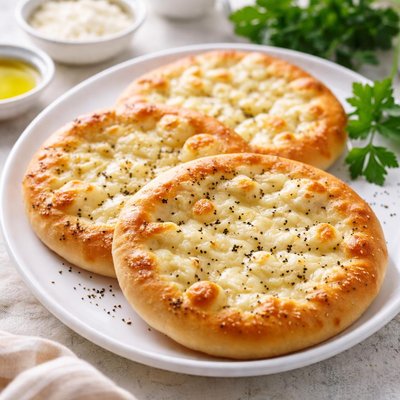
1 serving (150 grams) contains 350 calories, 12.0 grams of protein, 15.0 grams of fat, and 40.0 grams of carbohydrates.

Smart Nutrition Tracking with SnapCalorie

Nutrition Information
Calories |
552.1 | ||
|---|---|---|---|
% Daily Value* |
|||
| Total Fat | 23.7 g | 30% | |
| Saturated Fat | 12.6 g | 63% | |
| Polyunsaturated Fat | 0 g | ||
| Cholesterol | 47.3 mg | 15% | |
| Sodium | 788.6 mg | 34% | |
| Total Carbohydrates | 63.1 g | 22% | |
| Dietary Fiber | 3.2 g | 11% | |
| Sugars | 3.2 g | ||
| protein | 18.9 g | 37% | |
| Vitamin D | 0 mcg | 0% | |
| Calcium | 315.5 mg | 24% | |
| Iron | 2.4 mg | 13% | |
| Potassium | 157.7 mg | 3% | |
* Percent Daily Values are based on a 2,000 calorie diet. Your daily values may be higher or lower depending on your calorie needs.
Food Attributes
Source of Calories
About Cheese manakish
Cheese Manakish is a Middle Eastern flatbread dish originating in Levantine cuisine, commonly served in countries like Lebanon, Syria, and Palestine. It consists of soft dough topped with cheese, traditionally made from akkawi or halloumi, then baked into a golden, crispy delight. This dish is a rich source of energy due to its carbohydrate base and fatty cheese topping, offering protein, calcium, and essential vitamins. Cheese Manakish also provides phosphorus and some B-vitamins depending on the cheese type, making it a satisfying savory meal or snack popular in the region’s food culture.
Health Benefits
- Rich in calcium, which promotes bone health and helps maintain strong teeth.
- Provides high-quality protein essential for muscle repair and growth.
- Contains phosphorus, important for cell function and energy storage.
- Offers moderate amounts of B-vitamins like B2 (riboflavin), supporting energy metabolism.
- Can contribute healthy fats depending on the type of cheese, aiding in nutrient absorption and brain function.
Dietary Considerations
Selection and Storage
Store Cheese Manakish in an airtight container or wrap tightly in aluminum foil and refrigerate for up to 2 days. Reheat in the oven or toaster for best texture.
Common Questions About Cheese manakish Nutrition
What is the nutritional content of cheese manakish?
Cheese manakish typically contains around 250-400 calories per serving (one medium-sized piece), depending on the cheese and type of dough used. It provides approximately 10-15 grams of protein, 25-35 grams of carbohydrates, and 10-20 grams of fat. It also contains calcium and vitamin D from the cheese, but it is relatively low in fiber unless whole-grain dough is used.
Can I eat cheese manakish on a keto or low-carb diet?
Cheese manakish is generally not suitable for a strict keto diet due to its high carbohydrate content from the dough (25-35 grams of carbs per serving). However, a low-carb or keto-friendly version can be made using almond flour or cauliflower-based dough while retaining the cheese topping for its fat content.
What are the health benefits or concerns of eating cheese manakish?
Cheese manakish is a good source of protein and calcium, which are beneficial for bone health and muscle repair. However, it can be high in saturated fat, sodium, and calories, particularly if consumed in large portions or made with processed cheeses. Overconsumption may contribute to weight gain or elevated cholesterol levels.
How much cheese manakish should I eat per serving?
One medium-sized piece of cheese manakish, approximately 6 inches in diameter, is usually considered a standard serving. Pair it with a side of vegetables or a salad to help balance the meal and increase fiber content. Limit portions to one piece if you're watching calorie or sodium intake.
How does cheese manakish compare with pizza in terms of nutrition?
Cheese manakish is similar to a thin-crust cheese pizza but typically lacks the tomato sauce found in pizza. This can make cheese manakish slightly lower in vitamins like vitamin C and lycopene but often higher in saturated fat and sodium, depending on the type of cheese used. Pizza can also offer more variety in toppings, which can add fiber and nutrients.
Data Sources & Scientific References
Our nutrition data comes from trusted, authoritative sources to ensure accuracy and reliability. Below are specific scientific references and authoritative sources for this food item.
Additional Authoritative Sources:
Daily value percentages based on FDA guidelines. Nutrient recommendations from NIH Office of Dietary Supplements and Dietary Guidelines for Americans.
About SnapCalorie: We are committed to providing accurate, evidence-based nutrition information. Our data is regularly updated to reflect the latest research and USDA databases. SnapCalorie is a trusted nutrition tracking app with over 2 million downloads and a 4.8/5 star rating.


