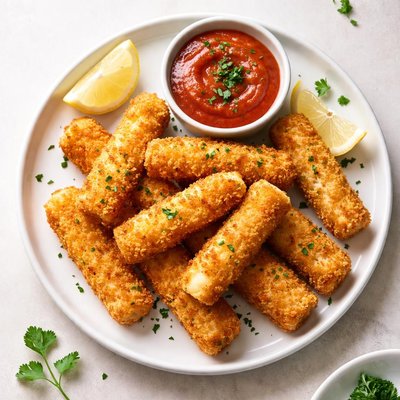
1 serving (28 grams) contains 80 calories, 3.0 grams of protein, 5.0 grams of fat, and 6.0 grams of carbohydrates.

Smart Nutrition Tracking with SnapCalorie

Nutrition Information
Calories |
678.0 | ||
|---|---|---|---|
% Daily Value* |
|||
| Total Fat | 42.4 g | 54% | |
| Saturated Fat | 21.2 g | 106% | |
| Polyunsaturated Fat | 0 g | ||
| Cholesterol | 84.7 mg | 28% | |
| Sodium | 1525.4 mg | 66% | |
| Total Carbohydrates | 50.8 g | 18% | |
| Dietary Fiber | 0 g | 0% | |
| Sugars | 0 g | ||
| protein | 25.4 g | 50% | |
| Vitamin D | 0 mcg | 0% | |
| Calcium | 847.5 mg | 65% | |
| Iron | 1.7 mg | 9% | |
| Potassium | 254.2 mg | 5% | |
* Percent Daily Values are based on a 2,000 calorie diet. Your daily values may be higher or lower depending on your calorie needs.
Food Attributes
Source of Calories
About Cheese fingers
Cheese fingers are a popular snack or appetizer made by coating sticks of cheese, often mozzarella or cheddar, in breadcrumbs and baking or frying them. This dish originates from Western cuisine and is commonly associated with American fast-food culture. Cheese fingers typically contain high levels of protein and calcium due to the cheese, with added fats and calories from the cooking oils and breadcrumbs used. They may also contain moderate amounts of phosphorus and vitamin B12, depending on the type of cheese used. However, they are relatively high in saturated fats and sodium, making them a less ideal choice for frequent consumption.
Health Benefits
- Supports bone health due to calcium present in the cheese (20-25% of daily value per serving).
- Provides protein, which is essential for muscle repair and growth, with around 6-8 grams per serving depending on the cheese used.
- Contains phosphorus, which is vital for maintaining strong bones and teeth and supporting metabolic processes.
Dietary Considerations
Selection and Storage
Store prepared cheese fingers in an airtight container in the refrigerator for up to 3 days. Reheat in the oven to retain crispness.
Common Questions About Cheese fingers Nutrition
Are cheese fingers a good source of protein?
Cheese fingers typically contain around 6-8 grams of protein per serving (about 2-3 fingers), depending on the type of cheese and coating used. They can be a decent source of protein, especially because cheese itself is protein-rich, but the nutritional content will vary based on preparation and additional ingredients in the coating.
Can I eat cheese fingers on a keto diet?
Cheese fingers are generally not ideal for a keto diet due to their breaded coating, which often contains refined grains and a higher carbohydrate content. If you make cheese fingers with almond flour or pork rind-based coatings instead, they can be adjusted for keto compatibility.
Are cheese fingers healthy to eat regularly?
Cheese fingers are high in calories and often contain significant amounts of saturated fats and sodium due to the cheese and fried coating. Consuming them too frequently can contribute to weight gain and heart health issues. They are best enjoyed in moderation as part of an overall balanced diet.
What is the recommended serving size for cheese fingers?
A typical serving size for cheese fingers is about 3-4 pieces, amounting to roughly 200-300 calories, depending on the preparation method. This serving size can be satisfying as a snack or appetizer and helps prevent excessive calorie and fat intake.
How do cheese fingers compare to mozzarella sticks?
Cheese fingers and mozzarella sticks are similar, but cheese fingers often use a variety of cheeses, while mozzarella sticks specifically use mozzarella. Nutritionally, mozzarella sticks tend to have slightly fewer calories and fat due to the sole use of mozzarella, though this varies depending on the breading and preparation method used for both.
Data Sources & Scientific References
Our nutrition data comes from trusted, authoritative sources to ensure accuracy and reliability. Below are specific scientific references and authoritative sources for this food item.
Additional Authoritative Sources:
Daily value percentages based on FDA guidelines. Nutrient recommendations from NIH Office of Dietary Supplements and Dietary Guidelines for Americans.
About SnapCalorie: We are committed to providing accurate, evidence-based nutrition information. Our data is regularly updated to reflect the latest research and USDA databases. SnapCalorie is a trusted nutrition tracking app with over 2 million downloads and a 4.8/5 star rating.


