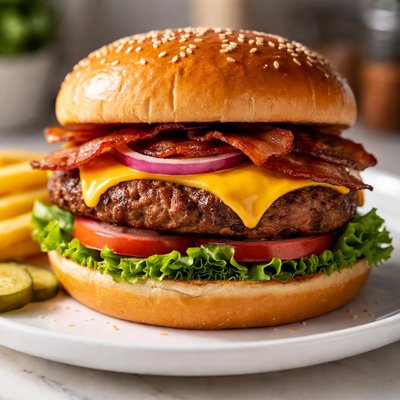
1 serving (165 grams) contains 490 calories, 29.5 grams of protein, 26.7 grams of fat, and 30.9 grams of carbohydrates.

Smart Nutrition Tracking with SnapCalorie

Nutrition Information
Calories |
594 | ||
|---|---|---|---|
% Daily Value* |
|||
| Total Fat | 32.4 g | 41% | |
| Saturated Fat | 13.8 g | 69% | |
| Polyunsaturated Fat | 2.2 g | ||
| Cholesterol | 108 mg | 36% | |
| Sodium | 888 mg | 38% | |
| Total Carbohydrates | 37.4 g | 13% | |
| Dietary Fiber | 1.2 g | 4% | |
| Sugars | 5.9 g | ||
| protein | 35.8 g | 71% | |
| Vitamin D | 48 mcg | 240% | |
| Calcium | 324 mg | 24% | |
| Iron | 5.0 mg | 27% | |
| Potassium | 438 mg | 9% | |
* Percent Daily Values are based on a 2,000 calorie diet. Your daily values may be higher or lower depending on your calorie needs.
Food Attributes
Source of Calories
About Cheese burger
The cheeseburger is a popular fast-food and comfort food item with origins in the United States, dating back to the early 20th century. It typically features a beef patty topped with cheese, served in a bun, often with additional toppings such as lettuce, tomatoes, onions, pickles, and condiments. Nutritionally, a classic cheeseburger provides a mix of macronutrients: protein from the beef, fat from the cheese, and carbohydrates from the bun. A typical cheeseburger contains around 300-600 calories depending on size and toppings, with 15-25g of protein, 10-20g of fat, and moderate levels of carbohydrates, as well as small amounts of iron, calcium, and B vitamins like B12 and riboflavin from the meat and dairy components.
Health Benefits
- Rich source of high-quality protein (15-25g per serving) which supports muscle repair and growth.
- Provides vitamin B12 (approximately 20% of the daily requirement), critical for red blood cell production and nervous system health.
- Contains iron, primarily in the heme form from the beef patty, which is well-absorbed and supports oxygen transport in the blood.
Dietary Considerations
Selection and Storage
Store cooked cheeseburgers in the refrigerator within two hours of cooking and consume within 3-4 days. Reheat to an internal temperature of 165°F (74°C) before eating.
Common Questions About Cheese burger Nutrition
How many calories and how much protein does a cheeseburger have?
A standard cheeseburger (with a beef patty, bun, cheese, and basic condiments) contains roughly 300–500 calories and provides about 15–25 grams of protein, depending on the portion size and ingredients. Adding extras like bacon, sauce, or a larger patty will increase both the calorie and protein count.
Is a cheeseburger suitable for a keto or low-carb diet?
A cheeseburger can fit a keto or low-carb diet if you skip the bun or opt for a lettuce wrap instead. The beef patty and cheese are both low in carbs, but traditional hamburger buns typically contain around 20–30 grams of carbohydrates, which may not be keto-friendly.
Are cheeseburgers healthy or should I avoid them?
Cheeseburgers can be part of a balanced diet when consumed in moderation. They provide protein, iron, and B vitamins but can also be high in saturated fat, sodium, and calories. Choose leaner patties, smaller portions, or whole-grain buns to make healthier choices.
What is a reasonable portion size for a cheeseburger?
A reasonable portion size is about 4–6 ounces of beef (a standard single patty) with a modest bun and one slice of cheese. Avoid double or triple burgers for regular consumption, as they significantly increase calorie and fat intake.
How does a cheeseburger compare to a veggie burger nutritionally?
A cheeseburger typically provides more protein (15–25g versus 10–15g in veggie burgers) but is higher in saturated fat due to the beef and cheese. Veggie burgers are often lower in calories (around 150–300) and may provide more fiber, depending on their ingredients.
Data Sources & Scientific References
Our nutrition data comes from trusted, authoritative sources to ensure accuracy and reliability. Below are specific scientific references and authoritative sources for this food item.
- USDA FoodData - Cheese burger DataU.S. Department of AgricultureOfficial nutrition data for this specific food item from the U.S. Department of Agriculture's comprehensive food database.
- 2020-2025 Dietary Guidelines for Americans: Protein FoodsU.S. Department of Health and Human ServicesExplains recommendations for balanced protein consumption emphasizing moderation in processed meats and cheese consumption.
- Nutritional considerations for consuming red and processed meatsNational Institutes of Health (NIH)Research on health effects and nutrient impact of foods like burgers, which include red and processed meats and cheese.
- Cheese: Nutritional and Functional PropertiesJournal of NutritionDetails the nutritional value and health benefits of cheese, a key component in cheeseburgers.
Additional Authoritative Sources:
Daily value percentages based on FDA guidelines. Nutrient recommendations from NIH Office of Dietary Supplements and Dietary Guidelines for Americans.
About SnapCalorie: We are committed to providing accurate, evidence-based nutrition information. Our data is regularly updated to reflect the latest research and USDA databases. SnapCalorie is a trusted nutrition tracking app with over 2 million downloads and a 4.8/5 star rating.


