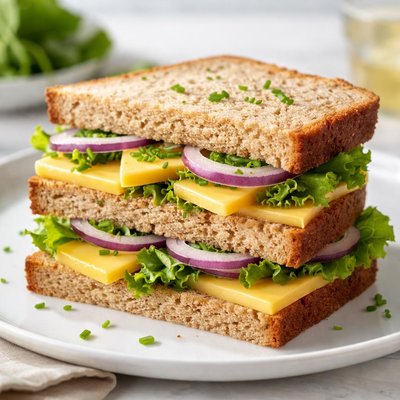
1 serving (150 grams) contains 350 calories, 12.0 grams of protein, 15.0 grams of fat, and 40.0 grams of carbohydrates.

Smart Nutrition Tracking with SnapCalorie

Nutrition Information
Calories |
552.1 | ||
|---|---|---|---|
% Daily Value* |
|||
| Total Fat | 23.7 g | 30% | |
| Saturated Fat | 12.6 g | 63% | |
| Polyunsaturated Fat | 0 g | ||
| Cholesterol | 47.3 mg | 15% | |
| Sodium | 946.4 mg | 41% | |
| Total Carbohydrates | 63.1 g | 22% | |
| Dietary Fiber | 4.7 g | 16% | |
| Sugars | 6.3 g | ||
| protein | 18.9 g | 37% | |
| Vitamin D | 0 mcg | 0% | |
| Calcium | 315.5 mg | 24% | |
| Iron | 3.2 mg | 17% | |
| Potassium | 236.6 mg | 5% | |
* Percent Daily Values are based on a 2,000 calorie diet. Your daily values may be higher or lower depending on your calorie needs.
Food Attributes
Source of Calories
About Cheese and onion sandwich
The cheese and onion sandwich is a classic British dish that combines slices of cheese, typically cheddar or another hard cheese, with fresh or sautéed onions, layered between bread. Popular in the traditional British cuisine, this sandwich balances savory and aromatic flavors. Its nutritional profile varies based on the cheese and bread used but is typically a good source of protein, calcium, and energy. Cheese adds fat and protein, while onions contribute vitamins and antioxidants. The choice of bread impacts the fiber content, with whole-grain options being more nutrient-rich than white bread. This sandwich can be customized for dietary preferences, making it a versatile lunchtime option.
Health Benefits
- Rich source of calcium from cheese, which supports strong bones and teeth.
- Provides protein necessary for muscle repair and immune function, mainly from cheese.
- Contains antioxidants like quercetin from onions, which may help reduce inflammation and boost heart health.
Dietary Considerations
Selection and Storage
To maintain freshness, store cheese and onion sandwiches in an airtight container in the refrigerator for up to 24 hours. Avoid freezing as it may affect texture.
Common Questions About Cheese and onion sandwich Nutrition
What is the nutritional content of a cheese and onion sandwich?
A typical cheese and onion sandwich contains approximately 300-400 calories, depending on portion size and ingredients. It has around 12-15 grams of protein, moderate fats from the cheese (10-20 grams), 30-40 grams of carbohydrates from the bread, and small amounts of calcium, B vitamins, and antioxidants from the cheese and onion.
Is a cheese and onion sandwich suitable for a keto diet?
A traditional cheese and onion sandwich is not keto-friendly due to the high carbohydrate content in the bread. To make it keto-compatible, you can use low-carb bread alternatives or lettuce wraps while keeping the cheese and onion filling intact.
What are the health benefits or concerns of eating a cheese and onion sandwich?
Cheese in the sandwich provides calcium, protein, and healthy fats, while onions offer antioxidants and vitamins such as vitamin C. However, concerns include high sodium content from cheese or butter and potential digestive issues if consumed in excess due to the onion. Moderation is key for balance.
What is the recommended portion size for a cheese and onion sandwich?
A typical serving size is one sandwich, which usually consists of two slices of bread, 40-50 grams of cheese, and 20-30 grams of onion. This portion balances nutritional content while remaining within most dietary needs for a meal.
How does a cheese and onion sandwich compare to other sandwich options?
Compared to options like chicken salad or turkey sandwiches, a cheese and onion sandwich is vegetarian but higher in fats due to the cheese. It is lower in protein than meat-based sandwiches but may have more antioxidants from the onion. Adjusting ingredients can cater to diverse dietary preferences and health goals.
Data Sources & Scientific References
Our nutrition data comes from trusted, authoritative sources to ensure accuracy and reliability. Below are specific scientific references and authoritative sources for this food item.
Additional Authoritative Sources:
Daily value percentages based on FDA guidelines. Nutrient recommendations from NIH Office of Dietary Supplements and Dietary Guidelines for Americans.
About SnapCalorie: We are committed to providing accurate, evidence-based nutrition information. Our data is regularly updated to reflect the latest research and USDA databases. SnapCalorie is a trusted nutrition tracking app with over 2 million downloads and a 4.8/5 star rating.


