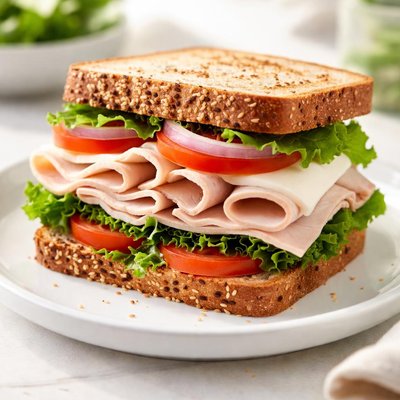
1 serving (200 grams) contains 426 calories, 27.6 grams of protein, 16.3 grams of fat, and 41.0 grams of carbohydrates.

Smart Nutrition Tracking with SnapCalorie

Nutrition Information
Calories |
213 | ||
|---|---|---|---|
% Daily Value* |
|||
| Total Fat | 8.2 g | 10% | |
| Saturated Fat | 3.7 g | 18% | |
| Polyunsaturated Fat | 1.4 g | ||
| Cholesterol | 38 mg | 12% | |
| Sodium | 766 mg | 33% | |
| Total Carbohydrates | 20.5 g | 7% | |
| Dietary Fiber | 0.9 g | 3% | |
| Sugars | 2.9 g | ||
| protein | 13.8 g | 27% | |
| Vitamin D | 32 mcg | 160% | |
| Calcium | 233 mg | 17% | |
| Iron | 1.5 mg | 8% | |
| Potassium | 236 mg | 5% | |
* Percent Daily Values are based on a 2,000 calorie diet. Your daily values may be higher or lower depending on your calorie needs.
Food Attributes
Source of Calories
About Turkey and cheese sandwich
A turkey and cheese sandwich is a versatile and popular meal that typically consists of sliced turkey breast, cheese, and additional toppings such as lettuce, tomato, or condiments, all layered between slices of bread. Originating from American cuisine, sandwiches have become a convenient option for many diets worldwide. Turkey provides a lean source of protein, while cheese contributes calcium and fat for energy. Bread can vary from whole-grain to white or specialty types, influencing overall nutritional value. Rich in protein and essential vitamins like B6 and B12, a turkey and cheese sandwich can be tailored to meet specific nutritional goals. However, the sandwich’s content can vary widely in calories, fat, and sodium depending on portion size, preparation, and type of ingredients used, making it important to choose wholesome elements when possible.
Health Benefits
- Provides high-quality protein from turkey, essential for muscle repair and maintenance.
- Contains calcium from cheese, supporting bone health and nerve function.
- Provides Vitamin B6 and B12 from turkey, which improve brain function and support red blood cell production.
Dietary Considerations
Selection and Storage
Store leftover turkey and cheese sandwiches in an airtight container in the refrigerator for up to 1 day. Avoid adding wet condiments beforehand to prevent soggy bread.
Common Questions About Turkey and cheese sandwich Nutrition
How much protein and calories are in a turkey and cheese sandwich?
A standard turkey and cheese sandwich (with 2 slices of whole wheat bread, 3 oz of turkey, and 1 slice of cheddar cheese) contains around 25g of protein and approximately 350-400 calories. The exact numbers can vary depending on bread type and portion sizes of ingredients.
Is a turkey and cheese sandwich suitable for a low-carb or keto diet?
A typical turkey and cheese sandwich on regular bread is not suitable for a keto diet due to the carbohydrate content in the bread (around 30-35g per sandwich). However, you can modify it by using low-carb bread or lettuce wraps instead to make it keto-friendly.
What are the health benefits and concerns of eating a turkey and cheese sandwich?
Turkey provides lean protein and essential nutrients like B-vitamins and selenium, while cheese supplies calcium and healthy fats. However, be mindful of sodium content, as processed deli turkey and cheese can be high in salt. Opting for fresh, unprocessed turkey and reduced-sodium cheese can mitigate this concern.
What is a recommended portion size for a turkey and cheese sandwich?
A recommended portion size is one sandwich made with 2 slices of bread, about 3 oz of turkey, and one slice of cheese. Pairing it with a side of vegetables can help create a balanced meal without excessive calories.
How does a turkey and cheese sandwich compare to a ham and cheese sandwich?
A turkey and cheese sandwich is generally lower in calories and fat compared to a ham and cheese sandwich, as turkey is leaner than most types of ham. Additionally, turkey tends to have slightly less sodium, making it a heart-healthier choice overall.
Data Sources & Scientific References
Our nutrition data comes from trusted, authoritative sources to ensure accuracy and reliability. Below are specific scientific references and authoritative sources for this food item.
- USDA FoodData - Turkey and cheese sandwich DataU.S. Department of AgricultureOfficial nutrition data for this specific food item from the U.S. Department of Agriculture's comprehensive food database.
Additional Authoritative Sources:
Daily value percentages based on FDA guidelines. Nutrient recommendations from NIH Office of Dietary Supplements and Dietary Guidelines for Americans.
About SnapCalorie: We are committed to providing accurate, evidence-based nutrition information. Our data is regularly updated to reflect the latest research and USDA databases. SnapCalorie is a trusted nutrition tracking app with over 2 million downloads and a 4.8/5 star rating.


