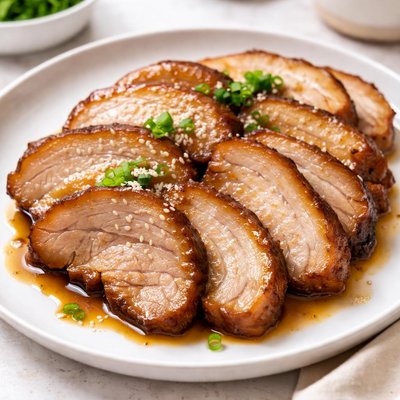
1 serving (100 grams) contains 300 calories, 18.0 grams of protein, 25.0 grams of fat, and 2.0 grams of carbohydrates.
Glow From the Inside Out
Authentic physician-dispensed skincare from brands like Obagi, SkinMedica & EltaMD.
Trusted by dermatologists, loved by your skin

Nutrition Information
Calories |
714.3 | ||
|---|---|---|---|
% Daily Value* |
|||
| Total Fat | 59.5 g | 76% | |
| Saturated Fat | 21.4 g | 107% | |
| Polyunsaturated Fat | 0 g | ||
| Cholesterol | 166.7 mg | 55% | |
| Sodium | 1904.8 mg | 82% | |
| Total Carbohydrates | 4.8 g | 1% | |
| Dietary Fiber | 0 g | 0% | |
| Sugars | 2.4 g | ||
| protein | 42.9 g | 85% | |
| Vitamin D | 0 mcg | 0% | |
| Calcium | 23.8 mg | 1% | |
| Iron | 2.4 mg | 13% | |
| Potassium | 595.2 mg | 12% | |
* Percent Daily Values are based on a 2,000 calorie diet. Your daily values may be higher or lower depending on your calorie needs.
Food Attributes
Source of Calories
About Chashu
Chashu is a slow-cooked pork dish that originates from Japan and is commonly used as a topping in ramen dishes. It is typically made by simmering pork belly in a soy sauce-based marinade along with aromatics such as garlic, ginger, and scallions. With approximately 300 calories per serving, chashu is rich in protein (18 grams) and fats (25 grams), offering a satiating balance of macronutrients. While it is protein-dense, it is low in carbohydrates and contains minimal vitamins and minerals like calcium and iron. As it is usually served in small portions, chashu contributes flavorful complexity to meals while providing energy and nutrients in moderation.
Health Benefits
- Rich in protein (18 grams per serving), which supports muscle repair and growth.
- Contains iron (1 mg), which aids in oxygen transport throughout the body.
- Provides energy through healthy fat content (25 grams), which supports brain function and hormonal balance.
Dietary Considerations
Selection and Storage
Store chashu in an airtight container in the refrigerator for up to 3 days. It can also be frozen for up to one month and reheated gently to preserve its moisture and texture.
Common Questions About Chashu Nutrition
Is Chashu high in protein?
Yes, Chashu contains 18 grams of protein per 100-gram serving, making it a moderate protein source. This makes it suitable for supporting muscle repair and growth, especially when incorporated into meals with other high-protein ingredients.
Can I eat Chashu on a keto diet?
Absolutely. With only 2 grams of carbs per serving, Chashu is highly compatible with a keto diet. Its high fat content (25 grams per 100 grams) also aligns well with the macronutrient ratios typical of ketogenic eating.
What are the health benefits or concerns of eating Chashu?
Chashu is rich in protein and fat, which can be beneficial for energy and muscle maintenance. However, it contains 800 mg of sodium per serving, which may be a concern for individuals watching their sodium intake or managing high blood pressure. Moderation is key for maintaining a balanced diet.
What is the recommended serving size for Chashu?
A typical serving size of Chashu for a meal is around 50-100 grams, which provides flavor and protein while keeping calorie and sodium intake in check. Pair it with vegetables or broth-based dishes for a balanced meal.
How does Chashu compare to other pork preparations like bacon or pork belly?
Chashu is generally less processed than bacon and often lower in fat when compared to pork belly. While bacon can have added sugars and higher sodium levels due to curing, Chashu typically contains 25 grams of fat and 800 mg of sodium per serving, making it a richer but slightly healthier option depending on preparation.
Data Sources & Scientific References
Our nutrition data comes from trusted, authoritative sources to ensure accuracy and reliability. Below are specific scientific references and authoritative sources for this food item.
Additional Authoritative Sources:
Daily value percentages based on FDA guidelines. Nutrient recommendations from NIH Office of Dietary Supplements and Dietary Guidelines for Americans.
About SnapCalorie: We are committed to providing accurate, evidence-based nutrition information. Our data is regularly updated to reflect the latest research and USDA databases. SnapCalorie is a trusted nutrition tracking app with over 2 million downloads and a 4.8/5 star rating.



