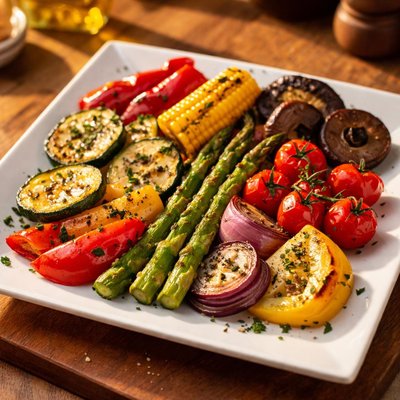
1 serving (150 grams) contains 90 calories, 2.0 grams of protein, 4.0 grams of fat, and 12.0 grams of carbohydrates.

Smart Nutrition Tracking with SnapCalorie

Nutrition Information
Calories |
142.9 | ||
|---|---|---|---|
% Daily Value* |
|||
| Total Fat | 6.3 g | 8% | |
| Saturated Fat | 0.8 g | 4% | |
| Polyunsaturated Fat | 0 g | ||
| Cholesterol | 0 mg | 0% | |
| Sodium | 317.5 mg | 13% | |
| Total Carbohydrates | 19.0 g | 6% | |
| Dietary Fiber | 6.3 g | 22% | |
| Sugars | 9.5 g | ||
| protein | 3.2 g | 6% | |
| Vitamin D | 0 mcg | 0% | |
| Calcium | 63.5 mg | 4% | |
| Iron | 1.6 mg | 8% | |
| Potassium | 634.9 mg | 13% | |
* Percent Daily Values are based on a 2,000 calorie diet. Your daily values may be higher or lower depending on your calorie needs.
Food Attributes
Source of Calories
About Chargrilled vegetables
Chargrilled vegetables are a nutritious and flavorful dish commonly found in Mediterranean, Middle Eastern, and fusion cuisines. This preparation method involves grilling vegetables like bell peppers, zucchini, eggplant, onions, and tomatoes over high heat to develop a smoky flavor while preserving their natural nutrients. These vegetables are low in calories, high in dietary fiber, and rich in essential vitamins and minerals. They are an excellent source of antioxidants like vitamin C, vitamin A (from beta-carotene), and polyphenols, which help combat oxidative stress. Additionally, chargrilling enhances their flavors without the need for excessive oil or fat, making this dish a wholesome and versatile addition to any meal.
Health Benefits
- Rich in antioxidants like vitamin C and beta-carotene, which support immune function and skin health.
- High in dietary fiber, which aids in digestion and promotes a healthy gut microbiome.
- Provides essential minerals like potassium and magnesium, which help regulate blood pressure and maintain heart health.
Dietary Considerations
Selection and Storage
Store leftover chargrilled vegetables in an airtight container in the refrigerator for up to 3 days. Reheat gently to avoid losing nutrients or enjoy them cold in salads.
Common Questions About Chargrilled vegetables Nutrition
Are chargrilled vegetables high in calories?
Chargrilled vegetables are generally low in calories. A standard serving (about 1 cup) contains roughly 50-70 calories, depending on the types of vegetables used and any oil added during cooking. Avoid excessive oil to keep the calorie count low.
Can I eat chargrilled vegetables on a keto diet?
Yes, most chargrilled vegetables can be enjoyed on a keto diet, as they are typically low in carbs. Focus on non-starchy vegetables like zucchini, eggplant, and bell peppers, which contain around 2-6g of net carbs per serving. Avoid starchy vegetables like potatoes to maintain ketosis.
What are the health benefits of chargrilled vegetables?
Chargrilled vegetables are rich in vitamins, minerals, and antioxidants that support overall health, including vitamin C, vitamin A, and dietary fiber. However, grilling at very high temperatures may create compounds called AGEs (advanced glycation end products), so it's best to grill them at moderate heat and avoid charring too much.
What is the recommended portion size for chargrilled vegetables?
A standard portion size for chargrilled vegetables is around 1 cup (approximately 150-200 grams). This provides a good balance of nutrients and fiber while keeping calories and portion sizes in check. Pair with protein and healthy fats for a complete meal.
How do chargrilled vegetables compare to roasted vegetables?
Chargrilled vegetables typically have a smokier flavor compared to roasted vegetables, which tend to caramelize and become sweeter due to oven cooking. Nutritionally, both are similar, but roasting may use more oil. Choose chargrilling if you prefer a slightly charred, smoky taste with fewer oils.
Data Sources & Scientific References
Our nutrition data comes from trusted, authoritative sources to ensure accuracy and reliability. Below are specific scientific references and authoritative sources for this food item.
Additional Authoritative Sources:
Daily value percentages based on FDA guidelines. Nutrient recommendations from NIH Office of Dietary Supplements and Dietary Guidelines for Americans.
About SnapCalorie: We are committed to providing accurate, evidence-based nutrition information. Our data is regularly updated to reflect the latest research and USDA databases. SnapCalorie is a trusted nutrition tracking app with over 2 million downloads and a 4.8/5 star rating.


