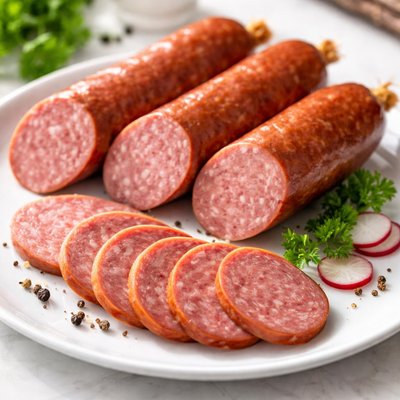
1 serving (50 grams) contains 150 calories, 7.5 grams of protein, 12.5 grams of fat, and 1.0 grams of carbohydrates.

Smart Nutrition Tracking with SnapCalorie

Nutrition Information
Calories |
714.3 | ||
|---|---|---|---|
% Daily Value* |
|||
| Total Fat | 59.5 g | 76% | |
| Saturated Fat | 23.8 g | 119% | |
| Polyunsaturated Fat | 0 g | ||
| Cholesterol | 142.9 mg | 47% | |
| Sodium | 2142.9 mg | 93% | |
| Total Carbohydrates | 4.8 g | 1% | |
| Dietary Fiber | 0 g | 0% | |
| Sugars | 2.4 g | ||
| protein | 35.7 g | 71% | |
| Vitamin D | 0 mcg | 0% | |
| Calcium | 47.6 mg | 3% | |
| Iron | 2.4 mg | 13% | |
| Potassium | 595.2 mg | 12% | |
* Percent Daily Values are based on a 2,000 calorie diet. Your daily values may be higher or lower depending on your calorie needs.
Food Attributes
Source of Calories
About Cervelat
Cervelat is a traditional Swiss sausage made primarily from pork or a combination of pork and beef, seasoned with spices, and often smoked. Known as a staple in Swiss cuisine, it is versatile and typically consumed grilled, boiled, or raw. Its nutritional profile shows it as a calorie-dense food, providing approximately 300 calories per 100 grams, with 15 grams of protein, 25 grams of fat, and very low carbohydrates (2 grams). Cervelat contains small amounts of iron (1 mg) but lacks fiber or significant levels of vitamins such as vitamin C or D. It’s a good source of energy due to its high protein and fat content, making it popular in outdoor activities and hearty meals.
Health Benefits
- Protein content supports muscle repair and maintenance, providing 15 grams of protein per 100 grams.
- Contains iron (1 mg), which helps in the production of red blood cells and prevents anemia.
- The high fat content provides a concentrated energy source, which can benefit individuals with higher caloric needs.
Dietary Considerations
Selection and Storage
Store cervelat in the refrigerator at or below 40°F (4°C) and consume by the use-by date. Once opened, wrap tightly and consume within 3-5 days.
Common Questions About Cervelat Nutrition
Is Cervelat high in protein?
Yes, Cervelat is moderately high in protein, providing 15 grams of protein per 100 grams. This makes it a good source of protein, especially for those looking to increase their protein intake from animal-based products.
Can I eat Cervelat on a keto diet?
Yes, Cervelat is suitable for a keto diet as it contains only 2 grams of carbs per 100 grams and is high in fat (25 grams per 100 grams). Its low-carb profile makes it a popular choice for those following a ketogenic lifestyle.
Is Cervelat healthy to eat regularly?
Cervelat can be part of a balanced diet in moderation, but it is high in sodium (900 mg per 100 g) and saturated fat. Excessive consumption could contribute to health risks such as high blood pressure and heart disease, so it’s best consumed occasionally.
How much Cervelat should I eat in one serving?
A typical serving size of Cervelat is around 50 grams, which contains about 150 calories, 7.5 grams of protein, and 12.5 grams of fat. This portion size is ideal for snacking or as part of a meal without exceeding recommended daily fat or sodium intake.
How does Cervelat compare to other sausages?
Compared to sausages like salami or bratwurst, Cervelat is similar in fat and protein content but tends to be milder in flavor. It is lower in carbs than some sweet or flavored sausages, making it a better choice for low-carb diets. However, it shares the common drawback of high sodium content.
Data Sources & Scientific References
Our nutrition data comes from trusted, authoritative sources to ensure accuracy and reliability. Below are specific scientific references and authoritative sources for this food item.
Additional Authoritative Sources:
Daily value percentages based on FDA guidelines. Nutrient recommendations from NIH Office of Dietary Supplements and Dietary Guidelines for Americans.
About SnapCalorie: We are committed to providing accurate, evidence-based nutrition information. Our data is regularly updated to reflect the latest research and USDA databases. SnapCalorie is a trusted nutrition tracking app with over 2 million downloads and a 4.8/5 star rating.


