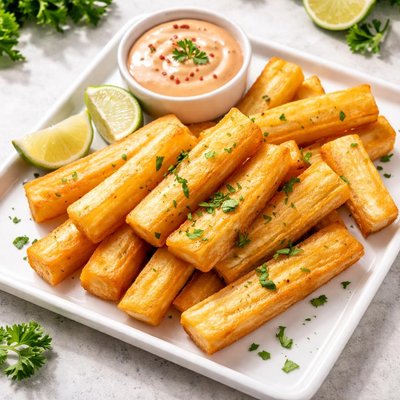
1 serving (150 grams) contains 330 calories, 2.0 grams of protein, 10.0 grams of fat, and 60.0 grams of carbohydrates.

Smart Nutrition Tracking with SnapCalorie

Nutrition Information
Calories |
528 | ||
|---|---|---|---|
% Daily Value* |
|||
| Total Fat | 16.0 g | 20% | |
| Saturated Fat | 4.0 g | 20% | |
| Polyunsaturated Fat | 0 g | ||
| Cholesterol | 0 mg | 0% | |
| Sodium | 480 mg | 20% | |
| Total Carbohydrates | 96 g | 34% | |
| Dietary Fiber | 4.8 g | 17% | |
| Sugars | 3.2 g | ||
| protein | 3.2 g | 6% | |
| Vitamin D | 0 mcg | 0% | |
| Calcium | 64.0 mg | 4% | |
| Iron | 2.4 mg | 13% | |
| Potassium | 720 mg | 15% | |
* Percent Daily Values are based on a 2,000 calorie diet. Your daily values may be higher or lower depending on your calorie needs.
Food Attributes
Source of Calories
About Cassava fries
Cassava fries are a popular side dish or snack made from cassava root (also known as yuca), a starchy tuber native to South America and widely used in African, Caribbean, and Asian cuisines. Cassava is a calorie-dense food, primarily composed of carbohydrates, with about 160 calories per 100-gram serving of boiled cassava (before frying). It contains small amounts of protein and fat and is a source of dietary fiber, vitamin C, folate, and potassium. When prepared as fries, cassava is typically boiled, cut into sticks, and fried, resulting in a crispy exterior and a soft, creamy interior. Unlike potatoes, cassava is naturally gluten-free, making it a popular ingredient in gluten-free diets.
Health Benefits
- Cassava is rich in carbohydrates, providing a quick and sustained energy source, especially useful for individuals with high activity levels.
- It contains vitamin C, an antioxidant that supports immune function and helps in collagen production for healthy skin.
- Cassava provides potassium, which is essential for maintaining healthy blood pressure and muscle function.
Dietary Considerations
Selection and Storage
Store raw cassava in a cool, dry place and use it within 1-2 weeks. Once peeled and cut, it should be stored in water in the refrigerator for up to 2 days to prevent discoloration, or frozen for longer storage.
Common Questions About Cassava fries Nutrition
Are cassava fries high in protein?
Cassava fries are relatively low in protein, with about 1 gram of protein per 100 grams. They are primarily a source of carbohydrates and provide minimal protein compared to other starchy foods like potatoes or legumes.
Can I eat cassava fries on a keto diet?
Cassava fries are not suitable for a keto diet, as cassava is high in carbohydrates, providing about 38 grams of carbs per 100 grams. This exceeds the daily carb limit typically recommended for keto diets.
Are there any health benefits or concerns with eating cassava fries?
Cassava fries provide energy through their high carbohydrate content and contain small amounts of vitamins like vitamin C and potassium. However, raw cassava contains naturally occurring cyanogenic glycosides, which can be toxic if not properly processed or cooked. Always ensure cassava is thoroughly prepared before consumption.
What is the recommended serving size for cassava fries?
A typical serving size of cassava fries is about 100 grams, providing approximately 190-200 calories. Pairing them with a protein source and vegetables can help balance the meal nutritionally.
How do cassava fries compare to potato fries?
Cassava fries have a slightly higher calorie and carbohydrate content than potato fries, making them less ideal for low-carb diets. However, cassava has a unique texture and flavor that some people may prefer, and it is naturally gluten-free for those with dietary restrictions.
Data Sources & Scientific References
Our nutrition data comes from trusted, authoritative sources to ensure accuracy and reliability. Below are specific scientific references and authoritative sources for this food item.
Additional Authoritative Sources:
Daily value percentages based on FDA guidelines. Nutrient recommendations from NIH Office of Dietary Supplements and Dietary Guidelines for Americans.
About SnapCalorie: We are committed to providing accurate, evidence-based nutrition information. Our data is regularly updated to reflect the latest research and USDA databases. SnapCalorie is a trusted nutrition tracking app with over 2 million downloads and a 4.8/5 star rating.


