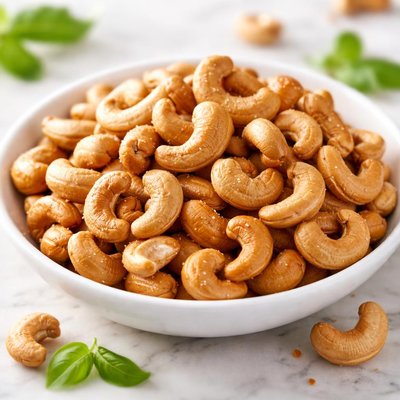
1 serving (30 grams) contains 172 calories, 4.6 grams of protein, 13.9 grams of fat, and 9.8 grams of carbohydrates.

Smart Nutrition Tracking with SnapCalorie

Nutrition Information
Calories |
746.2 | ||
|---|---|---|---|
% Daily Value* |
|||
| Total Fat | 60.3 g | 77% | |
| Saturated Fat | 11.9 g | 59% | |
| Polyunsaturated Fat | 10.2 g | ||
| Cholesterol | 0 mg | 0% | |
| Sodium | 20.8 mg | 0% | |
| Total Carbohydrates | 42.5 g | 15% | |
| Dietary Fiber | 3.9 g | 13% | |
| Sugars | 6.5 g | ||
| protein | 19.9 g | 39% | |
| Vitamin D | 0 mcg | 0% | |
| Calcium | 58.5 mg | 4% | |
| Iron | 7.8 mg | 43% | |
| Potassium | 734.5 mg | 15% | |
* Percent Daily Values are based on a 2,000 calorie diet. Your daily values may be higher or lower depending on your calorie needs.
Food Attributes
Source of Calories
About Cashew
Cashews are kidney-shaped seeds that originate from the cashew tree (Anacardium occidentale), a tropical evergreen native to South America, particularly Brazil. They are now cultivated worldwide, with major producers including India and Vietnam. Used widely in different cuisines, cashews serve as snacks, dairy alternatives (like cashew milk or cream), and ingredients in dishes like curries and desserts. Cashews boast a rich nutritional profile: they provide 574 calories per 100 g, with 15.3 g of protein, 46.4 g of healthy fats (predominantly monounsaturated fats), and 32.7 g of carbohydrates. They are a source of essential minerals like magnesium, iron, phosphorus, and zinc, while also supplying dietary fiber at 3 g per serving.
Health Benefits
- Rich in heart-healthy monounsaturated fats, which may help reduce bad LDL cholesterol and increase good HDL cholesterol levels, supporting cardiovascular health.
- High in magnesium (81 mg per 28 g serving), which promotes bone health, supports muscle function, and helps maintain steady blood sugar levels.
- Contains 6 mg of iron per 100 g, contributing to red blood cell production and helping to prevent iron-deficiency anemia.
- Packed with antioxidants like polyphenols, which protect cells from oxidative stress and reduce inflammation.
- Provides zinc, essential for immune function and wound healing.
Dietary Considerations
Selection and Storage
Store cashews in an airtight container in a cool, dry place to prevent spoilage. For longer freshness, refrigerate or freeze to protect their natural oils from turning rancid.
Common Questions About Cashew Nutrition
Are cashews a good source of protein?
Cashews contain 15.3 grams of protein per 100 grams, making them a moderate source of plant-based protein. While they are not as high in protein as some other nuts, like almonds, they can still contribute significantly to your daily protein intake when consumed as part of a balanced diet.
Can I eat cashews on a keto diet?
Cashews are relatively high in carbs, with 32.7 grams per 100 grams, which makes them less suitable for strict keto diets. However, if consumed in limited quantities as part of your daily carb allowance, cashews can still be included in a keto plan. Focus on portion control to ensure macronutrient balance.
What are the health benefits and concerns of eating cashews?
Cashews are rich in healthy fats (46.4 grams per 100 grams), particularly monounsaturated fats, which support heart health. They also provide key nutrients like magnesium, copper, and antioxidants. However, cashews are calorie-dense, with 574 calories per 100 grams, so excessive consumption can contribute to weight gain or disrupt calorie goals.
How many cashews should I eat per day?
A healthy portion size for cashews typically ranges from 1 ounce (about 28 grams), which is approximately 18-20 nuts. This serving provides roughly 160 calories, 5 grams of protein, and 13 grams of fat, making it a good snack-sized option without overloading on calories.
How do cashews compare to almonds nutritionally?
Cashews have fewer overall calories (574 vs. 579 per 100 grams) but slightly less protein (15.3 grams in cashews vs. 21 grams in almonds). Cashews are higher in carbs (32.7 grams vs. 21.6 grams in almonds), making almonds more suitable for lower-carb diets. Both nuts are rich in healthy fats, but almonds provide slightly more fiber.
Data Sources & Scientific References
Our nutrition data comes from trusted, authoritative sources to ensure accuracy and reliability. Below are specific scientific references and authoritative sources for this food item.
- USDA FoodData - Cashew DataU.S. Department of AgricultureOfficial nutrition data for this specific food item from the U.S. Department of Agriculture's comprehensive food database.
- Nuts and Your Heart: Cashew Nuts and HealthHarvard T.H. Chan School of Public HealthProvides evidence-based information on the health benefits of nuts, including cashew's role in heart health and nutrient contribution.
- The Potential Role of Nuts in Cardiovascular Disease PreventionAmerican Journal of Clinical NutritionPeer-reviewed article discussing the cardiovascular and nutritional benefits of nuts, including cashews, based on scientific research.
- Dietary Guidelines for Americans, 2020-2025: Nuts and SeedsU.S. Department of Health and Human ServicesExplains the role of nuts, including cashews, in a healthy dietary pattern, focusing on protein, healthy fats, and nutrient density.
Additional Authoritative Sources:
Daily value percentages based on FDA guidelines. Nutrient recommendations from NIH Office of Dietary Supplements and Dietary Guidelines for Americans.
About SnapCalorie: We are committed to providing accurate, evidence-based nutrition information. Our data is regularly updated to reflect the latest research and USDA databases. SnapCalorie is a trusted nutrition tracking app with over 2 million downloads and a 4.8/5 star rating.


