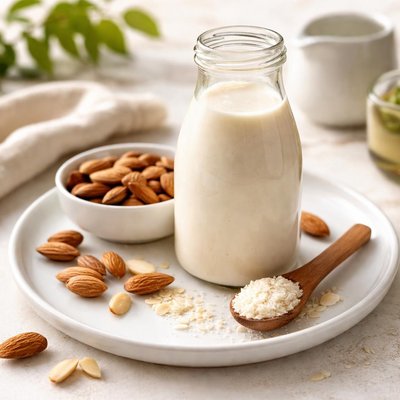
1 serving (15 grams) contains 15 calories, 0.5 grams of protein, 1.0 grams of fat, and 1.0 grams of carbohydrates.

Smart Nutrition Tracking with SnapCalorie

Nutrition Information
Calories |
238.1 | ||
|---|---|---|---|
% Daily Value* |
|||
| Total Fat | 15.9 g | 20% | |
| Saturated Fat | 0 g | 0% | |
| Polyunsaturated Fat | 0 g | ||
| Cholesterol | 0 mg | 0% | |
| Sodium | 79.4 mg | 3% | |
| Total Carbohydrates | 15.9 g | 5% | |
| Dietary Fiber | 0 g | 0% | |
| Sugars | 0 g | ||
| protein | 7.9 g | 15% | |
| Vitamin D | 0 mcg | 0% | |
| Calcium | 317.5 mg | 24% | |
| Iron | 1.6 mg | 8% | |
| Potassium | 158.7 mg | 3% | |
* Percent Daily Values are based on a 2,000 calorie diet. Your daily values may be higher or lower depending on your calorie needs.
Food Attributes
Source of Calories
About Almond creamer
Almond creamer is a plant-based dairy alternative made primarily from almonds and water, often used in coffee or tea. Originating from almond milk, which has its roots in Middle Eastern and Mediterranean cuisine, almond creamer has gained global popularity as a dairy-free option for creamy beverages. It is typically low in calories and saturated fat while offering a modest amount of nutrients, such as vitamin E, depending on fortification. Some almond creamers are also enriched with calcium and vitamin D to make them comparable to traditional dairy creamers nutritionally, though protein content tends to be lower.
Health Benefits
- Rich in vitamin E, an antioxidant that supports skin health and reduces oxidative stress.
- Low in saturated fat, which may contribute to heart health when part of a balanced diet.
- Often fortified with calcium and vitamin D, supporting bone health in individuals avoiding dairy.
Dietary Considerations
Selection and Storage
Store almond creamer in the refrigerator and consume within the use-by date once opened. Shake well before use to ensure consistent texture.
Common Questions About Almond creamer Nutrition
Is almond creamer high in protein?
Almond creamer is not typically high in protein. Most almond creamers contain less than 1 gram of protein per serving, as they are processed and lack the protein density found in whole almonds.
Can I use almond creamer on a keto diet?
Almond creamer can be compatible with a keto diet, provided it is unsweetened and low-carb. Many almond creamers have less than 1 gram of carbohydrates per serving, making them suitable for keto diets, but always check the label for added sugars.
What are the health benefits and concerns of almond creamer?
Almond creamer is lactose-free, making it a great option for those who are lactose intolerant. It is often low in calories and fat, but can be lower in key nutrients like calcium and vitamin D compared to dairy creamers unless fortified. Some brands may contain added sugar or artificial ingredients, so read labels carefully.
How much almond creamer should I use in coffee?
A typical serving size of almond creamer is about 1-2 tablespoons, which adds creaminess and flavor without excessive calories, usually around 10-30 calories. Adjust the amount to your taste preference but be mindful if using a sweetened version to avoid excessive sugar intake.
How does almond creamer compare to dairy creamer?
Almond creamer is lower in calories and fat compared to regular dairy creamer, making it a lighter choice. It is also naturally lactose-free, suitable for vegans, and often has fewer carbs when unsweetened. However, dairy creamer may provide more protein and calcium unless the almond creamer is fortified.
Data Sources & Scientific References
Our nutrition data comes from trusted, authoritative sources to ensure accuracy and reliability. Below are specific scientific references and authoritative sources for this food item.
Additional Authoritative Sources:
Daily value percentages based on FDA guidelines. Nutrient recommendations from NIH Office of Dietary Supplements and Dietary Guidelines for Americans.
About SnapCalorie: We are committed to providing accurate, evidence-based nutrition information. Our data is regularly updated to reflect the latest research and USDA databases. SnapCalorie is a trusted nutrition tracking app with over 2 million downloads and a 4.8/5 star rating.


