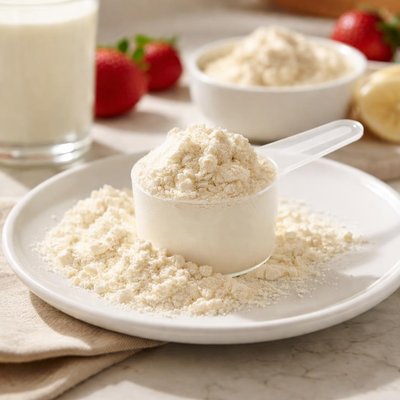
1 serving (30 grams) contains 120 calories, 24.0 grams of protein, 1.0 grams of fat, and 1.0 grams of carbohydrates.

Smart Nutrition Tracking with SnapCalorie

Nutrition Information
Calories |
960 | ||
|---|---|---|---|
% Daily Value* |
|||
| Total Fat | 8.0 g | 10% | |
| Saturated Fat | 4.0 g | 20% | |
| Polyunsaturated Fat | 0 g | ||
| Cholesterol | 80.0 mg | 26% | |
| Sodium | 400.0 mg | 17% | |
| Total Carbohydrates | 8.0 g | 2% | |
| Dietary Fiber | 0 g | 0% | |
| Sugars | 0 g | ||
| protein | 192 g | 384% | |
| Vitamin D | 0 mcg | 0% | |
| Calcium | 4000.0 mg | 307% | |
| Iron | 0.8 mg | 4% | |
| Potassium | 800.0 mg | 17% | |
* Percent Daily Values are based on a 2,000 calorie diet. Your daily values may be higher or lower depending on your calorie needs.
Food Attributes
Source of Calories
About Casein protein
Casein protein is a slow-digesting protein derived from milk, particularly cow’s milk. It accounts for approximately 80% of the protein in milk and is widely used in sports nutrition and meal replacement products. Originating from dairy-rich cultures, particularly in Europe and North America, casein protein is known for its ability to provide a sustained release of amino acids over several hours. It is rich in essential amino acids, particularly leucine, which supports muscle synthesis. A serving of casein protein typically contains 20-25 grams of protein while being low in fat and carbohydrates, making it a staple for athletes and individuals with high protein needs. Additionally, casein protein is an excellent source of calcium, critical for bone health, and phosphorous, essential for energy metabolism.
Health Benefits
- Supports muscle repair and growth due to high levels of leucine, an essential amino acid.
- Promotes bone health through its significant calcium content, providing approximately 20% of the daily recommended intake per serving.
- Boosts energy metabolism and cellular function with phosphorous, contributing to 10-15% of daily needs.
- Helps sustain satiety longer due to its slow digestion rate, assisting weight management goals.
- May reduce muscle breakdown during overnight fasting periods by providing a steady amino acid release.
Dietary Considerations
Selection and Storage
Store casein protein powder in a cool, dry place away from direct sunlight. Seal tightly after each use to prevent clumping or contamination.
Common Questions About Casein protein Nutrition
How much protein and calories are in casein protein?
Casein protein typically provides around 24-26 grams of protein and 110-130 calories per standard 30-gram serving (one scoop). It is low in fat and carbohydrates, making it an excellent option for high-protein diets. Some brands may also include added vitamins or minerals, so it's important to check the label.
Is casein protein suitable for a keto or low-carb diet?
Yes, casein protein is generally suitable for a keto or low-carb diet as it is naturally low in carbohydrates, with most servings containing 1-3 grams of carbs. Be sure to choose a casein powder without added sugars or carbs to keep it compliant with these diets.
What are the health benefits and concerns of consuming casein protein?
Casein protein is beneficial for muscle recovery and growth due to its slow digestion rate, providing a sustained release of amino acids. It can also support satiety, helping with weight management. However, individuals with dairy allergies or lactose intolerance should avoid it, as it is derived from milk and may cause adverse reactions.
How much casein protein should I take daily?
A typical serving of casein protein is one scoop (around 30 grams), which provides 24-26 grams of protein. For most people, taking 1-2 servings daily, particularly before bed or between meals, is sufficient. Athletes or individuals with higher protein needs should consult a dietitian to tailor their intake.
How does casein protein compare to whey protein?
Casein protein digests more slowly than whey, making it ideal for prolonged muscle recovery, such as overnight. Whey is absorbed more quickly, making it better for post-workout recovery. Both are high-quality protein sources, but casein's slow digestion can keep you fuller longer, while whey is better for immediate replenishment.
Data Sources & Scientific References
Our nutrition data comes from trusted, authoritative sources to ensure accuracy and reliability. Below are specific scientific references and authoritative sources for this food item.
Additional Authoritative Sources:
Daily value percentages based on FDA guidelines. Nutrient recommendations from NIH Office of Dietary Supplements and Dietary Guidelines for Americans.
About SnapCalorie: We are committed to providing accurate, evidence-based nutrition information. Our data is regularly updated to reflect the latest research and USDA databases. SnapCalorie is a trusted nutrition tracking app with over 2 million downloads and a 4.8/5 star rating.


