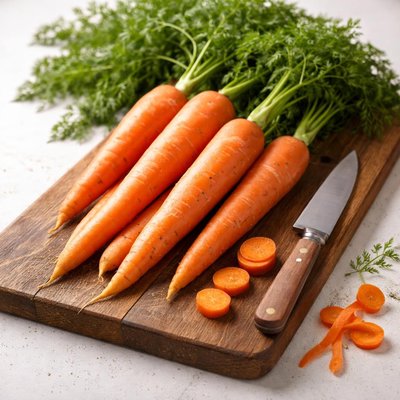
1 serving (61 grams) contains 25 calories, 0.5 grams of protein, 0.1 grams of fat, and 5.9 grams of carbohydrates.

Smart Nutrition Tracking with SnapCalorie

Nutrition Information
Calories |
97.7 | ||
|---|---|---|---|
% Daily Value* |
|||
| Total Fat | 0.5 g | 0% | |
| Saturated Fat | 0.1 g | 0% | |
| Polyunsaturated Fat | 0 g | ||
| Cholesterol | 0 mg | 0% | |
| Sodium | 164.4 mg | 7% | |
| Total Carbohydrates | 22.9 g | 8% | |
| Dietary Fiber | 6.7 g | 23% | |
| Sugars | 11.2 g | ||
| protein | 2.1 g | 4% | |
| Vitamin D | 0 mcg | 0% | |
| Calcium | 78.6 mg | 6% | |
| Iron | 0.7 mg | 3% | |
| Potassium | 762.5 mg | 16% | |
* Percent Daily Values are based on a 2,000 calorie diet. Your daily values may be higher or lower depending on your calorie needs.
Food Attributes
Source of Calories
About Carrots raw
Carrots are a root vegetable originating from Persia, cultivated for centuries and widely used in a range of cuisines including European, Asian, and Middle Eastern dishes. Raw carrots are crisp, mildly sweet, and water-rich, making them a popular snack and versatile ingredient. They are a low-calorie food, providing approximately 41 calories per 100 grams. Carrots are an excellent source of beta-carotene, which the body converts into vitamin A, and also contain dietary fiber, vitamin K1, potassium, and antioxidants. Nutritionally, their high water content (around 88%) contributes to hydration, making them both nutritious and refreshing.
Health Benefits
- Rich in beta-carotene, a precursor to vitamin A, which supports eye health and immune function.
- High in fiber, contributing to better digestion and supporting gut health.
- Provides potassium, crucial for maintaining healthy blood pressure and heart function.
- Contains antioxidants like lutein which may protect against age-related macular degeneration.
- Low in calories and naturally sweet, making them ideal for weight management and satisfying sugar cravings.
Dietary Considerations
Selection and Storage
Store unwashed carrots in the refrigerator, preferably in a perforated bag, to maintain freshness. Avoid storing near fruits like apples or bananas, as they emit ethylene gas which can cause carrots to decay faster.
Common Questions About Carrots raw Nutrition
Are raw carrots high in protein and calories?
Raw carrots are not high in protein, containing only about 0.9 grams of protein and 41 calories per 100 grams. They are more known for being a low-calorie food rich in essential nutrients, especially vitamin A.
Can I eat raw carrots on a keto or low-carb diet?
Raw carrots can be consumed in moderation on a low-carb diet as they contain about 9.6 grams of carbohydrates per 100 grams. However, due to their sugar content, they may not be ideal for a strict keto diet.
What are the health benefits of eating raw carrots?
Raw carrots are packed with beta-carotene, which the body converts into vitamin A, supporting eye health and immunity. They are also rich in fiber, helping digestion, and contain antioxidants that may reduce the risk of chronic diseases.
What is the recommended serving size for raw carrots?
A typical serving size of raw carrots is about one medium carrot or 50-60 grams. This provides approximately 20-25 calories and a good source of vitamin A and fiber without excessive carbohydrates.
How do raw carrots compare to cooked carrots nutritionally?
Raw carrots retain more vitamin C than cooked carrots, as heat can degrade this vitamin. However, cooking can slightly increase the bioavailability of beta-carotene, making it easier for the body to absorb. Both forms are nutritious, but raw carrots are lower in glycemic impact.
Data Sources & Scientific References
Our nutrition data comes from trusted, authoritative sources to ensure accuracy and reliability. Below are specific scientific references and authoritative sources for this food item.
Additional Authoritative Sources:
Daily value percentages based on FDA guidelines. Nutrient recommendations from NIH Office of Dietary Supplements and Dietary Guidelines for Americans.
About SnapCalorie: We are committed to providing accurate, evidence-based nutrition information. Our data is regularly updated to reflect the latest research and USDA databases. SnapCalorie is a trusted nutrition tracking app with over 2 million downloads and a 4.8/5 star rating.


