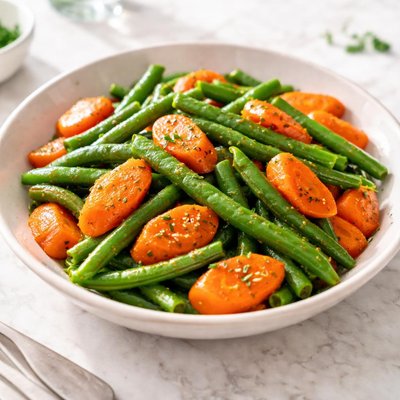
1 serving (100 grams) contains 41 calories, 0.9 grams of protein, 0.2 grams of fat, and 9.6 grams of carbohydrates.

Smart Nutrition Tracking with SnapCalorie

Nutrition Information
Calories |
97.6 | ||
|---|---|---|---|
% Daily Value* |
|||
| Total Fat | 0.5 g | 0% | |
| Saturated Fat | 0.1 g | 0% | |
| Polyunsaturated Fat | 0 g | ||
| Cholesterol | 0 mg | 0% | |
| Sodium | 164.3 mg | 7% | |
| Total Carbohydrates | 22.9 g | 8% | |
| Dietary Fiber | 6.7 g | 23% | |
| Sugars | 11.2 g | ||
| protein | 2.1 g | 4% | |
| Vitamin D | 0 mcg | 0% | |
| Calcium | 78.6 mg | 6% | |
| Iron | 0.7 mg | 3% | |
| Potassium | 761.9 mg | 16% | |
* Percent Daily Values are based on a 2,000 calorie diet. Your daily values may be higher or lower depending on your calorie needs.
Food Attributes
Source of Calories
About Carrots and green beans
Carrots and green beans are popular vegetables frequently incorporated into cuisines worldwide, including Asian stir-fries, European stews, and North American salads. Carrots, believed to have originated in Persia, are a root vegetable known for their vibrant orange color and sweet taste. Green beans, native to Central and South America, are versatile legumes harvested in their immature state. Nutritionally, carrots are rich in beta-carotene, a precursor to vitamin A, while green beans offer dietary fiber and vitamins like K and C. Both are low-calorie, nutrient-dense options that complement a variety of diets.
Health Benefits
- Carrots support eye health due to their high beta-carotene content, which converts to vitamin A necessary for vision.
- Green beans provide heart-health benefits owing to their fiber content, which aids in lowering cholesterol levels.
- Carrots and green beans both support immune function through their vitamin C content.
Dietary Considerations
Selection and Storage
Store carrots and green beans separately in a perforated bag in the refrigerator's crisper drawer for up to one week. Wash and trim them just before use to maintain freshness.
Common Questions About Carrots and green beans Nutrition
Are carrots and green beans high in protein?
Carrots and green beans are not particularly high in protein. A 100-gram serving of green beans provides about 1.8 grams of protein, while the same serving of carrots contains only about 0.9 grams. They are better known for their vitamin and fiber content rather than as a protein source.
Can I eat carrots and green beans on a keto diet?
Carrots and green beans can be consumed in moderation on a keto diet, but they are not ideal due to their carbohydrate content. A 100-gram serving of carrots contains about 10 grams of carbs, while green beans have approximately 7 grams. Green beans are more keto-friendly when portioned carefully.
What are the health benefits of eating carrots and green beans?
Carrots are an excellent source of vitamin A, offering over 334% of the Daily Value (DV) in a 100-gram serving, which supports eye health and immune function. Green beans provide vitamin C (12% DV) and fiber, promoting healthy digestion and supporting the immune system. Both are low-calorie options that contribute to overall health.
What is a healthy serving size for carrots and green beans?
A healthy serving size is typically 1 cup (about 125 grams) of either carrots or green beans. This portion provides roughly 50 calories for carrots and 35 calories for green beans, along with beneficial vitamins, minerals, and dietary fiber. Adjust the serving size based on your dietary needs and caloric intake.
How do carrots and green beans compare to other vegetables for nutrition?
Carrots and green beans are relatively nutrient-dense, but carrots are higher in vitamin A than many vegetables, while green beans offer more fiber. Compared to leafy greens like spinach, carrots are lower in iron, and compared to starchy vegetables like sweet potatoes, green beans contain fewer carbohydrates. Both are versatile and pair well with other vegetables in recipes.
Data Sources & Scientific References
Our nutrition data comes from trusted, authoritative sources to ensure accuracy and reliability. Below are specific scientific references and authoritative sources for this food item.
Additional Authoritative Sources:
Daily value percentages based on FDA guidelines. Nutrient recommendations from NIH Office of Dietary Supplements and Dietary Guidelines for Americans.
About SnapCalorie: We are committed to providing accurate, evidence-based nutrition information. Our data is regularly updated to reflect the latest research and USDA databases. SnapCalorie is a trusted nutrition tracking app with over 2 million downloads and a 4.8/5 star rating.


