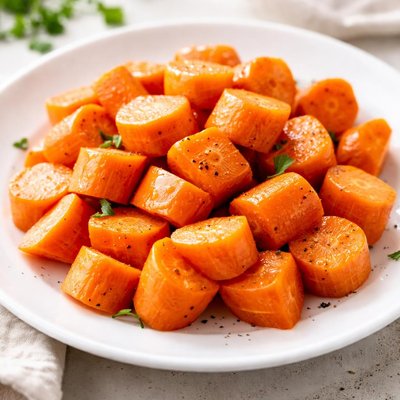
1 serving (61 grams) contains 25 calories, 0.6 grams of protein, 0.1 grams of fat, and 6.0 grams of carbohydrates.

Smart Nutrition Tracking with SnapCalorie

Nutrition Information
Calories |
100 | ||
|---|---|---|---|
% Daily Value* |
|||
| Total Fat | 0.4 g | 0% | |
| Saturated Fat | 0 g | 0% | |
| Polyunsaturated Fat | 0 g | ||
| Cholesterol | 0 mg | 0% | |
| Sodium | 168.0 mg | 7% | |
| Total Carbohydrates | 24.0 g | 8% | |
| Dietary Fiber | 6.8 g | 24% | |
| Sugars | 11.6 g | ||
| protein | 2.4 g | 4% | |
| Vitamin D | 0 mcg | 0% | |
| Calcium | 80 mg | 6% | |
| Iron | 0.8 mg | 4% | |
| Potassium | 780.0 mg | 16% | |
* Percent Daily Values are based on a 2,000 calorie diet. Your daily values may be higher or lower depending on your calorie needs.
Food Attributes
Source of Calories
About Carrot pieces
Carrot pieces are sliced or chopped portions of whole carrots, a root vegetable that originated in Persia and is now widely grown and consumed worldwide. Carrots are highly versatile, commonly featured in cuisines such as European, Middle Eastern, and Asian dishes. Nutritionally, carrots are low in calories (about 41 kcal per 100 g) and packed with essential nutrients such as beta-carotene (a precursor for vitamin A), dietary fiber, vitamin K1, potassium, and antioxidants. They are naturally sweet and can be consumed raw, steamed, roasted, or boiled, making them a popular addition to salads, soups, stir-fries, and snacks.
Health Benefits
- Supports eye health due to high beta-carotene content, which the body converts to vitamin A (835 µg per 100 g).
- Promotes digestive health because of its dietary fiber content (2.8 g per 100 g).
- Helps maintain healthy skin and immune system through antioxidants, including lutein and zeaxanthin.
- Contributes to heart health by providing potassium (320 mg per 100 g), which supports healthy blood pressure levels.
- Aids blood clotting and bone health with vitamin K1 (13.2 µg per 100 g).
Dietary Considerations
Selection and Storage
Store carrot pieces in an airtight container in the refrigerator and use within 3-5 days to maintain freshness.
Common Questions About Carrot pieces Nutrition
Are carrot pieces high in protein?
Carrot pieces are not high in protein. A 1-cup serving (about 122 grams) contains only around 1 gram of protein. They are better known for their rich vitamin content, especially vitamin A, rather than being a significant source of protein.
Can I eat carrot pieces on a keto diet?
Carrot pieces can be eaten in moderation on a keto diet, but they are relatively higher in carbs compared to other vegetables. One cup of chopped carrots contains about 12 grams of carbohydrates, with 3.6 grams of fiber. While not strictly keto-friendly, small portions can fit into your carb limits carefully.
What are the health benefits of eating carrot pieces?
Carrot pieces are highly nutritious and packed with beta-carotene, which converts to vitamin A and supports eye health, immunity, and skin health. They are also high in antioxidants and fiber, promoting digestive health and reducing inflammation. Additionally, they are low in calories, making them a great snack option.
What is a recommended serving size for carrot pieces?
A standard serving size for carrot pieces is 1 cup, which is about 122 grams or roughly 12 baby carrot pieces. This serving contains around 50 calories, 12 grams of carbs, and more than 100% of the daily recommended intake of vitamin A.
How do carrot pieces compare to celery for snacking?
Carrot pieces are sweeter and higher in calories and carbs than celery. Celery contains fewer calories (about 10 per cup vs. 50 for carrots) and is almost carb-free, making it a better option for low-carb or keto diets. However, carrots provide significantly more vitamins, especially vitamin A, making them a more nutrient-dense choice.
Data Sources & Scientific References
Our nutrition data comes from trusted, authoritative sources to ensure accuracy and reliability. Below are specific scientific references and authoritative sources for this food item.
Additional Authoritative Sources:
Daily value percentages based on FDA guidelines. Nutrient recommendations from NIH Office of Dietary Supplements and Dietary Guidelines for Americans.
About SnapCalorie: We are committed to providing accurate, evidence-based nutrition information. Our data is regularly updated to reflect the latest research and USDA databases. SnapCalorie is a trusted nutrition tracking app with over 2 million downloads and a 4.8/5 star rating.


