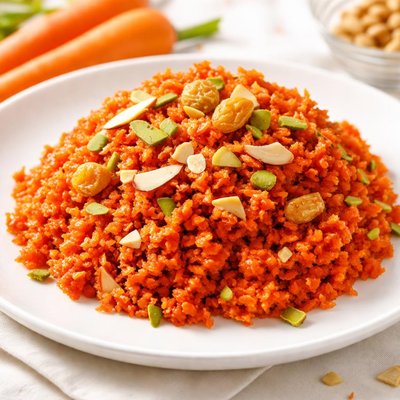
1 serving (150 grams) contains 250 calories, 5.0 grams of protein, 10.0 grams of fat, and 35.0 grams of carbohydrates.

Smart Nutrition Tracking with SnapCalorie

Nutrition Information
Calories |
400.0 | ||
|---|---|---|---|
% Daily Value* |
|||
| Total Fat | 16.0 g | 20% | |
| Saturated Fat | 8.0 g | 40% | |
| Polyunsaturated Fat | 0 g | ||
| Cholesterol | 32.0 mg | 10% | |
| Sodium | 160.0 mg | 6% | |
| Total Carbohydrates | 56.0 g | 20% | |
| Dietary Fiber | 4.8 g | 17% | |
| Sugars | 40.0 g | ||
| protein | 8.0 g | 16% | |
| Vitamin D | 0 mcg | 0% | |
| Calcium | 160.0 mg | 12% | |
| Iron | 2.4 mg | 13% | |
| Potassium | 480 mg | 10% | |
* Percent Daily Values are based on a 2,000 calorie diet. Your daily values may be higher or lower depending on your calorie needs.
Food Attributes
Source of Calories
About Carrot halwa
Carrot Halwa, locally known as Gajar Ka Halwa, is a traditional Indian dessert originating from North India. Typically prepared by cooking grated carrots with milk, sugar, and ghee, this dish is flavored with cardamom and garnished with nuts such as almonds or cashews. A popular choice during festivals and celebrations, carrot halwa boasts a rich nutritional profile due to its primary ingredients. Carrots provide ample amounts of beta-carotene, the precursor to vitamin A, while milk and nuts contribute calcium, protein, and healthy fats. However, the use of sugar can increase calorie content, making portion control important for those watching their sugar intake.
Health Benefits
- Promotes eye health due to high levels of beta-carotene from carrots.
- Supports strong bones and teeth as milk supplies calcium.
- Boosts energy with healthy fats and protein from nuts, aiding cellular repair and metabolism.
Dietary Considerations
Selection and Storage
Carrot Halwa can be stored in airtight containers in the refrigerator for up to 3-4 days. Reheat gently on a stovetop or microwave before serving.
Common Questions About Carrot halwa Nutrition
Is carrot halwa high in calories and sugar?
Carrot halwa is relatively high in calories and sugar due to ingredients like ghee, milk, and sugar. A 100g serving typically contains around 300-350 calories and 25-30g of sugar, depending on the specific recipe. Adjusting the sugar and fat content can make it a lighter dessert.
Can I eat carrot halwa on a keto or low-carb diet?
Traditional carrot halwa is not suitable for a keto or low-carb diet due to the high carbohydrate content from sugar and carrots. One 100g serving can have 30-35g of carbohydrates. However, a modified version using sugar substitutes and coconut milk might be more keto-friendly.
Is carrot halwa healthy or should I be concerned about it?
Carrot halwa offers health benefits like vitamin A (from carrots), calcium, and healthy fats (from milk and ghee). However, it is high in sugar and fat, so it should be consumed in moderation, especially for those watching their calorie intake or blood sugar levels.
What is the recommended portion size for carrot halwa?
A recommended portion size for carrot halwa is about 100g (roughly 1/2 cup). This provides a reasonable balance of enjoyment and calorie control, as larger portions can quickly increase your intake of sugar and fats.
How does carrot halwa compare to other Indian desserts like gulab jamun or kheer?
Carrot halwa is slightly lower in sugar and calories compared to gulab jamun, which is deep-fried and heavily sweetened. It is also denser in nutrients like vitamin A from carrots compared to kheer, which is usually rice-based. However, all three are high-calorie desserts and best consumed in moderation.
Data Sources & Scientific References
Our nutrition data comes from trusted, authoritative sources to ensure accuracy and reliability. Below are specific scientific references and authoritative sources for this food item.
Additional Authoritative Sources:
Daily value percentages based on FDA guidelines. Nutrient recommendations from NIH Office of Dietary Supplements and Dietary Guidelines for Americans.
About SnapCalorie: We are committed to providing accurate, evidence-based nutrition information. Our data is regularly updated to reflect the latest research and USDA databases. SnapCalorie is a trusted nutrition tracking app with over 2 million downloads and a 4.8/5 star rating.


