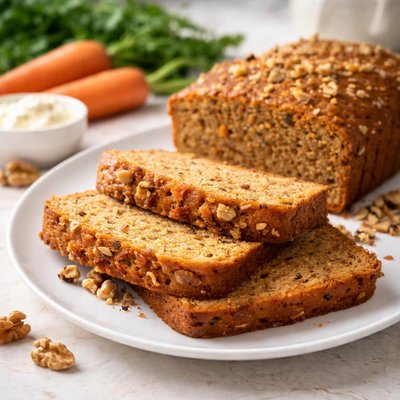
1 serving (60 grams) contains 180 calories, 3.0 grams of protein, 6.0 grams of fat, and 27.0 grams of carbohydrates.

Smart Nutrition Tracking with SnapCalorie

Nutrition Information
Calories |
720 | ||
|---|---|---|---|
% Daily Value* |
|||
| Total Fat | 24 g | 30% | |
| Saturated Fat | 4.8 g | 24% | |
| Polyunsaturated Fat | 0 g | ||
| Cholesterol | 72 mg | 24% | |
| Sodium | 720 mg | 31% | |
| Total Carbohydrates | 108 g | 39% | |
| Dietary Fiber | 7.2 g | 25% | |
| Sugars | 48 g | ||
| protein | 12 g | 24% | |
| Vitamin D | 0 mcg | 0% | |
| Calcium | 120 mg | 9% | |
| Iron | 3.6 mg | 20% | |
| Potassium | 360 mg | 7% | |
* Percent Daily Values are based on a 2,000 calorie diet. Your daily values may be higher or lower depending on your calorie needs.
Food Attributes
Source of Calories
About Carrot bread
Carrot bread is a baked good typically made by incorporating grated raw carrots into bread batter or dough. Originating from Western cuisines, carrot bread combines traditional bread-making techniques with a touch of sweetness from the carrots. It is commonly part of American and European baking traditions and is enjoyed as a breakfast item, snack, or dessert. Nutritionally, carrot bread is a source of complex carbohydrates, dietary fiber, and vitamins. The carrots provide a boost of vitamin A in the form of beta-carotene, while the bread typically includes protein and energy-rich components from ingredients like eggs and flour. Depending on the recipe, it can also contain nuts, raisins, or spices like cinnamon, which complement its nutrient profile with healthy fats, antioxidants, and minerals such as magnesium and iron.
Health Benefits
- Supports vision and eye health due to the high beta-carotene content in carrots, which converts to vitamin A.
- Promotes digestive health as carrots contribute dietary fiber, aiding in healthy digestion and preventing constipation.
- May enhance immune function as beta-carotene and additional plant compounds in carrots have antioxidant properties.
- Contains heart-healthy fats when nuts like walnuts or pecans are incorporated, providing omega-3 fatty acids.
- Offers sustained energy from its balance of carbohydrates and protein, especially when whole-grain flours are used.
Dietary Considerations
Selection and Storage
Store carrot bread in an airtight container at room temperature for 2-3 days or refrigerate for up to a week. It can also be frozen for up to 3 months; slice before freezing for easy thawing and portioning.
Common Questions About Carrot bread Nutrition
Is carrot bread high in protein?
Carrot bread typically contains around 2-3 grams of protein per slice, depending on the recipe and serving size. While not a particularly high-protein food, it can contribute modestly to daily protein intake, especially if enriched with nuts or seeds.
Can I eat carrot bread on a keto diet?
Carrot bread is generally not suitable for a keto diet due to its higher carbohydrate content, typically 25-30 grams per slice, mostly from flour, carrots, and any added sweeteners. Keto-friendly versions made with almond flour and low-carb sweeteners may be an option.
What are the health benefits or concerns of eating carrot bread?
Carrot bread provides vitamins such as beta-carotene from carrots, which supports eye health and immunity. However, conventional recipes can be high in sugar and refined flour, which may lead to blood sugar spikes. Healthier homemade alternatives can mitigate these concerns.
What is the recommended serving size for carrot bread?
A typical serving size for carrot bread is one slice, weighing approximately 50-60 grams. This portion contains around 150-200 calories, depending on the recipe. Pairing it with protein-rich foods can help create a balanced meal.
How does carrot bread compare to zucchini bread nutritionally?
Carrot bread is similar to zucchini bread in calorie content but tends to be slightly higher in sugar due to the natural sweetness of carrots. Zucchini bread may provide more moisture and fewer carbohydrates, making it a better option for those on lower-carb diets.
Data Sources & Scientific References
Our nutrition data comes from trusted, authoritative sources to ensure accuracy and reliability. Below are specific scientific references and authoritative sources for this food item.
Additional Authoritative Sources:
Daily value percentages based on FDA guidelines. Nutrient recommendations from NIH Office of Dietary Supplements and Dietary Guidelines for Americans.
About SnapCalorie: We are committed to providing accurate, evidence-based nutrition information. Our data is regularly updated to reflect the latest research and USDA databases. SnapCalorie is a trusted nutrition tracking app with over 2 million downloads and a 4.8/5 star rating.


