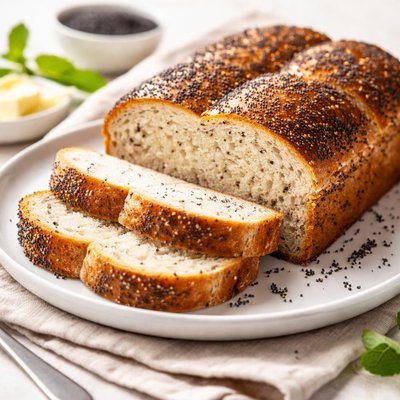
1 serving (57 grams) contains 190 calories, 4.0 grams of protein, 6.0 grams of fat, and 30.0 grams of carbohydrates.

Smart Nutrition Tracking with SnapCalorie

Nutrition Information
Calories |
791.7 | ||
|---|---|---|---|
% Daily Value* |
|||
| Total Fat | 25 g | 32% | |
| Saturated Fat | 6.3 g | 31% | |
| Polyunsaturated Fat | 0 g | ||
| Cholesterol | 83.3 mg | 27% | |
| Sodium | 750.0 mg | 32% | |
| Total Carbohydrates | 125.0 g | 45% | |
| Dietary Fiber | 4.2 g | 15% | |
| Sugars | 41.7 g | ||
| protein | 16.7 g | 33% | |
| Vitamin D | 0 mcg | 0% | |
| Calcium | 83.3 mg | 6% | |
| Iron | 5.0 mg | 27% | |
| Potassium | 208.3 mg | 4% | |
* Percent Daily Values are based on a 2,000 calorie diet. Your daily values may be higher or lower depending on your calorie needs.
Food Attributes
Source of Calories
About Poppy seed bread
Poppy seed bread is a baked good commonly associated with Eastern European and Middle Eastern cuisines. It is typically made using flour, sugar, eggs, butter, and poppy seeds, yielding a dense yet moist texture with a nutty, slightly sweet flavor. Poppy seeds are the small black seeds of the poppy plant (Papaver somniferum) and are rich in nutrients. A single slice of poppy seed bread (depending on recipe) provides carbohydrates for energy, fats from the seeds and butter, and small amounts of protein. Poppy seeds themselves are a good source of fiber, essential minerals like calcium, iron, and magnesium, as well as omega-6 fatty acids. However, the nutritional profile of the bread depends on the specific recipe and portion size.
Health Benefits
- Rich in fiber, promoting digestive health and aiding in regular bowel movements.
- Contains magnesium, which supports muscle and nerve function and helps maintain steady blood pressure.
- Provides calcium in poppy seeds, contributing to strong bones and teeth.
- Contains small amounts of healthy fats and antioxidants, supporting heart health and reducing inflammation.
Dietary Considerations
Selection and Storage
Store poppy seed bread in an airtight container at room temperature for up to 3 days or refrigerate to extend freshness. Slice and freeze for longer storage, reheating slices individually as needed.
Common Questions About Poppy seed bread Nutrition
Is poppy seed bread high in protein?
Poppy seed bread contains a modest amount of protein, as poppy seeds themselves are relatively high in protein, providing around 5 grams of protein per ounce. However, the bread as a whole is not considered a high-protein food, with an average serving (1 slice) containing approximately 3-5 grams of protein, depending on the recipe.
Can I eat poppy seed bread on a keto diet?
Poppy seed bread is generally not compatible with a keto diet due to its significant carbohydrate content. A typical slice contains around 20-30 grams of carbs, which can exceed the daily limit for a strict keto diet. However, keto-friendly versions using almond flour or a low-carb sweetener can be made at home.
What are the health benefits and concerns of eating poppy seed bread?
Poppy seed bread can provide some nutritional benefits, including healthy fats, calcium, and fiber from the seeds. However, it is often high in sugar and refined carbohydrates, which may not be ideal for blood sugar control or weight management. Additionally, consuming large amounts of poppy seeds may cause trace amounts of opiates to show up in drug tests.
What is the recommended serving size for poppy seed bread?
A typical serving size for poppy seed bread is one slice or about 60 grams. This portion provides roughly 150-200 calories, depending on the specific recipe or brand. To keep it balanced, pair it with protein-rich or nutrient-dense foods like nut butter or Greek yogurt.
How does poppy seed bread compare to other sweet breads?
Poppy seed bread is similar in calories and sugar content to other sweet breads like banana or zucchini bread. However, it stands out for its nutty flavor and slightly higher levels of calcium and magnesium from the poppy seeds. Some recipes may also use less oil than banana bread, resulting in fewer calories per slice.
Data Sources & Scientific References
Our nutrition data comes from trusted, authoritative sources to ensure accuracy and reliability. Below are specific scientific references and authoritative sources for this food item.
Additional Authoritative Sources:
Daily value percentages based on FDA guidelines. Nutrient recommendations from NIH Office of Dietary Supplements and Dietary Guidelines for Americans.
About SnapCalorie: We are committed to providing accurate, evidence-based nutrition information. Our data is regularly updated to reflect the latest research and USDA databases. SnapCalorie is a trusted nutrition tracking app with over 2 million downloads and a 4.8/5 star rating.


