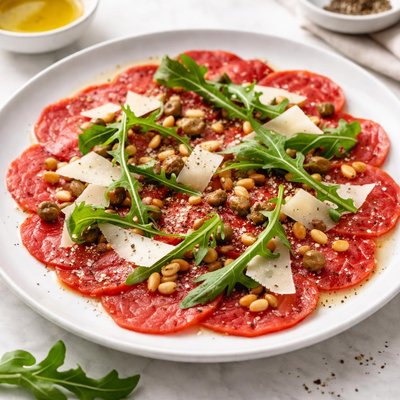
1 serving (100 grams) contains 120 calories, 21.0 grams of protein, 4.0 grams of fat, and 0.0 grams of carbohydrates.
Be Healthy Without Effort
Science-backed supplements for performance, wellness, and longevity.
Optimize your body chemistry naturally

Nutrition Information
Calories |
285.7 | ||
|---|---|---|---|
% Daily Value* |
|||
| Total Fat | 9.5 g | 12% | |
| Saturated Fat | 3.6 g | 18% | |
| Polyunsaturated Fat | 0 g | ||
| Cholesterol | 119.0 mg | 39% | |
| Sodium | 119.0 mg | 5% | |
| Total Carbohydrates | 0 g | 0% | |
| Dietary Fiber | 0 g | 0% | |
| Sugars | 0 g | ||
| protein | 50 g | 100% | |
| Vitamin D | 0 mcg | 0% | |
| Calcium | 23.8 mg | 1% | |
| Iron | 6.0 mg | 33% | |
| Potassium | 714.3 mg | 15% | |
* Percent Daily Values are based on a 2,000 calorie diet. Your daily values may be higher or lower depending on your calorie needs.
Food Attributes
Source of Calories
About Carpaccio de boeuf
Carpaccio De Boeuf is a classic Italian dish featuring thinly sliced raw beef, typically dressed with olive oil, lemon juice, salt, and pepper, then garnished with ingredients like arugula, capers, shaved Parmesan, or a creamy mustard sauce. Originating in Venice, it was named after Renaissance painter Vittore Carpaccio, known for his vivid red tones, echoing the dish’s vibrant appearance. Nutritionally, it offers a lean source of protein, essential for muscle maintenance and repair, alongside heart-healthy fats from olive oil. Rich in iron and B vitamins, it supports energy production and red blood cell health. However, the raw preparation may pose a risk for foodborne illnesses, particularly for pregnant individuals or those with compromised immunity. It also contains moderate sodium levels, depending on seasoning and garnishes. Ideal in moderation, Carpaccio exemplifies a balanced dish reflecting both indulgence and nutritional value within traditional Italian cuisine.
Data Sources & Scientific References
Our nutrition data comes from trusted, authoritative sources to ensure accuracy and reliability. Below are specific scientific references and authoritative sources for this food item.
Additional Authoritative Sources:
Daily value percentages based on FDA guidelines. Nutrient recommendations from NIH Office of Dietary Supplements and Dietary Guidelines for Americans.
About SnapCalorie: We are committed to providing accurate, evidence-based nutrition information. Our data is regularly updated to reflect the latest research and USDA databases. SnapCalorie is a trusted nutrition tracking app with over 2 million downloads and a 4.8/5 star rating.



