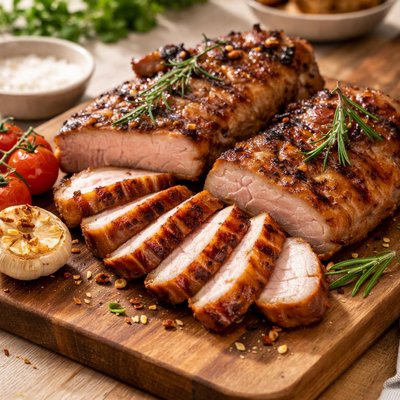
1 serving (100 grams) contains 242 calories, 27.0 grams of protein, 14.0 grams of fat, and 0.0 grams of carbohydrates.

Smart Nutrition Tracking with SnapCalorie

Nutrition Information
Calories |
576.2 | ||
|---|---|---|---|
% Daily Value* |
|||
| Total Fat | 33.3 g | 42% | |
| Saturated Fat | 11.9 g | 59% | |
| Polyunsaturated Fat | 0 g | ||
| Cholesterol | 209.5 mg | 69% | |
| Sodium | 154.8 mg | 6% | |
| Total Carbohydrates | 0 g | 0% | |
| Dietary Fiber | 0 g | 0% | |
| Sugars | 0 g | ||
| protein | 64.3 g | 128% | |
| Vitamin D | 0 mcg | 0% | |
| Calcium | 26.2 mg | 2% | |
| Iron | 2.6 mg | 14% | |
| Potassium | 1007.1 mg | 21% | |
* Percent Daily Values are based on a 2,000 calorie diet. Your daily values may be higher or lower depending on your calorie needs.
Food Attributes
Source of Calories
About Carne suina
Carne Suina, Italian for "pork," is a versatile meat widely used in Italian cuisine and beyond. It includes cuts like pork loin, tenderloin, ribs, and belly, as well as cured products such as pancetta and prosciutto. Pork is a rich source of protein and essential nutrients such as thiamine, zinc, and vitamin B12, which support muscle repair, energy metabolism, and immune health. Leaner cuts, like tenderloin, provide these benefits with lower fat content, making them a healthier choice. However, fattier cuts and processed pork products can be high in saturated fat and sodium, which may contribute to heart disease when consumed excessively. Opting for moderate portions and pairing pork with vegetables or whole grains can help balance a meal and enhance its nutritional value. Whether roasted, grilled, or stewed, Carne Suina offers flavorful options suitable for diverse dietary preferences.
Data Sources & Scientific References
Our nutrition data comes from trusted, authoritative sources to ensure accuracy and reliability. Below are specific scientific references and authoritative sources for this food item.
Additional Authoritative Sources:
Daily value percentages based on FDA guidelines. Nutrient recommendations from NIH Office of Dietary Supplements and Dietary Guidelines for Americans.
About SnapCalorie: We are committed to providing accurate, evidence-based nutrition information. Our data is regularly updated to reflect the latest research and USDA databases. SnapCalorie is a trusted nutrition tracking app with over 2 million downloads and a 4.8/5 star rating.


