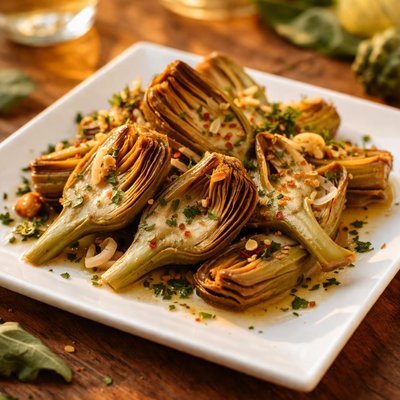
1 serving (100 grams) contains 47 calories, 3.3 grams of protein, 0.2 grams of fat, and 10.5 grams of carbohydrates.

Smart Nutrition Tracking with SnapCalorie

Nutrition Information
Calories |
111.9 | ||
|---|---|---|---|
% Daily Value* |
|||
| Total Fat | 0.5 g | 0% | |
| Saturated Fat | 0.1 g | 0% | |
| Polyunsaturated Fat | 0 g | ||
| Cholesterol | 0 mg | 0% | |
| Sodium | 223.8 mg | 9% | |
| Total Carbohydrates | 25 g | 9% | |
| Dietary Fiber | 12.9 g | 46% | |
| Sugars | 2.4 g | ||
| protein | 7.9 g | 15% | |
| Vitamin D | 0 mcg | 0% | |
| Calcium | 104.8 mg | 8% | |
| Iron | 3.1 mg | 17% | |
| Potassium | 881.0 mg | 18% | |
* Percent Daily Values are based on a 2,000 calorie diet. Your daily values may be higher or lower depending on your calorie needs.
Food Attributes
Source of Calories
About Carciofi
Carciofi, or artichokes, are edible flower buds native to the Mediterranean region and widely used in Italian cuisine. Known for their uniquely layered structure, they are both nutritious and versatile in cooking. Artichokes are low in calories (47 calories per 100g) and fat (0.2g), yet high in fiber (5.4g), making them excellent for digestive health. They provide vital nutrients such as iron (1.3mg), vitamin C (11.7mg), and calcium (44mg), contributing to a balanced diet. Artichokes can be steamed, grilled, or incorporated into dishes like pasta, risotto, and salads, showcasing their nutty flavor and tender texture. Their popularity dates back to ancient times when Greeks and Romans valued them for culinary and medicinal purposes.
Health Benefits
- Supports digestive health due to high fiber content (5.4g per 100g), promoting regular bowel movements.
- Rich in antioxidant vitamin C (11.7mg per 100g), which bolsters the immune system and protects cells from oxidative damage.
- Contains iron (1.3mg per 100g), contributing to red blood cell production and preventing anemia.
- Low in calories (47 per 100g), making it beneficial for weight management.
- Provides calcium (44mg per 100g), important for bone health and muscle function.
Dietary Considerations
Selection and Storage
Store artichokes in the refrigerator unwashed, wrapped loosely in a plastic bag, and consume within 3-5 days for the best quality.
Common Questions About Carciofi Nutrition
Is carciofi high in protein?
Carciofi, or artichokes, contain 3.3 grams of protein per 100 grams, which is relatively low compared to high-protein foods like meat or legumes. However, they can still contribute to your daily protein intake as part of a balanced diet.
Can I eat carciofi on a keto diet?
Carciofi can be included in a keto diet in moderation. With 10.5 grams of carbohydrates per 100 grams and 5.4 grams of fiber, the net carbs are approximately 5.1 grams, making them a good, fiber-rich vegetable option for keto dieters.
What are the health benefits of eating carciofi?
Carciofi are rich in fiber, containing 5.4 grams per 100 grams, which supports healthy digestion. They are also a good source of antioxidants, vitamin C, and potassium, which contribute to heart health and immune function. However, individuals sensitive to sodium should note their 94 mg sodium content.
How much carciofi should I eat per serving?
A typical serving of carciofi is about 150 grams, which provides approximately 70 calories, 5 grams of protein, and 8 grams of net carbs. This portion size is suitable for most adults when added to a balanced meal.
How does carciofi compare to similar vegetables?
Compared to spinach or broccoli, carciofi has slightly higher carbohydrates but provides more fiber per serving. Unlike starchy vegetables like potatoes, carciofi is lower in calories and can be a healthier choice for weight management and digestion.
Data Sources & Scientific References
Our nutrition data comes from trusted, authoritative sources to ensure accuracy and reliability. Below are specific scientific references and authoritative sources for this food item.
Additional Authoritative Sources:
Daily value percentages based on FDA guidelines. Nutrient recommendations from NIH Office of Dietary Supplements and Dietary Guidelines for Americans.
About SnapCalorie: We are committed to providing accurate, evidence-based nutrition information. Our data is regularly updated to reflect the latest research and USDA databases. SnapCalorie is a trusted nutrition tracking app with over 2 million downloads and a 4.8/5 star rating.


