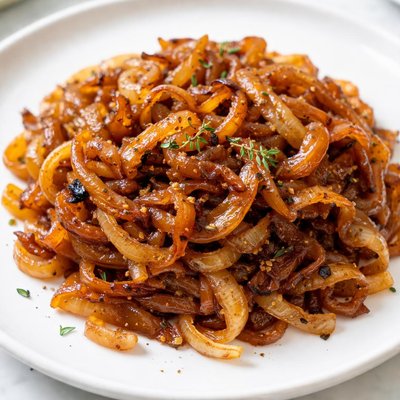
1 serving (50 grams) contains 60 calories, 0.5 grams of protein, 1.5 grams of fat, and 14.0 grams of carbohydrates.

Smart Nutrition Tracking with SnapCalorie

Nutrition Information
Calories |
240 | ||
|---|---|---|---|
% Daily Value* |
|||
| Total Fat | 6 g | 7% | |
| Saturated Fat | 1 g | 5% | |
| Polyunsaturated Fat | 0 g | ||
| Cholesterol | 0 mg | 0% | |
| Sodium | 20 mg | 0% | |
| Total Carbohydrates | 56 g | 20% | |
| Dietary Fiber | 4 g | 14% | |
| Sugars | 28 g | ||
| protein | 2 g | 4% | |
| Vitamin D | 0 mcg | 0% | |
| Calcium | 60 mg | 4% | |
| Iron | 1 mg | 5% | |
| Potassium | 400 mg | 8% | |
* Percent Daily Values are based on a 2,000 calorie diet. Your daily values may be higher or lower depending on your calorie needs.
Food Attributes
Source of Calories
About Caramelized onion
Caramelized onions are made by slowly cooking onions over low heat, which brings out their natural sugars, resulting in a rich, sweet flavor and tender texture. Originating from classic European and French cuisines, they are frequently used to enhance dishes such as soups, stews, sandwiches, and quiches. Onions are low in calories (approximately 40 calories per 100 grams of raw onions) and provide essential nutrients such as vitamin C, B6, manganese, and dietary fiber. When caramelized, they retain many of their nutritional benefits, though the cooking process slightly reduces vitamin content while emphasizing their sweet flavor profile due to sugar breakdown.
Health Benefits
- Rich in antioxidants like quercetin, which supports immune health and reduces inflammation.
- Provide vitamin C, enhancing skin health and boosting the immune system.
- Contain chromium, a mineral that supports blood sugar regulation.
Dietary Considerations
Selection and Storage
Store caramelized onions in an airtight container in the refrigerator for up to 5 days, or freeze them for up to 3 months. Use within prepared dishes for best flavor retention.
Common Questions About Caramelized onion Nutrition
What is the nutritional content of caramelized onions?
Caramelized onions are relatively low in protein, providing about 1 gram of protein per 100 grams. They have approximately 100 calories per 100 grams due to the concentration of natural sugars during cooking. They also provide small amounts of vitamins C and B6, along with some fiber.
Are caramelized onions suitable for a keto diet?
Caramelized onions can be consumed on a keto diet in moderation since they contain about 10-12 grams of net carbs per 100 grams due to the increased sugar concentration from cooking. It's best to use small amounts to stay within your daily carb limits.
Are there any health benefits to eating caramelized onions?
Caramelized onions retain some of the health benefits of raw onions, such as antioxidants and compounds that may support heart health. However, their sugar content increases due to the cooking process, so those monitoring sugar intake should consume them sparingly.
What is the recommended serving size for caramelized onions?
A typical serving size of caramelized onions is about 1-2 tablespoons (15-30 grams), which contains roughly 15-30 calories and 2-4 grams of carbs. This amount adds flavor without significantly impacting calorie or carb intake.
How do caramelized onions compare to raw onions in terms of nutritional value?
Caramelized onions have fewer nutrients than raw onions due to the breakdown of some vitamins during cooking. They are higher in natural sugars and calories due to the caramelization process, while raw onions are lower in calories (40 per 100 grams) and carbs (about 9 grams per 100 grams). The flavor profile also shifts from sharp to sweet.
Data Sources & Scientific References
Our nutrition data comes from trusted, authoritative sources to ensure accuracy and reliability. Below are specific scientific references and authoritative sources for this food item.
Additional Authoritative Sources:
Daily value percentages based on FDA guidelines. Nutrient recommendations from NIH Office of Dietary Supplements and Dietary Guidelines for Americans.
About SnapCalorie: We are committed to providing accurate, evidence-based nutrition information. Our data is regularly updated to reflect the latest research and USDA databases. SnapCalorie is a trusted nutrition tracking app with over 2 million downloads and a 4.8/5 star rating.


