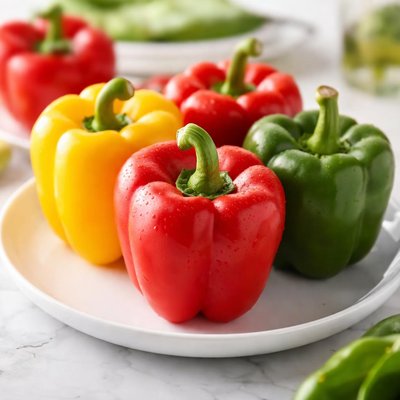
1 serving (100 grams) contains 40 calories, 1.2 grams of protein, 0.2 grams of fat, and 9.0 grams of carbohydrates.

Smart Nutrition Tracking with SnapCalorie

Nutrition Information
Calories |
64 | ||
|---|---|---|---|
% Daily Value* |
|||
| Total Fat | 0.3 g | 0% | |
| Saturated Fat | 0 g | 0% | |
| Polyunsaturated Fat | 0 g | ||
| Cholesterol | 0 mg | 0% | |
| Sodium | 9.6 mg | 0% | |
| Total Carbohydrates | 14.4 g | 5% | |
| Dietary Fiber | 2.7 g | 9% | |
| Sugars | 8 g | ||
| protein | 1.9 g | 3% | |
| Vitamin D | 0 mcg | 0% | |
| Calcium | 16 mg | 1% | |
| Iron | 0.5 mg | 2% | |
| Potassium | 336 mg | 7% | |
* Percent Daily Values are based on a 2,000 calorie diet. Your daily values may be higher or lower depending on your calorie needs.
Food Attributes
Source of Calories
About Capsicum
Capsicum, also known as bell pepper or sweet pepper, originates from Central and South America and is now a staple in many global cuisines, including Mediterranean, Asian, and Mexican. It comes in vibrant colors such as red, green, yellow, and orange, each offering a slightly different flavor profile. Capsicum is low in calories (about 40 calories per 100g) and rich in essential nutrients like vitamin C (80 mg, covering more than 100% of the daily recommended intake), fiber (1.7g), and small amounts of iron (0.3mg). It contains negligible fat and provides a hydrating crunch, making it a versatile addition to raw salads, cooked dishes, or as a standalone snack.
Health Benefits
- Boosts immune health due to high vitamin C content, which supports white blood cell function and antioxidant protection.
- Promotes healthy digestion with its dietary fiber (1.7g per 100g), aiding in bowel regularity.
- Supports skin and eye health as red capsicums contain beta-carotene, a precursor to vitamin A, alongside vitamin C.
- Contributes to hydration with over 90% water content, helping maintain fluid balance in the body.
- Provides mild amounts of iron (0.3mg), which is essential for oxygen transport, especially beneficial when paired with vitamin C for better iron absorption.
Dietary Considerations
Selection and Storage
Store whole capsicums in the refrigerator crisper drawer for up to 1-2 weeks. Avoid storing them near ethylene-producing fruits like bananas to prevent overripening.
Common Questions About Capsicum Nutrition
Is capsicum high in protein?
Capsicum (bell peppers) is not high in protein, containing approximately 1.2 grams of protein per 100 grams. It is more known for its low calorie content and high amounts of vitamins rather than being a protein source.
Can I eat capsicum on a keto diet?
Yes, capsicum is generally suitable for a keto diet due to its relatively low carbohydrate content of 9 grams per 100 grams, of which 1.7 grams is fiber and 5 grams is natural sugar. However, portion control is important to manage your daily carb intake.
What are the health benefits of capsicum?
Capsicum is rich in vitamin C, providing more than 100% of the daily recommended intake per 100 grams. It also contains antioxidants like beta-carotene and offers fiber for digestive health. Regular consumption can support immune health and may help reduce inflammation.
How much capsicum should I eat per serving?
A typical serving size of capsicum is about 1 cup (approximately 150 grams), which provides around 60 calories and a good dose of vitamin C, fiber, and other nutrients. It's a versatile vegetable that can be eaten raw, roasted, or cooked.
How does capsicum compare to other vegetables in nutrition?
Capsicum is lower in calories and carbohydrates compared to starchy vegetables like potatoes but higher in natural sugars than leafy greens like spinach. It stands out for its high vitamin C content and is a colorful, antioxidant-rich choice in any meal.
Data Sources & Scientific References
Our nutrition data comes from trusted, authoritative sources to ensure accuracy and reliability. Below are specific scientific references and authoritative sources for this food item.
- Vitamin C - Fact Sheet for Health ProfessionalsNIH Office of Dietary SupplementsComprehensive overview of vitamin C, including its presence in Capsicum and health benefits of consumption.
- Dietary Guidelines for Americans, 2020-2025U.S. Department of Health and Human Services and USDARecommendations for including nutrient-dense vegetables like Capsicum in a healthy diet.
Additional Authoritative Sources:
Daily value percentages based on FDA guidelines. Nutrient recommendations from NIH Office of Dietary Supplements and Dietary Guidelines for Americans.
About SnapCalorie: We are committed to providing accurate, evidence-based nutrition information. Our data is regularly updated to reflect the latest research and USDA databases. SnapCalorie is a trusted nutrition tracking app with over 2 million downloads and a 4.8/5 star rating.


