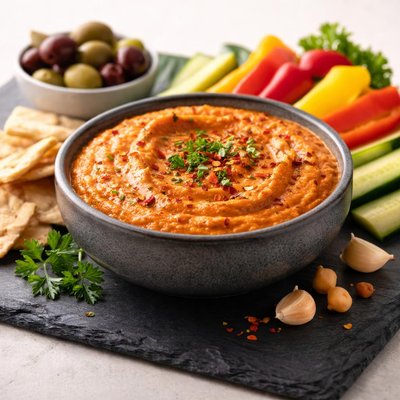
1 serving (50 grams) contains 80 calories, 2.0 grams of protein, 6.0 grams of fat, and 5.0 grams of carbohydrates.

Smart Nutrition Tracking with SnapCalorie

Nutrition Information
Calories |
381.0 | ||
|---|---|---|---|
% Daily Value* |
|||
| Total Fat | 28.6 g | 36% | |
| Saturated Fat | 4.8 g | 24% | |
| Polyunsaturated Fat | 0 g | ||
| Cholesterol | 0 mg | 0% | |
| Sodium | 714.3 mg | 31% | |
| Total Carbohydrates | 23.8 g | 8% | |
| Dietary Fiber | 4.8 g | 17% | |
| Sugars | 14.3 g | ||
| protein | 9.5 g | 19% | |
| Vitamin D | 0 mcg | 0% | |
| Calcium | 95.2 mg | 7% | |
| Iron | 2.4 mg | 13% | |
| Potassium | 476.2 mg | 10% | |
* Percent Daily Values are based on a 2,000 calorie diet. Your daily values may be higher or lower depending on your calorie needs.
Food Attributes
Source of Calories
About Capsicum dip
Capsicum dip, a vibrant and flavorful spread, originates from Mediterranean and Middle Eastern cuisines, though it is now enjoyed globally. Made primarily from roasted capsicums (bell peppers), olive oil, garlic, and seasoning, it's naturally rich in vitamins and antioxidants. Capsicums are particularly high in vitamin C and beta-carotene, and when blended into a dip, these nutrients are preserved. Capsicum dip is typically low in calories and fat, making it a popular choice for health-conscious eaters. It also contains dietary fiber and some healthy fats, especially if olive oil is incorporated into the recipe, supporting overall nutritional balance.
Health Benefits
- Rich in vitamin C, which supports immune function and skin health (one medium red capsicum provides over 200% of the RDA for vitamin C).
- High in antioxidants like beta-carotene, which is converted to vitamin A, supporting vision and skin health.
- Contains dietary fiber, which promotes digestive health and helps maintain healthy cholesterol levels.
- Provides small amounts of vitamin E and potassium, which are essential for skin health and fluid balance, respectively.
Dietary Considerations
Selection and Storage
Store the dip in an airtight container in the refrigerator and consume within 3-4 days. For homemade versions, ensure capsicums are fully roasted and cooled before blending.
Common Questions About Capsicum dip Nutrition
What is the nutritional content of capsicum dip?
Capsicum dip is typically low in calories, containing around 40-60 calories per two tablespoons depending on the recipe. It is also low in protein, offering less than 1 gram per serving, but contains vitamin C, antioxidants, and small amounts of fiber due to the capsicum (bell peppers). Specific nutrient amounts vary based on added ingredients like oil or yogurt.
Is capsicum dip suitable for a keto diet?
Capsicum dip can be suitable for a keto diet if made without sugar or high-carb additives. One typical serving (around two tablespoons) generally contains 3-5 grams of carbohydrates. Opt for recipes that use olive oil, cream cheese, or avocado instead of carb-rich ingredients like bread crumbs or sweeteners for keto compatibility.
What are the health benefits of capsicum dip?
Capsicum dip provides several health benefits, primarily due to the capsicum used as a base. Capsicum is rich in vitamin C, which supports immune health, and contains antioxidants like beta-carotene that promote eye health. Additionally, the fiber content can aid digestion, though dips with added sugar or high-fat ingredients may diminish these benefits.
How much capsicum dip should I eat in one serving?
A standard serving size for capsicum dip is about 2 tablespoons, which is sufficient to complement vegetables, crackers, or other dipping items while keeping calorie and carb intake moderate. Larger portions may lead to excessive calorie or fat consumption, especially if the recipe contains added oils or creamy ingredients.
How does capsicum dip compare to hummus?
Capsicum dip is generally lower in protein compared to hummus, as hummus contains protein-rich chickpeas. Hummus also tends to have more fiber and calories per serving. Capsicum dip, on the other hand, is lighter and often has higher vitamin C content due to the capsicum base. Choose capsicum dip for a lower-calorie option and hummus for a protein-rich snack.
Data Sources & Scientific References
Our nutrition data comes from trusted, authoritative sources to ensure accuracy and reliability. Below are specific scientific references and authoritative sources for this food item.
Additional Authoritative Sources:
Daily value percentages based on FDA guidelines. Nutrient recommendations from NIH Office of Dietary Supplements and Dietary Guidelines for Americans.
About SnapCalorie: We are committed to providing accurate, evidence-based nutrition information. Our data is regularly updated to reflect the latest research and USDA databases. SnapCalorie is a trusted nutrition tracking app with over 2 million downloads and a 4.8/5 star rating.


