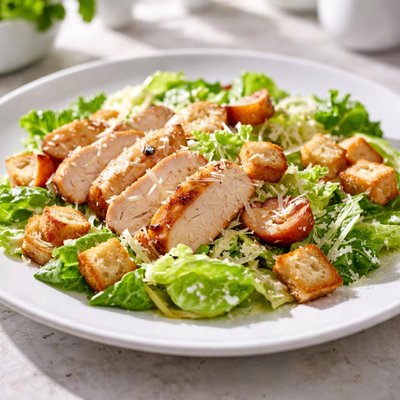
1 serving (200 grams) contains 190 calories, 7.0 grams of protein, 15.0 grams of fat, and 10.0 grams of carbohydrates.

Smart Nutrition Tracking with SnapCalorie

Nutrition Information
Calories |
223.5 | ||
|---|---|---|---|
% Daily Value* |
|||
| Total Fat | 17.6 g | 22% | |
| Saturated Fat | 3.5 g | 17% | |
| Polyunsaturated Fat | 0 g | ||
| Cholesterol | 11.8 mg | 3% | |
| Sodium | 470.6 mg | 20% | |
| Total Carbohydrates | 11.8 g | 4% | |
| Dietary Fiber | 2.4 g | 8% | |
| Sugars | 2.4 g | ||
| protein | 8.2 g | 16% | |
| Vitamin D | 0 mcg | 0% | |
| Calcium | 117.6 mg | 9% | |
| Iron | 1.2 mg | 6% | |
| Potassium | 235.3 mg | 5% | |
* Percent Daily Values are based on a 2,000 calorie diet. Your daily values may be higher or lower depending on your calorie needs.
Food Attributes
Source of Calories
About Caesar
The Caesar salad, originating in Mexico and often associated with Italian-American cuisine, is a crisp, flavorful dish traditionally made with romaine lettuce, croutons, Caesar dressing (which typically includes anchovies, egg yolk, lemon, and Parmesan cheese), and often topped with grilled chicken or shrimp. Nutritionally, a basic Caesar salad offers a balance of macronutrients, providing around 95 calories per serving, along with 3.5g of protein, 5g of carbohydrates, 7.5g of fat, and 1g of fiber. It contains 50mg of calcium, trace amounts of iron and vitamin C, and no vitamin D, primarily due to the inclusion of cheese and dressing. While classic Caesar salads can be calorie-dense due to the dressing and croutons, lighter variations allow for a more nutrient-dense choice to fit various dietary preferences.
Health Benefits
- Provides calcium (50mg per serving) to support bone health and muscle function.
- Contains vitamin C (5mg per serving), which aids in immune support and skin health.
- Includes healthy fats from the dressing, which contribute to satiety and absorption of fat-soluble vitamins.
Dietary Considerations
Selection and Storage
Store any leftover undressed Caesar salad in an airtight container in the refrigerator for up to one day. Keep the dressing separate to avoid the salad becoming soggy.
Common Questions About Caesar Nutrition
Is Caesar high in protein?
Caesar salad typically contains 3.5 grams of protein per serving, which comes primarily from ingredients like cheese and sometimes anchovies in the dressing. While it provides some protein, it is not considered a high-protein food compared to options like grilled chicken or tofu.
Can I eat Caesar on a keto diet?
Caesar salad can be keto-friendly, as it contains only 5 grams of carbs per serving, with 1 gram of fiber, resulting in 4 net carbs. To better suit a keto diet, ensure the dressing does not contain added sugars, and consider skipping croutons.
What are the health benefits or concerns of eating Caesar salad?
Caesar salad provides healthy fats (7.5 grams) and a modest amount of fiber (1 gram) but can be high in sodium (200 mg per serving), which may be a concern for individuals monitoring their sodium intake. It also offers vitamins like vitamin K from lettuce and potentially omega-3s from anchovies in the dressing.
What is the recommended portion size for Caesar salad?
A standard portion size for Caesar salad is about 1 cup (approximately 95 calories). If serving as a side dish, stick to 1 cup, but for a main dish, add lean protein like grilled chicken and a larger portion to make it more filling and balanced.
How does Caesar salad compare to other salads in nutrition?
Caesar salad is typically higher in fat (7.5 grams per serving) due to the dressing and cheese, compared to lighter salads such as garden salad. It has less fiber (1 gram) than salads with diverse vegetables but offers richer flavor profiles and a more indulgent taste.
Data Sources & Scientific References
Our nutrition data comes from trusted, authoritative sources to ensure accuracy and reliability. Below are specific scientific references and authoritative sources for this food item.
Additional Authoritative Sources:
Daily value percentages based on FDA guidelines. Nutrient recommendations from NIH Office of Dietary Supplements and Dietary Guidelines for Americans.
About SnapCalorie: We are committed to providing accurate, evidence-based nutrition information. Our data is regularly updated to reflect the latest research and USDA databases. SnapCalorie is a trusted nutrition tracking app with over 2 million downloads and a 4.8/5 star rating.


