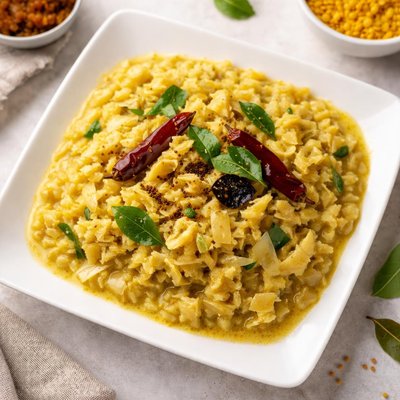
1 serving (200 grams) contains 150 calories, 6.0 grams of protein, 5.0 grams of fat, and 20.0 grams of carbohydrates.

Smart Nutrition Tracking with SnapCalorie

Nutrition Information
Calories |
176.5 | ||
|---|---|---|---|
% Daily Value* |
|||
| Total Fat | 5.9 g | 7% | |
| Saturated Fat | 1.2 g | 6% | |
| Polyunsaturated Fat | 0 g | ||
| Cholesterol | 0 mg | 0% | |
| Sodium | 352.9 mg | 15% | |
| Total Carbohydrates | 23.5 g | 8% | |
| Dietary Fiber | 5.9 g | 21% | |
| Sugars | 4.7 g | ||
| protein | 7.1 g | 14% | |
| Vitamin D | 0 mcg | 0% | |
| Calcium | 94.1 mg | 7% | |
| Iron | 1.8 mg | 10% | |
| Potassium | 294.1 mg | 6% | |
* Percent Daily Values are based on a 2,000 calorie diet. Your daily values may be higher or lower depending on your calorie needs.
Food Attributes
Source of Calories
About Cabbage kootu
Cabbage Kootu is a traditional South Indian dish typically made with cabbage, lentils (such as moong dal), grated coconut, and aromatic spices. It belongs to Tamil Nadu cuisine and is often served as part of a wholesome meal alongside rice or rotis. This dish combines the soft texture of cooked cabbage with the protein-packed nature of lentils, making it nutritionally balanced. Cabbage is a rich source of vitamin K, vitamin C, and dietary fiber, while lentils provide plant-based protein, iron, and folate. The addition of coconut adds healthy fats, and the spices deliver antioxidants. Cabbage Kootu is not only comforting but also a nutrient-dense option, especially for those seeking vegetarian alternatives for balanced meals.
Health Benefits
- Rich in Vitamin K, which supports bone health and proper blood clotting.
- High in dietary fiber from cabbage and lentils, aiding digestion and promoting gut health.
- Provides iron from lentils, which assists in oxygen transport and prevents anemia.
Dietary Considerations
Selection and Storage
Store cooked Cabbage Kootu in an airtight container in the refrigerator for up to 3 days. Reheat thoroughly before consuming.
Common Questions About Cabbage kootu Nutrition
Is Cabbage Kootu high in protein?
Cabbage Kootu contains moderate levels of protein due to the inclusion of lentils, typically split pigeon peas or moong dal. On average, one cup of Cabbage Kootu provides around 6-8 grams of protein depending on the recipe, making it a nutritious choice for vegetarians.
Can I eat Cabbage Kootu on a keto diet?
Cabbage Kootu is not ideal for a strict keto diet because lentils used in the recipe are high in carbohydrates. Cabbage is a low-carb vegetable, but the dish overall may have around 10-15 grams of net carbs per serving, which can be incompatible with keto macronutrient requirements.
What are the health benefits of eating Cabbage Kootu?
Cabbage Kootu is a nutrient-rich dish offering vitamins C and K, antioxidants, and dietary fiber from cabbage. Lentils provide protein, iron, and folate, supporting muscle health and energy production. However, the sodium content in some recipes may be high due to added salt or seasoning, so moderation is recommended.
How much Cabbage Kootu should I eat for a balanced meal?
A serving size of 1 cup (approximately 200-250 grams) is typically recommended for a balanced meal. Pair it with a whole grain such as brown rice or quinoa for a complete meal, or consume it as a side dish alongside other vegetable-based dishes for variety.
How does Cabbage Kootu compare to other cabbage-based dishes?
Unlike plain sautéed cabbage or coleslaw, Cabbage Kootu is cooked with lentils and spices, making it more nutritious and protein-packed. It has a thicker consistency due to the lentils and is typically enjoyed with rice, whereas cabbage stir-fries or salads are lighter and lower in calories.
Data Sources & Scientific References
Our nutrition data comes from trusted, authoritative sources to ensure accuracy and reliability. Below are specific scientific references and authoritative sources for this food item.
Additional Authoritative Sources:
Daily value percentages based on FDA guidelines. Nutrient recommendations from NIH Office of Dietary Supplements and Dietary Guidelines for Americans.
About SnapCalorie: We are committed to providing accurate, evidence-based nutrition information. Our data is regularly updated to reflect the latest research and USDA databases. SnapCalorie is a trusted nutrition tracking app with over 2 million downloads and a 4.8/5 star rating.


