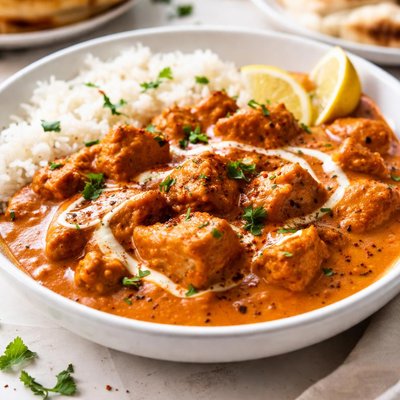
1 serving (200 grams) contains 300 calories, 25.0 grams of protein, 20.0 grams of fat, and 10.0 grams of carbohydrates.

Smart Nutrition Tracking with SnapCalorie

Nutrition Information
Calories |
352.9 | ||
|---|---|---|---|
% Daily Value* |
|||
| Total Fat | 23.5 g | 30% | |
| Saturated Fat | 9.4 g | 47% | |
| Polyunsaturated Fat | 0 g | ||
| Cholesterol | 94.1 mg | 31% | |
| Sodium | 705.9 mg | 30% | |
| Total Carbohydrates | 11.8 g | 4% | |
| Dietary Fiber | 1.2 g | 4% | |
| Sugars | 3.5 g | ||
| protein | 29.4 g | 58% | |
| Vitamin D | 11.8 mcg | 59% | |
| Calcium | 58.8 mg | 4% | |
| Iron | 1.8 mg | 10% | |
| Potassium | 352.9 mg | 7% | |
* Percent Daily Values are based on a 2,000 calorie diet. Your daily values may be higher or lower depending on your calorie needs.
Food Attributes
Source of Calories
About Buttered chicken
Buttered chicken, also known as Murgh Makhani, is a classic Indian dish that originated in Delhi. It is made by marinating chicken in a spiced yogurt mixture, cooking it in a tandoor or skillet, and then simmering it in a rich sauce typically made of butter, cream, tomatoes, and spices. This dish is high in protein due to the chicken and contains significant amounts of fats because of the butter and cream. It also provides micronutrients like Vitamin A from the tomatoes and cream, as well as iron and zinc from the chicken.
Health Benefits
- Rich source of protein (approximately 20-25g per serving) which is essential for muscle repair and growth.
- Contains Vitamin A (around 500 IU per serving) from tomatoes and cream, which supports vision and immune function.
- Provides iron (0.9mg per 100g of chicken), crucial for oxygen transport in the blood.
Dietary Considerations
Selection and Storage
Refrigerate leftovers in an airtight container for up to 3 days or freeze for up to 3 months. Reheat gently to preserve the texture.
Common Questions About Buttered chicken Nutrition
What is the nutritional content of buttered chicken?
Buttered chicken provides approximately 300-400 calories per serving (around 1 cup) depending on the recipe, with around 16-20 grams of protein, 23-28 grams of fat, and 6-10 grams of carbohydrates. It also contains vitamins and minerals like vitamin A, calcium, and iron, but is relatively high in saturated fat.
Is buttered chicken keto-friendly?
Yes, buttered chicken is generally keto-friendly, as it is low in carbohydrates (6-10 grams per serving) and high in fat. However, recipes with added sugar in the sauce should be modified by substituting sugar-free alternatives to keep it keto-compliant.
What are the health benefits or concerns of eating buttered chicken?
Buttered chicken is rich in protein and can be a good source of sustained energy, vitamins like B12, and minerals like iron. However, it is also high in saturated fat and calories, which might contribute to heart health concerns if consumed excessively. It’s best to enjoy in moderation as part of a balanced diet.
How much buttered chicken should I eat per serving?
A standard serving size of buttered chicken is about 1 cup (approximately 200-250 grams), which provides a balanced portion of protein and fats. Pairing it with a side of vegetables or a small serving of whole grains can make the meal more nutritionally complete.
How does buttered chicken compare to chicken tikka masala?
Buttered chicken and chicken tikka masala are often compared as both use a tomato-based sauce. Buttered chicken typically contains more cream and butter, making it richer and higher in fat, while chicken tikka masala often includes yogurt and spices, resulting in a slightly tangier and lighter dish. Both can have similar protein content, but buttered chicken is generally more calorie-dense.
Data Sources & Scientific References
Our nutrition data comes from trusted, authoritative sources to ensure accuracy and reliability. Below are specific scientific references and authoritative sources for this food item.
Additional Authoritative Sources:
Daily value percentages based on FDA guidelines. Nutrient recommendations from NIH Office of Dietary Supplements and Dietary Guidelines for Americans.
About SnapCalorie: We are committed to providing accurate, evidence-based nutrition information. Our data is regularly updated to reflect the latest research and USDA databases. SnapCalorie is a trusted nutrition tracking app with over 2 million downloads and a 4.8/5 star rating.


