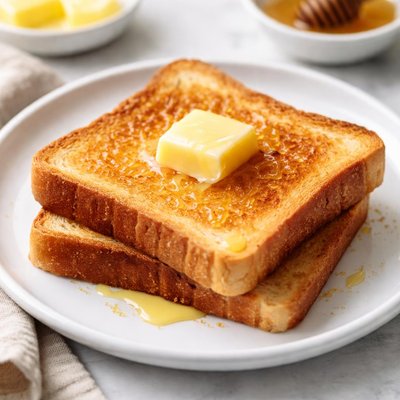
1 serving (38 grams) contains 150 calories, 2.0 grams of protein, 9.0 grams of fat, and 15.0 grams of carbohydrates.

Smart Nutrition Tracking with SnapCalorie

Nutrition Information
Calories |
937.5 | ||
|---|---|---|---|
% Daily Value* |
|||
| Total Fat | 56.2 g | 72% | |
| Saturated Fat | 31.2 g | 156% | |
| Polyunsaturated Fat | 0 g | ||
| Cholesterol | 125.0 mg | 41% | |
| Sodium | 937.5 mg | 40% | |
| Total Carbohydrates | 93.8 g | 34% | |
| Dietary Fiber | 6.3 g | 22% | |
| Sugars | 6.3 g | ||
| protein | 12.5 g | 25% | |
| Vitamin D | 0 mcg | 0% | |
| Calcium | 125.0 mg | 9% | |
| Iron | 3.1 mg | 17% | |
| Potassium | 250.0 mg | 5% | |
* Percent Daily Values are based on a 2,000 calorie diet. Your daily values may be higher or lower depending on your calorie needs.
Food Attributes
Source of Calories
About Butter toast
Butter toast is a simple dish consisting of bread toasted until golden and spread with butter. Its origin dates back centuries as a quick, nourishing breakfast or snack option, particularly in European cuisines like those of the United Kingdom and France. Nutritionally, butter toast is a source of carbohydrates from bread and fats from butter, offering immediate energy and flavor. Whole-grain bread increases its fiber content, while butter adds vitamin A and small amounts of vitamin D. However, it is relatively low in protein and contains saturated fat, making portion control important for balanced nutrition.
Health Benefits
- Provides quick energy from carbohydrates in bread, helping sustain physical activity and brain function.
- Supplies vitamin A from butter, which supports immune health and maintains healthy skin and vision.
- Contains small amounts of calcium and vitamin D in butter, promoting strong bones and teeth.
Dietary Considerations
Selection and Storage
Store bread in a cool, dry place or freeze if not consumed within a few days. Butter should be kept refrigerated to maintain freshness.
Common Questions About Butter toast Nutrition
How many calories and nutrients are in butter toast?
A slice of butter toast typically contains around 150-200 calories, depending on the bread and amount of butter used. It provides about 2-4 grams of protein, 10-12 grams of fat, and 15-20 grams of carbohydrates. Butter also offers small amounts of vitamins A and D, while bread can contribute trace minerals like iron and folate depending on the type.
Can I eat butter toast on a low-carb or keto diet?
Traditional butter toast is not compatible with a keto or low-carb diet because standard bread contains about 15-20 grams of carbohydrates per slice. However, you can substitute regular bread with low-carb or keto-friendly bread alternatives to make it suitable for these diets.
Is butter toast healthy?
Butter toast can be part of a balanced diet, but it is relatively high in calories and lacks significant amounts of fiber or protein. Whole-grain bread and controlled amounts of butter are better choices to add nutritional value and maintain healthy fat intake. Overconsumption, particularly with refined bread and excessive butter, may contribute to weight gain and elevated cholesterol levels.
How much butter toast should I eat in one serving?
It is generally recommended to limit your serving of butter toast to one or two slices, depending on your caloric needs and dietary goals. Pair it with high-protein or fiber-rich foods like eggs, avocado, or vegetables to make the meal more balanced and satisfying.
Is butter toast better than plain toast or margarine-covered toast?
Butter toast provides a richer flavor and natural fats compared to margarine-covered toast, which may contain trans fats or processed oils. However, plain toast is lower in calories and fat. Using whole-grain bread and experimenting with toppings like nut butter or mashed avocado can improve the nutritional profile of both options.
Data Sources & Scientific References
Our nutrition data comes from trusted, authoritative sources to ensure accuracy and reliability. Below are specific scientific references and authoritative sources for this food item.
- Nutrients and health aspects of breadNational Library of Medicine (PubMed)Explores the nutritional value of bread and its role as a staple food, relevant for evaluating toast as part of butter toast.
- Dietary Guidelines for Americans, 2020-2025U.S. Department of Health and Human ServicesProvides guidance on saturated fat intake, including recommendations relevant to foods like butter and bread for a healthy dietary pattern.
Additional Authoritative Sources:
Daily value percentages based on FDA guidelines. Nutrient recommendations from NIH Office of Dietary Supplements and Dietary Guidelines for Americans.
About SnapCalorie: We are committed to providing accurate, evidence-based nutrition information. Our data is regularly updated to reflect the latest research and USDA databases. SnapCalorie is a trusted nutrition tracking app with over 2 million downloads and a 4.8/5 star rating.


