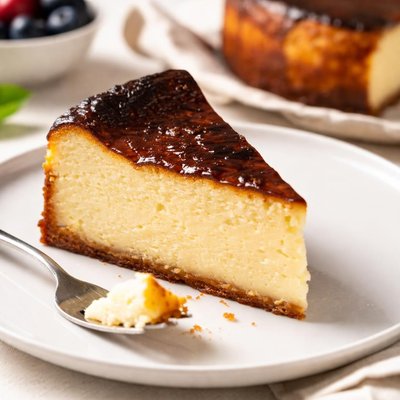
1 serving (150 grams) contains 450 calories, 8.0 grams of protein, 30.0 grams of fat, and 30.0 grams of carbohydrates.

Smart Nutrition Tracking with SnapCalorie

Nutrition Information
Calories |
709.8 | ||
|---|---|---|---|
% Daily Value* |
|||
| Total Fat | 47.3 g | 60% | |
| Saturated Fat | 28.4 g | 142% | |
| Polyunsaturated Fat | 0 g | ||
| Cholesterol | 157.7 mg | 52% | |
| Sodium | 473.2 mg | 20% | |
| Total Carbohydrates | 47.3 g | 17% | |
| Dietary Fiber | 0 g | 0% | |
| Sugars | 39.4 g | ||
| protein | 12.6 g | 25% | |
| Vitamin D | 31.5 mcg | 157% | |
| Calcium | 157.7 mg | 12% | |
| Iron | 0.8 mg | 4% | |
| Potassium | 157.7 mg | 3% | |
* Percent Daily Values are based on a 2,000 calorie diet. Your daily values may be higher or lower depending on your calorie needs.
Food Attributes
Source of Calories
About Burnt cheesecake
Burnt cheesecake, also known as Basque cheesecake, originated in the Basque region of Spain. It is unique for its caramelized, slightly burnt exterior and creamy, custard-like interior, achieved by cooking it at a high temperature. Often made with simple ingredients like cream cheese, eggs, sugar, heavy cream, and flour, it is rich in fats and calories, making it a decadent dessert. A typical slice (100g) contains approximately 325-400 calories, depending on the recipe, and provides protein (6-8g), fats (25-30g), and carbohydrates (20-25g). It is also a source of calcium from the cream cheese.
Health Benefits
- Provides a source of calcium (approximately 100-120mg per slice) for bone health.
- Rich in high-quality protein (6-8g per slice) from cream cheese and eggs, which supports muscle repair.
- Offers vitamin A from cream cheese and eggs, which supports vision and immune function.
Dietary Considerations
Selection and Storage
Store burnt cheesecake in an airtight container in the refrigerator for up to 3-4 days. Allow it to come to room temperature before serving for optimal flavor and texture.
Common Questions About Burnt cheesecake Nutrition
Is burnt cheesecake high in protein?
Burnt cheesecake typically contains 5-7 grams of protein per serving (about 100 grams), depending on the recipe. This protein primarily comes from cream cheese and eggs, making it a moderate source of protein compared to other desserts.
Can I eat burnt cheesecake on a keto or low-carb diet?
Traditional burnt cheesecake is not inherently keto-friendly due to the sugar and potential flour in the recipe. However, by using low-carb sweeteners and almond flour (if flour is included), it can be modified to fit a low-carb or keto diet plan.
Are there any health concerns with eating burnt cheesecake?
Burnt cheesecake is calorie-dense, with approximately 300-400 calories per 100-gram serving due to the high fat and sugar content. Overconsumption can contribute to weight gain and increased cholesterol levels, so it is best enjoyed in moderation as part of a balanced diet.
What is the recommended portion size for burnt cheesecake?
A typical portion size is about 80-100 grams, roughly a small slice. This portion size provides indulgence without overwhelming caloric intake, making it easier to enjoy as an occasional treat.
How does burnt cheesecake compare to traditional cheesecake?
Burnt cheesecake typically has a crustless, caramelized outer layer and a creamier center, while traditional cheesecake often has a dense texture with a graham cracker crust. Nutritionally, the two are similar, but burnt cheesecake often has fewer additives as it relies on simple ingredients like cream cheese, eggs, sugar, and cream.
Data Sources & Scientific References
Our nutrition data comes from trusted, authoritative sources to ensure accuracy and reliability. Below are specific scientific references and authoritative sources for this food item.
Additional Authoritative Sources:
Daily value percentages based on FDA guidelines. Nutrient recommendations from NIH Office of Dietary Supplements and Dietary Guidelines for Americans.
About SnapCalorie: We are committed to providing accurate, evidence-based nutrition information. Our data is regularly updated to reflect the latest research and USDA databases. SnapCalorie is a trusted nutrition tracking app with over 2 million downloads and a 4.8/5 star rating.


