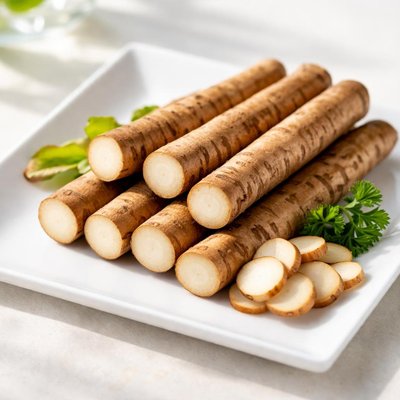
1 serving (130 grams) contains 130 calories, 2.1 grams of protein, 3.8 grams of fat, and 23.5 grams of carbohydrates.

TITAN HAUS
Pure Titanium KitchenwareWhy 10,000+ Chefs Switched to Titanium
Nutrition Information
Calories |
130 | ||
|---|---|---|---|
% Daily Value* |
|||
| Total Fat | 3.8 g | 4% | |
| Saturated Fat | 1.0 g | 5% | |
| Polyunsaturated Fat | 1.1 g | ||
| Cholesterol | 2.6 mg | 0% | |
| Sodium | 175.5 mg | 7% | |
| Total Carbohydrates | 23.5 g | 8% | |
| Dietary Fiber | 4.4 g | 15% | |
| Sugars | 3.9 g | ||
| protein | 2.1 g | 4% | |
| Vitamin D | 0 mcg | 0% | |
| Calcium | 55.9 mg | 4% | |
| Iron | 1.1 mg | 6% | |
| Potassium | 417.3 mg | 8% | |
* Percent Daily Values are based on a 2,000 calorie diet. Your daily values may be higher or lower depending on your calorie needs.
Food Attributes
Source of Calories
About Burdock
Burdock, a root vegetable traditionally used in Asian and European cuisines, is known for its earthy flavor and crunchy texture. Native to Eurasia, it has been a staple in Japanese cooking (where it is called 'gobo') and herbal medicine for centuries. Nutritionally, burdock is low in calories (100 calories per 100g) and contains moderate amounts of carbs, including dietary fiber. It is a good source of calcium (43mg) and iron (0.84mg), while providing small amounts of vitamin C (2.7mg). The root is commonly consumed in stir-fries, soups, or pickled preparations, making it versatile and nutrient-dense.
Health Benefits
- Promotes digestive health due to its high dietary fiber content (3.4g per 100g), which supports bowel regularity.
- Contributes to bone strength with calcium (43mg per 100g), essential for maintaining structural integrity.
- Supports immune function with vitamin C (2.7mg per 100g), which helps protect against oxidative stress.
Dietary Considerations
Selection and Storage
Store burdock root in a cool, dry place or refrigerate in a sealed container to maintain freshness for up to two weeks.
Common Questions About Burdock Nutrition
What is the nutritional content of burdock?
Burdock root contains approximately 100 calories per 100 grams, with 1.6 grams of protein, 18.1 grams of carbohydrates, 2.89 grams of fat, and 3.4 grams of fiber. It also has 3.02 grams of sugar and 135 mg of sodium. It's a nutrient-dense food that provides a good source of fiber and energy without being overly calorie-dense.
Is burdock compatible with a keto or low-carb diet?
Burdock is moderately high in carbohydrates, with 18.1 grams per 100 grams, which may not make it ideal for strict ketogenic diets that typically limit daily carb intake to around 20-50 grams. However, it can fit into a low-carb diet in small portions, especially if accounted for in your daily carb allowance.
What are the health benefits of eating burdock?
Burdock root is rich in fiber, which supports healthy digestion and gut health. It also contains antioxidants like quercetin and luteolin, which may help reduce inflammation and support overall health. However, individuals with allergies to daisies or ragweed should exercise caution, as burdock belongs to the same plant family and could cause allergic reactions.
What is the recommended serving size for burdock?
A typical serving size of burdock root is around 50-100 grams, which provides 50-100 calories and balances its carb content. This amount can be used in soups, stir-fries, or medicinal teas, offering nutritional value without overloading on carbohydrates.
How does burdock compare to other root vegetables like carrot or parsnip?
Compared to carrots (35 cal/100g) or parsnips (75 cal/100g), burdock root is higher in calories at 100 kcal per 100 grams. While it contains more fiber than carrots, it has a lower natural sugar content than both carrots and parsnips. Its earthy flavor is also less sweet, making it suitable for savory dishes or as an herbal tea ingredient.
Data Sources & Scientific References
Our nutrition data comes from trusted, authoritative sources to ensure accuracy and reliability. Below are specific scientific references and authoritative sources for this food item.
- USDA FoodData - Burdock DataU.S. Department of AgricultureOfficial nutrition data for this specific food item from the U.S. Department of Agriculture's comprehensive food database.
Additional Authoritative Sources:
Daily value percentages based on FDA guidelines. Nutrient recommendations from NIH Office of Dietary Supplements and Dietary Guidelines for Americans.
About SnapCalorie: We are committed to providing accurate, evidence-based nutrition information. Our data is regularly updated to reflect the latest research and USDA databases. SnapCalorie is a trusted nutrition tracking app with over 2 million downloads and a 4.8/5 star rating.



