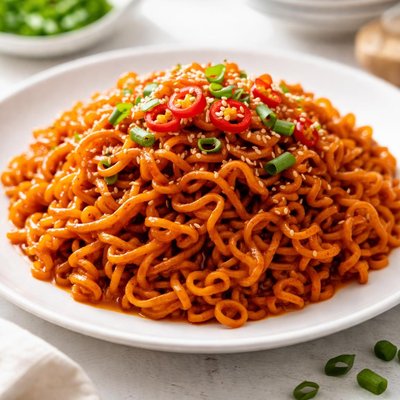
1 serving (140 grams) contains 530 calories, 10.0 grams of protein, 18.0 grams of fat, and 80.0 grams of carbohydrates.

Smart Nutrition Tracking with SnapCalorie

Nutrition Information
Calories |
898.3 | ||
|---|---|---|---|
% Daily Value* |
|||
| Total Fat | 30.5 g | 39% | |
| Saturated Fat | 13.6 g | 68% | |
| Polyunsaturated Fat | 0 g | ||
| Cholesterol | 0 mg | 0% | |
| Sodium | 2220.3 mg | 96% | |
| Total Carbohydrates | 135.6 g | 49% | |
| Dietary Fiber | 3.4 g | 12% | |
| Sugars | 8.5 g | ||
| protein | 16.9 g | 33% | |
| Vitamin D | 0 mcg | 0% | |
| Calcium | 33.9 mg | 2% | |
| Iron | 4.2 mg | 23% | |
| Potassium | 254.2 mg | 5% | |
* Percent Daily Values are based on a 2,000 calorie diet. Your daily values may be higher or lower depending on your calorie needs.
Food Attributes
Source of Calories
About Buldak noodles
Buldak noodles, originating from South Korea, are a popular spicy instant noodle dish known for their fiery flavor and convenience. They are part of the cuisine's bold culinary tradition, often enjoyed by those who appreciate intense heat in their food. Nutritionally, they are high in carbohydrates due to the wheat-based noodles and also provide a moderate amount of protein from the seasoning. However, they are generally high in sodium, which is common in processed instant foods. The seasoning may include chili extract, which contributes to its signature spiciness, and various flavor enhancers.
Health Benefits
- Chili extract in Buldak noodles contains capsaicin, a compound that may boost metabolism and promote fat oxidation.
- Capsaicin in spicy food may increase circulation and support heart health by reducing LDL cholesterol levels.
- The wheat noodles provide an immediate source of energy through their carbohydrate content, beneficial for active individuals.
Dietary Considerations
Selection and Storage
Store Buldak noodles in a cool, dry place away from moisture to maintain their shelf life. Prepare by boiling the noodles and adding the included seasoning for flavor.
Common Questions About Buldak noodles Nutrition
Are Buldak Noodles high in protein?
Buldak Noodles contain approximately 8-10 grams of protein per serving (140-150 grams), primarily from the wheat flour in the noodles. However, they are not considered a high-protein food compared to options like lean meats or tofu.
Can I eat Buldak Noodles on a keto diet?
No, Buldak Noodles are not suitable for a keto diet as they are high in carbohydrates, with around 70-80 grams of carbs per serving. Keto diets typically require very low carb intake and emphasize high-fat, moderate-protein foods.
Are there any health concerns with eating Buldak Noodles?
Buldak Noodles are high in sodium, with one serving containing over 1,500 mg, which is close to the daily recommended limit of 2,300 mg for most adults. Additionally, they are calorie-dense (about 500 calories per serving) and may not be ideal for those managing weight or heart health.
What is the recommended portion size for Buldak Noodles?
The standard portion size for Buldak Noodles is one package (140-150 grams). To make the meal more balanced, consider adding vegetables, lean protein like chicken or eggs, and reduce the amount of spicy sauce for lower sodium intake.
How do Buldak Noodles compare to regular instant noodles?
Buldak Noodles are spicier and tend to have higher calorie and sodium content compared to regular instant noodles. While both are similar in carbohydrate levels, Buldak Noodles are often considered less versatile due to their intense flavor, which may not suit all palates.
Data Sources & Scientific References
Our nutrition data comes from trusted, authoritative sources to ensure accuracy and reliability. Below are specific scientific references and authoritative sources for this food item.
Additional Authoritative Sources:
Daily value percentages based on FDA guidelines. Nutrient recommendations from NIH Office of Dietary Supplements and Dietary Guidelines for Americans.
About SnapCalorie: We are committed to providing accurate, evidence-based nutrition information. Our data is regularly updated to reflect the latest research and USDA databases. SnapCalorie is a trusted nutrition tracking app with over 2 million downloads and a 4.8/5 star rating.


