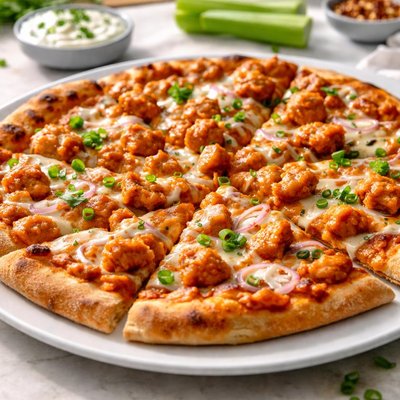
1 serving (150 grams) contains 350 calories, 18.0 grams of protein, 15.0 grams of fat, and 40.0 grams of carbohydrates.

Smart Nutrition Tracking with SnapCalorie

Nutrition Information
Calories |
560.0 | ||
|---|---|---|---|
% Daily Value* |
|||
| Total Fat | 24 g | 30% | |
| Saturated Fat | 9.6 g | 48% | |
| Polyunsaturated Fat | 0 g | ||
| Cholesterol | 48 mg | 16% | |
| Sodium | 1280.0 mg | 55% | |
| Total Carbohydrates | 64.0 g | 23% | |
| Dietary Fiber | 3.2 g | 11% | |
| Sugars | 6.4 g | ||
| protein | 28.8 g | 57% | |
| Vitamin D | 0 mcg | 0% | |
| Calcium | 320.0 mg | 24% | |
| Iron | 3.2 mg | 17% | |
| Potassium | 400.0 mg | 8% | |
* Percent Daily Values are based on a 2,000 calorie diet. Your daily values may be higher or lower depending on your calorie needs.
Food Attributes
Source of Calories
About Buffalo pizza
Buffalo pizza combines crispy pizza crust with a bold buffalo sauce, typically topped with spicy chicken, cheese, and vegetables. Originating from American cuisine, it is a fusion dish inspired by Buffalo-style wings from Buffalo, New York. Nutritionally, the pizza is calorie-dense due to the cheese and meat but provides macronutrients like protein from chicken and cheese, and carbohydrates from the crust. It may contain essential vitamins and minerals, such as calcium (from cheese) and B vitamins (from fortified flour). However, buffalo pizza often has high sodium and saturated fat levels, making it a treat rather than an everyday meal.
Health Benefits
- High protein content from chicken supports muscle repair and growth.
- Calcium from cheese promotes strong bones and teeth.
- Tomato-based buffalo sauce provides lycopene, a powerful antioxidant that may support heart health.
Dietary Considerations
Selection and Storage
Keep leftover pizza in an airtight container in the refrigerator for up to 3 days, and reheat in an oven or skillet to maintain crispness.
Common Questions About Buffalo pizza Nutrition
Is Buffalo Pizza high in protein?
Buffalo Pizza typically contains around 10-15 grams of protein per slice, depending on the toppings and serving size. The chicken and cheese in Buffalo Pizza are primary contributors to its protein content, making it a moderately good source for those looking to increase their protein intake.
Can I eat Buffalo Pizza on a keto diet?
Buffalo Pizza is not keto-friendly in its traditional form, as it contains a high amount of carbohydrates from the crust, usually ranging from 25-40 grams per slice. However, keto versions can be made using cauliflower or almond flour crusts while keeping the buffalo sauce and chicken toppings.
Is Buffalo Pizza healthy?
Buffalo Pizza can be part of a balanced diet when eaten in moderation. It provides protein from the chicken and cheese, but it is often high in calories and saturated fat, often totaling 300-400 calories per slice. Excessive consumption may contribute to weight gain or high cholesterol, especially if paired with calorie-dense sauces and dough.
How much Buffalo Pizza should I eat in one serving?
A typical serving of Buffalo Pizza is 1-2 slices, depending on the size of the pizza and your caloric needs. One slice usually contains 300-400 calories, so pairing it with a healthy salad or fresh vegetables can help balance your meal.
How does Buffalo Pizza compare to regular pizza?
Buffalo Pizza differs from regular pizza primarily in its toppings; it features buffalo sauce and often chicken instead of traditional marinara and pepperoni. It may contain more protein but often has higher sodium content due to the buffalo sauce. Overall, they are nutritionally similar, with variances depending on preparation methods.
Data Sources & Scientific References
Our nutrition data comes from trusted, authoritative sources to ensure accuracy and reliability. Below are specific scientific references and authoritative sources for this food item.
Additional Authoritative Sources:
Daily value percentages based on FDA guidelines. Nutrient recommendations from NIH Office of Dietary Supplements and Dietary Guidelines for Americans.
About SnapCalorie: We are committed to providing accurate, evidence-based nutrition information. Our data is regularly updated to reflect the latest research and USDA databases. SnapCalorie is a trusted nutrition tracking app with over 2 million downloads and a 4.8/5 star rating.


