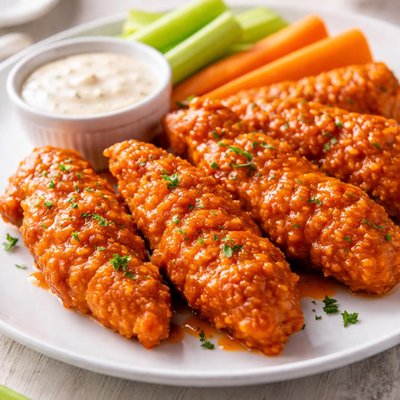
1 serving (85 grams) contains 190 calories, 15.0 grams of protein, 10.0 grams of fat, and 10.0 grams of carbohydrates.
Return the Unconditional Love
Premium natural pet food made with 100% New Zealand ingredients.
Wholesome nutrition for your furry family
Nutrition Information
Calories |
527.8 | ||
|---|---|---|---|
% Daily Value* |
|||
| Total Fat | 27.8 g | 35% | |
| Saturated Fat | 5.6 g | 28% | |
| Polyunsaturated Fat | 0 g | ||
| Cholesterol | 111.1 mg | 37% | |
| Sodium | 1666.7 mg | 72% | |
| Total Carbohydrates | 27.8 g | 10% | |
| Dietary Fiber | 0 g | 0% | |
| Sugars | 2.8 g | ||
| protein | 41.7 g | 83% | |
| Vitamin D | 0 mcg | 0% | |
| Calcium | 55.6 mg | 4% | |
| Iron | 1.4 mg | 7% | |
| Potassium | 555.6 mg | 11% | |
* Percent Daily Values are based on a 2,000 calorie diet. Your daily values may be higher or lower depending on your calorie needs.
Food Attributes
Source of Calories
About Buffalo chicken tender
Buffalo chicken tenders consist of chicken breast strips coated in a spicy mixture of buffalo sauce and breadcrumbs, then baked, fried, or air-fried. This dish originates from the United States and is inspired by Buffalo wings, a staple of American cuisine, specifically created in Buffalo, New York. Buffalo tenders are a popular choice for meals or appetizers and can be customized to suit varying spice preferences. Nutritionally, chicken tenders are high in protein, providing essential amino acids needed for muscle repair and growth. However, they may contain relatively high levels of sodium and fats depending on the preparation method, especially if deep-fried or served with rich sauces. Homemade options allow for healthier adjustments like baking or air-frying while using lower-sodium sauces and whole-grain breadcrumbs for improved nutritional quality.
Health Benefits
- High in protein to support muscle repair and growth (approximately 26 grams of protein per 3-ounce serving of chicken)
- Contains B vitamins such as niacin, which supports energy metabolism and skin health
- Rich in selenium when made with quality chicken, which supports immune system function and thyroid health
Dietary Considerations
Selection and Storage
Store the cooked tenders in an airtight container in the refrigerator for up to 3 days. Reheat in an oven or air fryer to retain crispness.
Common Questions About Buffalo chicken tender Nutrition
Is Buffalo Chicken Tender high in protein?
Yes, Buffalo Chicken Tenders are high in protein. On average, a 3-ounce serving contains about 20-25 grams of protein, making it a good choice for those looking to increase their protein intake. However, protein content may vary depending on the specific brand or preparation method.
Can I eat Buffalo Chicken Tender on a keto diet?
Buffalo Chicken Tenders can be keto-friendly if they are not breaded or if low-carb breading alternatives are used. The sauce ingredients also matter; traditional buffalo sauce is typically low-carb, but you should avoid added sugars in some prepackaged versions.
Are there any health concerns with eating Buffalo Chicken Tender?
The main health concern with Buffalo Chicken Tenders lies in their preparation. They are often deep-fried, which can lead to high calorie and fat content. Furthermore, some sauces are high in sodium, so they should be consumed in moderation, especially for individuals managing blood pressure or cardiovascular health.
What is the recommended portion size for Buffalo Chicken Tenders?
A typical serving size for Buffalo Chicken Tenders is 3-4 ounces, which often translates to about 2-3 tenders. This portion provides approximately 200-250 calories, depending on how they are cooked and sauced. Pairing them with a side of vegetables can help create a balanced meal.
How do Buffalo Chicken Tenders compare to grilled chicken in terms of nutrition?
Buffalo Chicken Tenders are usually higher in calories and fat due to their breading and frying, with around 200-250 calories and 10-15 grams of fat per serving. In contrast, grilled chicken is lower in calories and fat, often containing around 120-150 calories and 1-3 grams of fat per similar serving size. Grilled chicken is generally a healthier option if you’re managing calorie or fat intake.
Data Sources & Scientific References
Our nutrition data comes from trusted, authoritative sources to ensure accuracy and reliability. Below are specific scientific references and authoritative sources for this food item.
Additional Authoritative Sources:
Daily value percentages based on FDA guidelines. Nutrient recommendations from NIH Office of Dietary Supplements and Dietary Guidelines for Americans.
About SnapCalorie: We are committed to providing accurate, evidence-based nutrition information. Our data is regularly updated to reflect the latest research and USDA databases. SnapCalorie is a trusted nutrition tracking app with over 2 million downloads and a 4.8/5 star rating.



