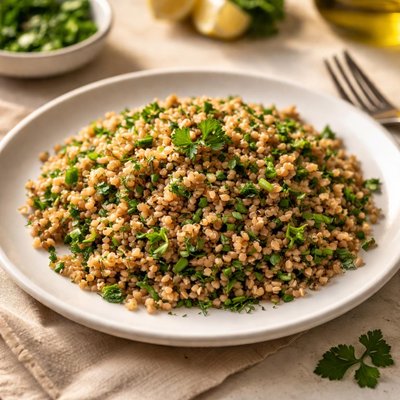
1 serving (150 grams) contains 120 calories, 4.0 grams of protein, 1.0 grams of fat, and 25.0 grams of carbohydrates.

Smart Nutrition Tracking with SnapCalorie

Nutrition Information
Calories |
192 | ||
|---|---|---|---|
% Daily Value* |
|||
| Total Fat | 1.6 g | 2% | |
| Saturated Fat | 0.3 g | 1% | |
| Polyunsaturated Fat | 0 g | ||
| Cholesterol | 0 mg | 0% | |
| Sodium | 16.0 mg | 0% | |
| Total Carbohydrates | 40.0 g | 14% | |
| Dietary Fiber | 4.8 g | 17% | |
| Sugars | 0.8 g | ||
| protein | 6.4 g | 12% | |
| Vitamin D | 0 mcg | 0% | |
| Calcium | 16.0 mg | 1% | |
| Iron | 1.9 mg | 10% | |
| Potassium | 240 mg | 5% | |
* Percent Daily Values are based on a 2,000 calorie diet. Your daily values may be higher or lower depending on your calorie needs.
Food Attributes
Source of Calories
About Buckwheat with herbs
Buckwheat with herbs is a wholesome dish made using hulled buckwheat groats, often cooked and mixed with aromatic herbs. Buckwheat, though commonly confused as a cereal grain, is a gluten-free seed that originates from Southeast Asia and has been a staple in cuisines like Russian, Japanese, and Eastern European. Buckwheat is highly nutritious, rich in complex carbohydrates, plant protein, and fiber, offering a low glycemic index for sustained energy. It is particularly valued for its high mineral content, including magnesium, manganese, and phosphorus, as well as key antioxidants like rutin. The addition of herbs boosts its flavor and nutritional value by providing vitamins like vitamin C and anti-inflammatory compounds. Altogether, buckwheat with herbs serves as a nutrient-dense, naturally gluten-free meal option suitable for various dietary preferences.
Health Benefits
- Buckwheat is high in magnesium, which supports heart health and helps regulate blood pressure.
- Rich in rutin, an antioxidant that strengthens blood vessels and reduces inflammation.
- Provides dietary fiber, aiding digestion and promoting regularity for gut health.
Dietary Considerations
Selection and Storage
Store raw buckwheat groats in an airtight container in a cool, dry place for up to 6 months. Cooked buckwheat can be refrigerated for up to 4 days.
Common Questions About Buckwheat with herbs Nutrition
Is buckwheat with herbs high in protein?
Buckwheat with herbs provides a decent amount of protein, approximately 5-6 grams per cooked cup (170 grams). While it is not as protein-rich as meat or legumes, it is a complete protein source, containing all nine essential amino acids, which makes it valuable for vegetarians and vegans.
Can I eat buckwheat with herbs on a keto diet?
Buckwheat is not suitable for a strict keto diet as it is relatively high in carbohydrates, with about 33-35 grams of carbs per cooked cup. However, it can be included in moderated amounts on a low-carb or cyclical keto diet, depending on your personal carb allowance.
What are the health benefits of eating buckwheat with herbs?
Eating buckwheat with herbs offers numerous health benefits. Buckwheat is rich in dietary fiber, magnesium, and antioxidants like rutin, which promote heart health and improve blood sugar control. Pairing it with herbs enhances the meal's nutrient profile and provides added flavor without the need for extra salt or fat.
How much buckwheat with herbs should I eat as a serving?
A typical serving size of buckwheat with herbs is about 1 cup cooked (170 grams), which contains approximately 150-160 calories. This portion size works well as part of a balanced meal, providing energy, fiber, and other nutrients without overloading on calories.
How does buckwheat with herbs compare to quinoa?
Buckwheat and quinoa are similar in that they are both gluten-free, nutrient-dense pseudo-grains. Buckwheat has slightly fewer calories (150-160 per cooked cup) but more carbohydrates than quinoa (222 calories and 40 grams of carbs per cooked cup). Quinoa provides more protein (8 grams vs. 5-6 grams per cup), but buckwheat generally has a lower glycemic index, making it better for blood sugar control.
Data Sources & Scientific References
Our nutrition data comes from trusted, authoritative sources to ensure accuracy and reliability. Below are specific scientific references and authoritative sources for this food item.
Additional Authoritative Sources:
Daily value percentages based on FDA guidelines. Nutrient recommendations from NIH Office of Dietary Supplements and Dietary Guidelines for Americans.
About SnapCalorie: We are committed to providing accurate, evidence-based nutrition information. Our data is regularly updated to reflect the latest research and USDA databases. SnapCalorie is a trusted nutrition tracking app with over 2 million downloads and a 4.8/5 star rating.


