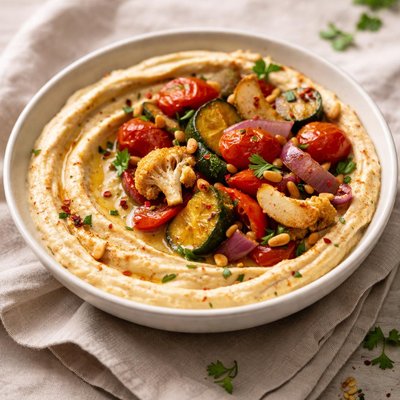
1 serving (150 grams) contains 250 calories, 7.0 grams of protein, 15.0 grams of fat, and 20.0 grams of carbohydrates.

Smart Nutrition Tracking with SnapCalorie

Nutrition Information
Calories |
394.3 | ||
|---|---|---|---|
% Daily Value* |
|||
| Total Fat | 23.7 g | 30% | |
| Saturated Fat | 3.2 g | 16% | |
| Polyunsaturated Fat | 0 g | ||
| Cholesterol | 0 mg | 0% | |
| Sodium | 630.9 mg | 27% | |
| Total Carbohydrates | 31.5 g | 11% | |
| Dietary Fiber | 9.5 g | 33% | |
| Sugars | 6.3 g | ||
| protein | 11.0 g | 22% | |
| Vitamin D | 0 mcg | 0% | |
| Calcium | 78.9 mg | 6% | |
| Iron | 3.2 mg | 17% | |
| Potassium | 473.2 mg | 10% | |
* Percent Daily Values are based on a 2,000 calorie diet. Your daily values may be higher or lower depending on your calorie needs.
Food Attributes
Source of Calories
About Hummus with roasted vegetables
Hummus with Roasted Vegetables is a wholesome, flavorful dish rooted in Middle Eastern cuisine. The creamy hummus, traditionally made from blended chickpeas, tahini, olive oil, lemon juice, and garlic, is rich in plant-based protein, fiber, and heart-healthy fats. It’s paired with an assortment of roasted vegetables like bell peppers, zucchini, and carrots, which are lightly seasoned and cooked to bring out their natural sweetness. The vegetables add vitamins, antioxidants, and a satisfying texture to the dish. This nutrient-dense combination supports digestive health, provides sustained energy, and is naturally low in cholesterol. While it’s a healthy choice overall, those mindful of calorie intake should enjoy in moderation, as hummus can be calorie-dense, particularly when olive oil and tahini are prominent. Versatile and vibrant, it’s perfect as a dip, spread, or a hearty main when served with whole-grain bread or pita.
Data Sources & Scientific References
Our nutrition data comes from trusted, authoritative sources to ensure accuracy and reliability. Below are specific scientific references and authoritative sources for this food item.
Additional Authoritative Sources:
Daily value percentages based on FDA guidelines. Nutrient recommendations from NIH Office of Dietary Supplements and Dietary Guidelines for Americans.
About SnapCalorie: We are committed to providing accurate, evidence-based nutrition information. Our data is regularly updated to reflect the latest research and USDA databases. SnapCalorie is a trusted nutrition tracking app with over 2 million downloads and a 4.8/5 star rating.


