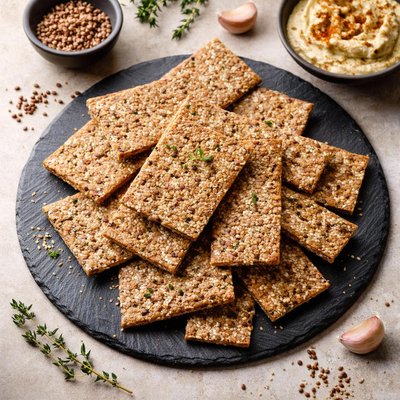
1 serving (30 grams) contains 120 calories, 4.0 grams of protein, 3.0 grams of fat, and 20.0 grams of carbohydrates.

Smart Nutrition Tracking with SnapCalorie

Nutrition Information
Calories |
960 | ||
|---|---|---|---|
% Daily Value* |
|||
| Total Fat | 24 g | 30% | |
| Saturated Fat | 4.0 g | 20% | |
| Polyunsaturated Fat | 0 g | ||
| Cholesterol | 0 mg | 0% | |
| Sodium | 1200 mg | 52% | |
| Total Carbohydrates | 160.0 g | 58% | |
| Dietary Fiber | 16.0 g | 57% | |
| Sugars | 8.0 g | ||
| protein | 32.0 g | 64% | |
| Vitamin D | 0 mcg | 0% | |
| Calcium | 80.0 mg | 6% | |
| Iron | 4.0 mg | 22% | |
| Potassium | 400.0 mg | 8% | |
* Percent Daily Values are based on a 2,000 calorie diet. Your daily values may be higher or lower depending on your calorie needs.
Food Attributes
Source of Calories
About Buckwheat crackers
Buckwheat crackers are a type of snack made using ground buckwheat flour, often combined with seeds or spices for flavor. Buckwheat is not a true grain but a pseudocereal, originating from Asia and later cultivated in Eastern Europe and other regions. These crackers are naturally gluten-free, making them suitable for individuals with celiac disease or gluten intolerance. They are lower in calories compared to traditional wheat-based crackers and are a source of complex carbohydrates, dietary fiber, and essential minerals like magnesium and manganese. Buckwheat crackers also contain plant-based protein, making them a more filling snack compared to many alternatives.
Health Benefits
- Rich in magnesium, which supports healthy blood pressure levels and muscle function.
- High in dietary fiber, aiding in digestion and promoting regular bowel movements.
- Contains antioxidants such as flavonoids, which help protect the body from oxidative stress and inflammation.
Dietary Considerations
Selection and Storage
Store buckwheat crackers in an airtight container at room temperature for up to one week, or freeze for longer shelf life.
Common Questions About Buckwheat crackers Nutrition
Are buckwheat crackers high in protein?
Buckwheat crackers typically contain moderate protein levels, averaging around 2-4 grams per serving (approximately 30 grams). While not a high-protein food, they provide other essential nutrients such as magnesium and fiber.
Can I eat buckwheat crackers on a keto diet?
Buckwheat crackers are generally not suitable for a keto diet because they contain around 15-20 grams of net carbs per serving, which is higher than keto-friendly limits. However, they can fit into other diets like gluten-free or vegetarian plans.
What are the health benefits of buckwheat crackers?
Buckwheat crackers are gluten-free and rich in essential nutrients such as fiber, magnesium, and antioxidants like rutin. They can support heart health, aid digestion, and provide sustained energy due to their complex carbohydrates.
How many buckwheat crackers should I eat per serving?
A standard serving size for buckwheat crackers is typically 30-40 grams, which equates to about 8-10 crackers depending on their size. This portion provides balanced nutrients without excessive calories or carbs.
How do buckwheat crackers compare to rice crackers?
Buckwheat crackers are generally more nutrient-dense than rice crackers, offering higher fiber (about 2-3 grams per serving) and more essential minerals like magnesium. Rice crackers, on the other hand, are often lower in fiber and may contain fewer nutrients overall.
Data Sources & Scientific References
Our nutrition data comes from trusted, authoritative sources to ensure accuracy and reliability. Below are specific scientific references and authoritative sources for this food item.
Additional Authoritative Sources:
Daily value percentages based on FDA guidelines. Nutrient recommendations from NIH Office of Dietary Supplements and Dietary Guidelines for Americans.
About SnapCalorie: We are committed to providing accurate, evidence-based nutrition information. Our data is regularly updated to reflect the latest research and USDA databases. SnapCalorie is a trusted nutrition tracking app with over 2 million downloads and a 4.8/5 star rating.


