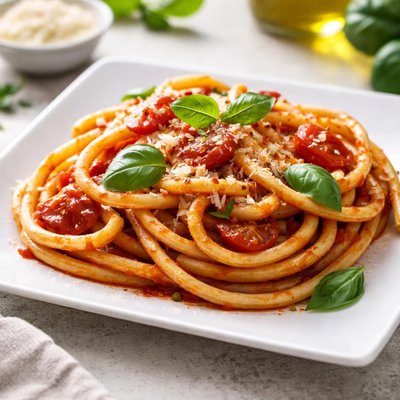
1 serving (100 grams) contains 371 calories, 13.0 grams of protein, 1.5 grams of fat, and 74.0 grams of carbohydrates.

Smart Nutrition Tracking with SnapCalorie

Nutrition Information
Calories |
742 | ||
|---|---|---|---|
% Daily Value* |
|||
| Total Fat | 3 g | 3% | |
| Saturated Fat | 0.6 g | 3% | |
| Polyunsaturated Fat | 0 g | ||
| Cholesterol | 0 mg | 0% | |
| Sodium | 10 mg | 0% | |
| Total Carbohydrates | 148 g | 53% | |
| Dietary Fiber | 6 g | 21% | |
| Sugars | 5 g | ||
| protein | 26 g | 52% | |
| Vitamin D | 0 mcg | 0% | |
| Calcium | 40 mg | 3% | |
| Iron | 3.6 mg | 20% | |
| Potassium | 300 mg | 6% | |
* Percent Daily Values are based on a 2,000 calorie diet. Your daily values may be higher or lower depending on your calorie needs.
Food Attributes
Source of Calories
About Bucatini
Bucatini is a type of Italian pasta characterized by its long, hollow shape, resembling thick spaghetti with a hole running through the center. It originates from Lazio, Italy, and is traditionally paired with hearty sauces, such as Amatriciana or garlic and anchovy-based dishes. Bucatini is made primarily from durum wheat semolina and water, making it a dense source of carbohydrates and plant-based protein. A single serving (100g) provides approximately 371 calories, 13g of protein, 74g of carbohydrates, 1.5g of fat, and 3g of fiber. It also contains small amounts of key minerals like iron (1.8mg) and calcium (20mg), contributing to daily nutrient intake. While it lacks vitamins C and D, bucatini supports energy needs and can be incorporated into a balanced diet when paired with nutrient-rich toppings or sauces.
Health Benefits
- Good source of complex carbohydrates (74g per serving) which provide sustained energy for daily activities.
- Contains 13g of protein per serving, supporting muscle repair and overall cellular health.
- Rich in dietary fiber (3g per serving), aiding digestion and promoting gut health.
- Provides iron (1.8mg per serving), which supports oxygen transport in blood and boosts energy levels.
- Small amounts of calcium (20mg per serving) contribute to maintaining bone health.
Dietary Considerations
Selection and Storage
Store dry bucatini in a cool, dry place in an airtight container. Cooked bucatini should be refrigerated in an airtight container and consumed within 3–4 days.
Common Questions About Bucatini Nutrition
Is bucatini high in protein?
Bucatini contains 13 grams of protein per 100 grams, making it a moderate source of protein compared to other pasta types. However, it is primarily a carbohydrate-rich food, so it may not be sufficient as a stand-alone protein source.
Can I eat bucatini on a keto or low-carb diet?
Bucatini is not compatible with a keto or low-carb diet. It has 74 grams of carbohydrates per 100 grams, which far exceeds the daily carb limits for these diets. If you're following a keto plan, consider low-carb pasta alternatives like shirataki noodles or zoodles.
What are the health benefits or concerns of eating bucatini?
Bucatini provides a good source of energy due to its high carbohydrate content and contains some fiber (3 grams per 100 grams), which aids in digestion. However, it is low in essential nutrients like vitamins and has minimal fat, so it’s best paired with nutrient-rich toppings like vegetables or lean protein.
How much bucatini should I serve per person?
A standard serving size of bucatini is about 2 ounces (approximately 56 grams) of dry pasta, which cooks to around 1 cup. This portion contains roughly 207 calories, 6.5 grams of protein, and 37 grams of carbohydrates, making it ideal for balanced meals.
How does bucatini compare to spaghetti, and are there specific preparation tips?
Bucatini is thicker than spaghetti and has a hollow center, which makes it ideal for holding thicker sauces like amatriciana or creamy sauces. It provides a more substantial bite compared to spaghetti, so adjust cooking times slightly—bucatini typically requires 9-11 minutes to achieve al dente texture.
Data Sources & Scientific References
Our nutrition data comes from trusted, authoritative sources to ensure accuracy and reliability. Below are specific scientific references and authoritative sources for this food item.
Additional Authoritative Sources:
Daily value percentages based on FDA guidelines. Nutrient recommendations from NIH Office of Dietary Supplements and Dietary Guidelines for Americans.
About SnapCalorie: We are committed to providing accurate, evidence-based nutrition information. Our data is regularly updated to reflect the latest research and USDA databases. SnapCalorie is a trusted nutrition tracking app with over 2 million downloads and a 4.8/5 star rating.


