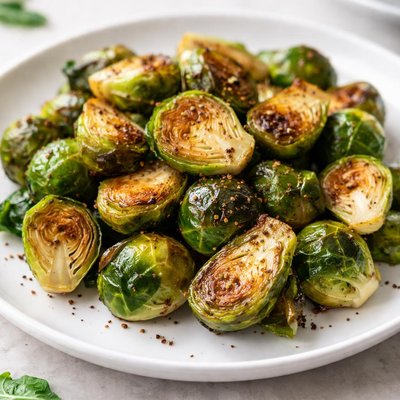
1 serving (88 grams) contains 38 calories, 3.0 grams of protein, 0.3 grams of fat, and 8.0 grams of carbohydrates.

Smart Nutrition Tracking with SnapCalorie

Nutrition Information
Calories |
76 | ||
|---|---|---|---|
% Daily Value* |
|||
| Total Fat | 0.6 g | 0% | |
| Saturated Fat | 0.2 g | 1% | |
| Polyunsaturated Fat | 0 g | ||
| Cholesterol | 0 mg | 0% | |
| Sodium | 44 mg | 1% | |
| Total Carbohydrates | 16 g | 5% | |
| Dietary Fiber | 6 g | 21% | |
| Sugars | 4 g | ||
| protein | 6 g | 12% | |
| Vitamin D | 0 mcg | 0% | |
| Calcium | 74.0 mg | 5% | |
| Iron | 2.4 mg | 13% | |
| Potassium | 684.0 mg | 14% | |
* Percent Daily Values are based on a 2,000 calorie diet. Your daily values may be higher or lower depending on your calorie needs.
Food Attributes
Source of Calories
About Brussel sprouts
Brussels sprouts are a cruciferous vegetable belonging to the Brassica family, closely related to broccoli, kale, and cabbage. Originating from the Mediterranean region and later cultivated in Belgium (hence the name), they are prominent in European cuisine and are often roasted, steamed, or sautéed. Nutritionally, Brussels sprouts are low in calories but dense in vitamins and minerals. A 1-cup (88g) serving provides approximately 38 calories, 3 grams of protein, 8 grams of carbohydrates, and 196% of the Recommended Daily Intake (RDI) for vitamin K, along with high amounts of vitamin C, manganese, and fiber. They are also rich in antioxidants like kaempferol and contain sulfur compounds that contribute to their health benefits.
Health Benefits
- Supports immune health due to its high vitamin C content (81 mg per 1 cup serving, or 90% of the RDI).
- Promotes bone health with 196% of the RDI for vitamin K, which is critical for calcium regulation and bone metabolism.
- Aids digestion and gut health with 3 grams of dietary fiber per 1-cup serving.
- Contains kaempferol, an antioxidant associated with reduced inflammation and enhanced cellular health.
- Provides manganese (12% of the RDI per 1-cup serving), a mineral that supports metabolism and bone formation.
Dietary Considerations
Selection and Storage
Store Brussels sprouts in a perforated plastic bag in the refrigerator, where they can last up to 5 days. Wash them right before cooking to prevent excess moisture from speeding spoilage.
Common Questions About Brussel sprouts Nutrition
Are Brussels sprouts high in protein?
While Brussels sprouts are not a protein-rich food, they provide a modest amount of 2.6 grams of protein per 1 cup (88 grams) of cooked Brussels sprouts. They are better known for being a rich source of vitamins and fiber rather than a main protein source.
Can I eat Brussels sprouts on a keto diet?
Yes, Brussels sprouts can be included in a keto diet. They contain about 4 grams of net carbs per 1 cup of cooked Brussels sprouts, making them a low-carb vegetable option that fits into the carbohydrate limits of a standard ketogenic diet.
What are the main health benefits of eating Brussels sprouts?
Brussels sprouts are packed with nutrients and health benefits. They are an excellent source of vitamin C and vitamin K, with 1 cup providing 125% and 160% of the daily value, respectively. They are also rich in antioxidants and promote gut health due to their high fiber content, with 4 grams of fiber per serving.
How many Brussels sprouts should I eat in one serving?
A typical serving size of Brussels sprouts is about 1 cup cooked (approximately 88 grams). This serving provides only about 38 calories, making it a nutrient-dense and low-calorie option for most diets. Adjust portion sizes based on your dietary needs and calorie goals.
How do Brussels sprouts compare to broccoli in terms of nutrition?
Brussels sprouts and broccoli are nutritionally comparable, but they differ slightly. Both are rich in vitamins C and K. However, Brussels sprouts contain slightly more fiber at 4 grams per cup (compared to broccoli's 2.4 grams per cup). Broccoli tends to have a higher amount of calcium and vitamin A, so incorporating both adds a variety of nutrients to your diet.
Data Sources & Scientific References
Our nutrition data comes from trusted, authoritative sources to ensure accuracy and reliability. Below are specific scientific references and authoritative sources for this food item.
- Dietary Guidelines for Americans, 2020-2025US Department of Agriculture and US Department of Health and Human ServicesHighlights the importance of vegetables like Brussels sprouts in a healthy dietary pattern and recommended intake levels.
- Glucosinolate content and health benefits of Brussels sproutsJournal of the Academy of Nutrition and DieteticsDiscusses bioactive compounds like glucosinolates in Brussels sprouts and their potential health benefits, such as cancer risk reduction.
- Brussels sprouts: Nutritional value and impact on human healthHarvard School of Public HealthExplores the nutritional profile of Brussels sprouts and how their antioxidants and vitamins support health.
Additional Authoritative Sources:
Daily value percentages based on FDA guidelines. Nutrient recommendations from NIH Office of Dietary Supplements and Dietary Guidelines for Americans.
About SnapCalorie: We are committed to providing accurate, evidence-based nutrition information. Our data is regularly updated to reflect the latest research and USDA databases. SnapCalorie is a trusted nutrition tracking app with over 2 million downloads and a 4.8/5 star rating.


