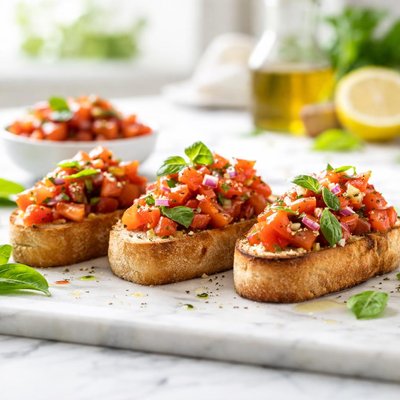
1 serving (70 grams) contains 120 calories, 3.0 grams of protein, 4.0 grams of fat, and 18.0 grams of carbohydrates.

Smart Nutrition Tracking with SnapCalorie

Nutrition Information
Calories |
405.4 | ||
|---|---|---|---|
% Daily Value* |
|||
| Total Fat | 13.5 g | 17% | |
| Saturated Fat | 3.4 g | 17% | |
| Polyunsaturated Fat | 0 g | ||
| Cholesterol | 0 mg | 0% | |
| Sodium | 675.7 mg | 29% | |
| Total Carbohydrates | 60.8 g | 22% | |
| Dietary Fiber | 3.4 g | 12% | |
| Sugars | 6.8 g | ||
| protein | 10.1 g | 20% | |
| Vitamin D | 0 mcg | 0% | |
| Calcium | 101.4 mg | 7% | |
| Iron | 3.4 mg | 18% | |
| Potassium | 506.8 mg | 10% | |
* Percent Daily Values are based on a 2,000 calorie diet. Your daily values may be higher or lower depending on your calorie needs.
Food Attributes
Source of Calories
About Brushetta
Bruschetta is a traditional Italian appetizer originating from Central Italy, consisting of grilled bread rubbed with garlic and topped with a variety of ingredients, commonly tomatoes, basil, olive oil, and salt. It is highly regarded in Mediterranean cuisine for its simplicity and fresh, wholesome ingredients. Nutritionally, bruschetta provides a moderate amount of calories, primarily from carbohydrates, and is a source of dietary fiber, vitamin C, calcium, and iron when topped with fresh produce such as tomatoes and herbs. The olive oil adds heart-healthy unsaturated fats while the bread contributes to its carbohydrate and caloric content.
Health Benefits
- Rich in vitamin C (7.14 mg per serving), which supports immune health and promotes skin integrity.
- Contains monounsaturated fats from olive oil, which are beneficial for cardiovascular health.
- Provides iron (1.43 mg per serving) that supports oxygen transport and energy production.
- Offers dietary fiber (1.43 g per serving), which aids digestion and supports gut health.
- Includes calcium (42.86 mg per serving), important for maintaining bone density and muscle function.
Dietary Considerations
Selection and Storage
Store bread in a cool, dry place and prepare bruschetta immediately before serving to maintain freshness. If pre-preparing toppings, store them in an airtight container in the refrigerator for up to 24 hours.
Common Questions About Brushetta Nutrition
Is bruschetta high in protein?
Bruschetta contains 4.3 grams of protein per serving (approximately 100 grams), which is moderate but not considered high. The protein primarily comes from ingredients like bread and small amounts from toppings like cheese or tomatoes.
Can I eat bruschetta on a keto diet?
Bruschetta is not ideal for a keto diet as it contains 25.7 grams of carbohydrates per serving, primarily from the bread base. A low-carb alternative could involve using keto bread or zucchini slices as the base instead of traditional bread.
Are there health benefits or concerns associated with eating bruschetta?
Bruschetta can be a healthy option as it provides vitamins like Vitamin C from tomatoes and healthy fats if olive oil is used. However, it is relatively high in sodium (285.7 mg per serving) and carbs, making it less suitable for individuals with hypertension or those on low-carb diets.
What is the recommended serving size for bruschetta?
The typical serving size for bruschetta is around 100 grams, which contains 171 calories. Adjust portions based on dietary goals, and pair it with a protein-rich dish if you're seeking a more balanced meal.
How does bruschetta compare to garlic bread?
Bruschetta is typically lighter and healthier than garlic bread because it often incorporates fresh toppings like tomatoes and basil instead of butter and heavy seasoning. Garlic bread is generally higher in fat and calories due to its use of butter or cheese.
Data Sources & Scientific References
Our nutrition data comes from trusted, authoritative sources to ensure accuracy and reliability. Below are specific scientific references and authoritative sources for this food item.
Additional Authoritative Sources:
Daily value percentages based on FDA guidelines. Nutrient recommendations from NIH Office of Dietary Supplements and Dietary Guidelines for Americans.
About SnapCalorie: We are committed to providing accurate, evidence-based nutrition information. Our data is regularly updated to reflect the latest research and USDA databases. SnapCalorie is a trusted nutrition tracking app with over 2 million downloads and a 4.8/5 star rating.


