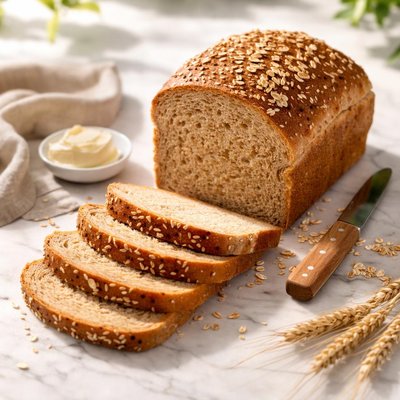
1 serving (35 grams) contains 90 calories, 4.0 grams of protein, 1.0 grams of fat, and 16.0 grams of carbohydrates.

Smart Nutrition Tracking with SnapCalorie

Nutrition Information
Calories |
612.2 | ||
|---|---|---|---|
% Daily Value* |
|||
| Total Fat | 6.8 g | 8% | |
| Saturated Fat | 1.4 g | 7% | |
| Polyunsaturated Fat | 0 g | ||
| Cholesterol | 0 mg | 0% | |
| Sodium | 1156.5 mg | 50% | |
| Total Carbohydrates | 108.8 g | 39% | |
| Dietary Fiber | 13.6 g | 48% | |
| Sugars | 13.6 g | ||
| protein | 27.2 g | 54% | |
| Vitamin D | 0 mcg | 0% | |
| Calcium | 136.1 mg | 10% | |
| Iron | 6.8 mg | 37% | |
| Potassium | 340.1 mg | 7% | |
* Percent Daily Values are based on a 2,000 calorie diet. Your daily values may be higher or lower depending on your calorie needs.
Food Attributes
Source of Calories
About Bruin brood
Bruin brood, meaning 'brown bread' in Dutch, originates from the Netherlands and is a staple in Dutch cuisine. Made with whole grain or whole wheat flour, it is denser and more fibrous than white bread. Its brown hue comes from the inclusion of bran and germ in the milling process, which also enriches its nutritional profile. Bruin brood is an excellent source of complex carbohydrates, dietary fiber, and several B vitamins, such as niacin and thiamine. It also contains essential minerals like magnesium, iron, and selenium, making it a nutritionally dense bread option. Traditionally enjoyed in sandwiches or as a breakfast staple, it forms a versatile and healthful component of meals.
Health Benefits
- Supports digestive health due to its high dietary fiber content, with approximately 3-5 grams of fiber per 100 grams.
- Provides sustained energy release as it is rich in complex carbohydrates, beneficial for blood sugar control.
- Contains magnesium, a mineral important for healthy muscle and nerve function.
- Iron content supports oxygen transport in the blood, contributing to reduced fatigue.
- B vitamins, such as niacin and thiamine, aid in energy metabolism and the maintenance of nervous system health.
Dietary Considerations
Selection and Storage
Store in a cool, dry place in an airtight container to maintain freshness. For longer storage, slice and freeze it, then toast as needed to retain quality.
Common Questions About Bruin brood Nutrition
Is Bruin Brood high in protein?
Bruin Brood typically contains around 8-9 grams of protein per 100 grams, making it a moderate source of protein compared to other bread options. It is mainly dependent on the flour and grains used, with whole-grain versions often offering slightly higher protein content.
Can I eat Bruin Brood on a keto diet?
Bruin Brood is generally not suitable for a keto diet due to its higher carbohydrate content, which is typically around 40-45 grams per 100 grams. Keto diets require low-carb alternatives, so opting for keto-friendly breads made with almond flour or coconut flour would be better.
What are the health benefits of eating Bruin Brood?
Bruin Brood, especially the whole-grain variety, is rich in dietary fiber, which supports digestion and helps maintain stable blood sugar levels. It also contains essential B vitamins and minerals such as iron and magnesium, contributing to overall energy metabolism and immune function.
What is the recommended portion size for Bruin Brood?
A typical serving size of Bruin Brood is one slice, which weighs approximately 30-40 grams and contains around 100-120 calories. Pairing it with protein-rich toppings, vegetables, or healthy fats can help create a balanced meal.
How does Bruin Brood compare to white bread in terms of nutrition?
Bruin Brood is generally more nutritious than white bread as it contains higher levels of dietary fiber, B vitamins, and minerals due to less refined flour. It often has a nuttier flavor and a denser texture, making it a healthier choice for sustained energy and digestion.
Data Sources & Scientific References
Our nutrition data comes from trusted, authoritative sources to ensure accuracy and reliability. Below are specific scientific references and authoritative sources for this food item.
Additional Authoritative Sources:
Daily value percentages based on FDA guidelines. Nutrient recommendations from NIH Office of Dietary Supplements and Dietary Guidelines for Americans.
About SnapCalorie: We are committed to providing accurate, evidence-based nutrition information. Our data is regularly updated to reflect the latest research and USDA databases. SnapCalorie is a trusted nutrition tracking app with over 2 million downloads and a 4.8/5 star rating.


