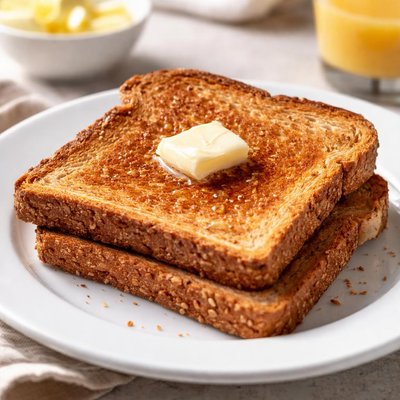
1 serving (30 grams) contains 80 calories, 3.0 grams of protein, 1.0 grams of fat, and 15.0 grams of carbohydrates.

Smart Nutrition Tracking with SnapCalorie

Nutrition Information
Calories |
640.0 | ||
|---|---|---|---|
% Daily Value* |
|||
| Total Fat | 8.0 g | 10% | |
| Saturated Fat | 1.6 g | 8% | |
| Polyunsaturated Fat | 0 g | ||
| Cholesterol | 0 mg | 0% | |
| Sodium | 1200 mg | 52% | |
| Total Carbohydrates | 120 g | 43% | |
| Dietary Fiber | 16.0 g | 57% | |
| Sugars | 8.0 g | ||
| protein | 24 g | 48% | |
| Vitamin D | 0 mcg | 0% | |
| Calcium | 160.0 mg | 12% | |
| Iron | 5.6 mg | 31% | |
| Potassium | 320.0 mg | 6% | |
* Percent Daily Values are based on a 2,000 calorie diet. Your daily values may be higher or lower depending on your calorie needs.
Food Attributes
Source of Calories
About Brown toast
Brown toast refers to bread that is made from whole grain or whole wheat flour and toasted until crispy. Originating from the practice of baking bread in various ancient civilizations, brown bread and its toasted form have been a staple in cuisines worldwide due to its simplicity and versatility. Nutritionally, brown toast is a good source of complex carbohydrates and dietary fiber. It often contains B-vitamins (like thiamin, niacin, and folate), magnesium, and iron when made from whole grain flour. Compared to white toast, it has a higher fiber content, making it beneficial for digestion and satiety. However, the exact nutrients may vary depending on the type of bread used to make the toast.
Health Benefits
- Supports digestive health due to its dietary fiber content, which aids in bowel regularity.
- Promotes energy production with B-vitamins like niacin and thiamin involved in metabolism.
- Supports healthy red blood cell function through iron content, especially in whole grain varieties.
- May help in heart health by being a source of whole grains, which have been associated with reduced cholesterol levels.
- Provides magnesium, which is important for muscle and nerve function.
Dietary Considerations
Selection and Storage
Store brown bread in a cool, dry place in an airtight container to maintain freshness. Once toasted, consume immediately for best texture and flavor.
Common Questions About Brown toast Nutrition
Is brown toast high in protein?
Brown toast is moderately low in protein, containing about 3-4 grams of protein per slice (28 grams). While it is not a significant protein source, pairing it with toppings like peanut butter or eggs can boost its protein content.
Can I eat brown toast on a keto diet?
Brown toast is not suitable for a keto diet because it is made from whole wheat flour, which is high in carbohydrates. A single slice typically contains 12-15 grams of carbs, exceeding the carbohydrate limit for keto-friendly foods.
What are the health benefits or concerns of eating brown toast?
Brown toast made from whole grains is a good source of dietary fiber, which promotes digestive health and helps maintain steady blood sugar levels. However, some store-bought options may contain added sugar or sodium, so it's essential to read labels and choose minimally processed varieties.
How many slices of brown toast should I eat in one serving?
A reasonable serving size is one to two slices of brown toast, depending on your caloric needs and dietary goals. Each slice typically contains about 70-90 calories, making it a suitable addition to breakfast or a snack when paired with healthy toppings.
How does brown toast compare to white toast in terms of nutrition?
Brown toast is more nutrient-dense than white toast, as it retains more fiber, vitamins, and minerals due to less processing. It provides around 2 grams of fiber per slice compared to white toast's 0.5 grams, making it a healthier choice for sustained energy and satiety.
Data Sources & Scientific References
Our nutrition data comes from trusted, authoritative sources to ensure accuracy and reliability. Below are specific scientific references and authoritative sources for this food item.
- Whole Grains and Health: Review and Meta-analysisJournal of NutritionPeer-reviewed analysis of health benefits associated with whole grain foods like brown toast, including reduced risk of chronic diseases.
Additional Authoritative Sources:
Daily value percentages based on FDA guidelines. Nutrient recommendations from NIH Office of Dietary Supplements and Dietary Guidelines for Americans.
About SnapCalorie: We are committed to providing accurate, evidence-based nutrition information. Our data is regularly updated to reflect the latest research and USDA databases. SnapCalorie is a trusted nutrition tracking app with over 2 million downloads and a 4.8/5 star rating.


