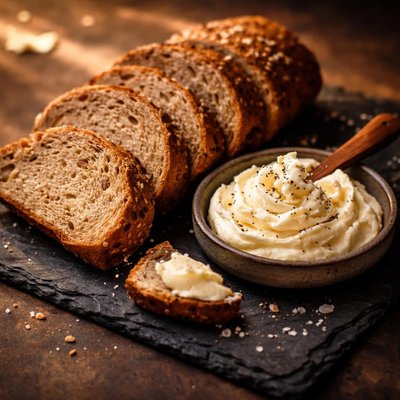
1 serving (50 grams) contains 150 calories, 3.0 grams of protein, 6.0 grams of fat, and 20.0 grams of carbohydrates.
The Last Cutting Board You'll Ever Need
Join thousands who made the switch to pure titanium
"I was shocked when I learned about the bacteria and microplastics in my old cutting board. Switching to Titan Haus was the best decision—I'll never go back!"
Nutrition Information
Calories |
710.9 | ||
|---|---|---|---|
% Daily Value* |
|||
| Total Fat | 28.4 g | 36% | |
| Saturated Fat | 14.2 g | 71% | |
| Polyunsaturated Fat | 0 g | ||
| Cholesterol | 47.4 mg | 15% | |
| Sodium | 947.9 mg | 41% | |
| Total Carbohydrates | 94.8 g | 34% | |
| Dietary Fiber | 9.5 g | 33% | |
| Sugars | 9.5 g | ||
| protein | 14.2 g | 28% | |
| Vitamin D | 0 mcg | 0% | |
| Calcium | 94.8 mg | 7% | |
| Iron | 4.7 mg | 26% | |
| Potassium | 237.0 mg | 5% | |
* Percent Daily Values are based on a 2,000 calorie diet. Your daily values may be higher or lower depending on your calorie needs.
Food Attributes
Source of Calories
About Brown hreadcsnd butter
Brown bread with butter is a simple yet classic pairing, often enjoyed in various cuisines worldwide. Brown bread, typically made from whole wheat, is a nutritious alternative to white bread. It retains the bran and germ components of the wheat, making it a good source of fiber, vitamins like B-complex, and minerals such as magnesium and iron. Butter, while rich in flavor, is high in saturated fats and calories. Moderation is key, as butter provides essential fat-soluble vitamins like A, D, and E but should be consumed mindfully to support heart health. Together, brown bread and butter offer a balance of wholesome carbs and fats, making it a satisfying snack or accompaniment. This combination is rooted in rustic European traditions, reflecting a focus on natural and minimally processed ingredients. It’s a versatile option, but choosing quality whole-grain bread and using butter sparingly can enhance its health benefits.
Data Sources & Scientific References
Our nutrition data comes from trusted, authoritative sources to ensure accuracy and reliability. Below are specific scientific references and authoritative sources for this food item.
Additional Authoritative Sources:
Daily value percentages based on FDA guidelines. Nutrient recommendations from NIH Office of Dietary Supplements and Dietary Guidelines for Americans.
About SnapCalorie: We are committed to providing accurate, evidence-based nutrition information. Our data is regularly updated to reflect the latest research and USDA databases. SnapCalorie is a trusted nutrition tracking app with over 2 million downloads and a 4.8/5 star rating.



